For many school in Thailand, there are two terms. The first term is from the first week of May to the first week of October. The second term starts from the first week of November and finishes at the last week of February or the first week of March. The students don't get a break for Christmas(圣诞节). But they get a 3-4 days' break for the New Year.
For many students, a school day is very long. They usually get to school at 7:30 a.m. Classes begin at 8:00 a.m. there are three classes in the morning and they are 50 minutes each(每个). Students have lunch at 11:00 a.m. they don't have dining halls so they have to eat in the classroom. Lunch time finishes at 12:25 p.m. there are three classes in the afternoon. School finishes at 3:15 p.m. many schools have a "homework" lesson after school, so students usually go home after 4:45 p.m.
【小题1】How long is the first term in Thailand schools?
| A.For six months. | B.For five months. | C.For four months. | D.For three moths. |
| A.假期 | B.节目 | C.游览 | D.计划 |
| A.At 7:00 a.m. | B.At 7:30 a.m. | C.At 8:00 a.m. | D.At 8:30 a.m. |
| A.Because their dining halls are very small. |
| B.Because they must do their homework after lunch. |
| C.Because they don't have dining halls. |
| D.Because they bring lunch to school. |
| A.There are three terms in Thailand schools. |
| B.Students don't go to school in November. |
| C.Students usually go home at 3:15 p.m. |
| D.Students have six classes a day. |
It's a fine day. The White family get up at seven o'clock. They have breakfast at seven forty. And then they go to the park. They take a basket of food and a carpet(地毯). The park is not far from their home, so they ride bikes there. Then they get to the park, it's half past eight. Mr. and Mrs. White are talking with each other. Their son, ted, is playing with a ball. Their daughter, Jenny, is taking photos.
After about an hour, Ted and Jenny sit down to relax. At that time, they see a squirrel eating a pine nut(松子)in a big tree. When they see the squirrel eating, they feel hungry(饥饿的). They go to help their parents take the food out of the basket. Ted has a hamburger. Hamburgers are his favorite food. Jenny has an apple. Mr. and Mrs. White have some bread. They have a great time in the park.
【小题1】What do the family take to the park?
| A.A basket of food and a book. | B.A carpet and a dog. |
| C.A basket of food and a carpet. | D.Food and clothes. |
| A.At 8:30 a.m. | B.At 8:00 a.m. | C.At 7:40 a.m. | D.At 7:00 a.m. |
| A.She is reading a book. | B.She is taking photos. |
| C.She is playing with a ball. | D.She is drawing pictures. |
| A.A kind of fruit. | B.A kind of animal. | C.A kind of drink. | D.A kind of sport. |
| A.The White family ride bikes to the park. | B.Ted plays with a ball for about an hour. |
| C.Four people are in Mr. White's family. | D.Hamburgers are Jenny's favorite food. |
In order to know a foreign language thoroughly, four things are necessary. Firstly, we must be able to understand the language when we hear it spoken. Secondly, we must be able to speak it ourselves, correctly, with confidence and without hesitation. Thirdly, we must be able to read the language and fourthly, we must be able to write it. We must be able to compose(组成)sentences that are grammatically correct. We must know how to arrange sentences in paragraphs, so as to write a good letter or composition.
There is no easy way to succeed in language learning. A good memory is of great help, but it is not enough simply to memorize rules from a grammar book. It is not much use learning by heart long lists of words and their meaning. We learn words not by ourselves, but in sentences. We must learn by using the language. “Learn through use” is a good piece of advice for those who are studying a new language. Practice is very important. We must practice speaking and writing the language whenever we can.
【小题1】The word “confidence” here probably means _____.
| A.use | B.eyes |
| C.need | D.feeling sure of ourselves |
| A.speak more and write more |
| B.read more |
| C.speak more |
| D.use a dictionary |
| A.reading | B.speaking | C.writing | D.listening |
| A.from a dictionary | B.from a textbook |
| C.in sentences | D.from a good grammar book |
| A.we must practise speaking and writing |
| B.we must learn by using the language |
| C.we must learn everything by language |
| D.we must remember grammar rules as many as possible |
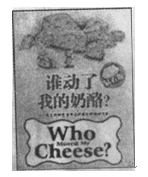
We all have our own ways of sharing our life experiences with others.
Photographers use cameras,artists use brushes, musicians use songs and writers use stories. Spencer Johnson's story Who Moved My Cheese? shows changes exist in(存在于) our life. Life changes and so we do. We must change ourselves to face the changing environment, or we will fail.
Just look at the cycle(循环) of the seasons. Trees bud(发芽) in spring and in summer their leaves turn green. In autumn, their leaves start to fall onto the ground. When winter arrives, there are no leaves on trees. Next spring the cycle begins again. Since we know there are cycles in nature, we can prepare for them. We know it is colder in winter and hotter in summer, so we can dress properly.
Since we accept the cycles of nature,we should also accept the changes in our life.
We can prepare ourselves for changes by becoming more flexible(灵活的). We can regard the changes in our life as chances. As we keep changing ourselves, we can keep up with the changes in our life.
【小题1】What do writers use to share their life experiences?
| A.Stories. | B.Newspapers. | C.Basketballs. | D.Pianos. |
| A.changes exist in our life |
| B.we should move other’s things |
| C.we should use books to share our life experiences |
| D.there are difficulties in our life |
| A.we should wear warm clothes in winter |
| B.we should accept the changes in our life |
| C.we should prepare for the weather |
| D.leaves turn yellow in autumn |
| A.I have no chance to pass the test. |
| B.Exams are hard for me. |
| C.I have bad luck. |
| D.It's good for me because I know there are more to learn |
| A.Weather changes in different seasons. |
| B.Who Moved My Cheese? is a good book. |
| C.We should change ourselves when life changes. |
| D.We should not lose heart when we meet with difficulties. |
Most children like watching TV. It' s very interesting. By watching TV they can see and learn a lot and know many things about their country and the world. Of course, they can also learn over the radio. But they can learn better and more easily with TV. Why? Because they can hear and watch at the same time. But they can' t see anything over the radio.
TV helps to open children' s eyes. TV helps to open their minds (智力), too. They learn newer and better ways of doing things. They may find the world is now smaller than before.
Many children watch TV only on Saturday or Sunday evening. They are always busy with their lessons. But a few children watch TV every night. They go to bed very late. They can' t have a good rest. How about you, my young friend?
【小题1】A few children go to bed late because they _________。
| A.are busy with their lessons | B.do their homework | C.watch TV | D.listen to the radio |
| A.in the book | B.on the radio | C.on TV | D.by watching TV |
| A.eyes and minds | B.minds | C.eyes or minds | D.eyes |
| A.A lot | B.Much | C.A lot of | D.A little |
| A.they like to watch TV | B.they can hear at the same time |
| C.they can watch at the same time | D.they can listen to and see something at the same time |
Mr. Jackson is a teacher of science in a middle school. His students like his classes because his classes are very interesting. They can learn a lot in his class. The students can make(制作)many things. His little son Val also likes making things. He makes lots of machines(机器), such as a machine like a man. It can do the job that is dangerous(危险的)for people to do. He says, “I want to be a scientist.”
根据短文内容,选择正确答案。
【小题1】What does Mr. Jackson teach?
| A.English | B.Science | C.Math | D.History |
| A.Because he is kind to his students. |
| B.Because he teaches them carefully. |
| C.Because his classes are very interesting. |
| D.Because students like him. |
| A.a machine like a man | B.a dangerous machine |
| C.a man | D.a scientist |
| A.No, he doesn’t. | B.No, she doesn’t. |
| C.Yes, he does. | D.Yes, he doesn’t. |
| A.They can learn English. | B.They can do dangerous job. |
| C.They can do nothing. | D.They can make many things. |