【题目】(题文)阅读理解。

Are you shyIf you areyou are not aloneIn factclose to 50percent of people are shyAlmost 80percent of people feel shy at some point in their livesThese daysshyness is becoming more and more commonNowscientists are trying to understand shynessThey have some interesting ideas about why people are shy

Is it possible to be born shyMany scientists say yesThey say 15to 20percent of babies behave shylyThese babies are a little quieter and more watchful than other babiesInterestinglythese shy babies usually have shy parentsAs a resultscientists think that some shyness is genetic

Family size might cause people to be shy as wellScientists at Harvard University studied shy childrenThey found that 66percent of them had older brothers and sistersAs a resultthey became shyAt the same timechildren with no brothers and sisters may be shy as wellGrowing up alonethey often play by themselvesThey are not able to learn the same social skills as children from big families

You may also be shy because of where you were bornWhen scientists studied shyness in different countriesThey found surprising differencesIn Japanmost people said they were shyBut in Israelonly one of three people said soWhat explains the differenceOne scientist says the Japanese and Israelis have different opinions of failureIn Japanwhen people do not succeedthey feel bad about themselvesThey blame(责备)themselves for their failureIn Israelthe opposite is trueIsraelis often blame failure on outside reasonssuch as familyteachersfriendsor bad luckIn Israelfreedom of opinion and risk taking are strongly supportedThis may be why Israelis worry less about failure and are less shy

For shy peopleit can be difficult to make friendsspeak in classand even get a good jobBut scientists say you can get over your shynessThey suggest trying new things and practicing conversationAnd don’t forget﹣﹣﹣if you are shyyou are not the only one

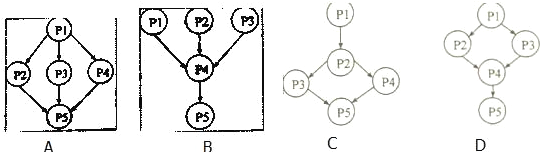
1】(小题1What is the passage mainly aboutB

A. HappinessB. Shyness

C. KindnessD. loneliness

2】(小题2What does the underlined word“genetic”in paragraph 2probably meanA

A. Passed down from parentsB. Learned from friends

C. Taught by teachersD. Made up by brothers

3】(小题3What can be learned from the passageC

A. Most little babies are born shy and quiet

B. If you are shy nowyou will be shy forever

C. Many shy children have older brothers and sisters

D. Most Israeli people are shy of expressing opinions

4】(小题4We can learn from the passage that B may cause shyness

A. geneticsgrown﹣﹣ups and birthplace

B. geneticsfamily size and birthplace

C. family sizegrown﹣﹣ups and failure

D. geneticsfamily size and freedom

5】(小题5Scientists suggest that shy people can get over their shyness by B

A. blaming their failure on outside reasons

B. trying new things and practicing conversation

C. getting themselves away from their shy parents

D. trying to understand reasons for their shyness

6】(小题6Which of the following shows the structure(结构)of the passage?(P=ParagraphA

【题目】

A group of people asked this question to a group 4-to-8-year-old children. “What does love mean?” The answers were surprising. The children would answer like they did below.

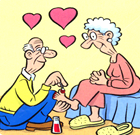
“When my grandmother hurt her knees (膝盖), she couldn’t bent (弯腰) over and paint her toenails (脚指甲) any more. So my grandfather does it for her all the time, even when his hands hurt too. That’s love.”

Rebecca–age 8

“Love is when someone hurts you. And you get so mad but you don’t shout at them because you know it would hurt her feelings.”

Samantha–age 6

“Love is what makes you smile when you’re tired.”

Terri–age 4

“I let my big sister pick on (捉弄) me because my mum says she only picks on me because she loves me. So I pick on my baby sister because I love her.”

Bethany–age 4

“I know my older sister loves me because she gives me all her old clothes and has to go out and buy new clothes.”

Lauren–age 4

“Love is when Mommy gives Daddy the best piece of chicken.”

Elaine–age 5

“My mommy loves me more than anybody. You don’t see anyone else kissing me to sleep at night.”

Clear–age 5

“You really shouldn’t say ‘I love you’ unless you mean it. But if you mean it, you should say it a lot. People forget.”

Jessica–age 8

1The passage mainly tells us about ______.

A. what “life” means to children B. what “family” means to children

C. what “friends” means to children D. what “love” means to children

2Who told us the love between mum and dad?

A. Clear. B. Elaine. C. Rebecca. D. Lauren.

3Which of the following is NOT true?

A. Rebecca’s grandmother ever couldn’t bend over.

B. Bethany is willing to be picked on by any other person.

C. If Samantha becomes angry, she will not shout at others.

D. Lauren prefers to wear her sister’s old clothes.

4What does Jessica mean about love?

A. Too much love is no love. B. You should say love more often.

C. You mean what you think. D. Say love more often if you have it.

5What is love according to Terri?

A. Love is the care between husband and wife.

B. Love is a rest when you are tired.

C. Love is what cheers you up when you are tired.

D. Love is a kiss from parents.

【题目】阅读短文,根据其内容回答文后各个小题。

What Does a Lifelong Learner Look Like?

Lifelong learners never think of themselves as the greatest expert in anything. They continue-to learn and bring a great deal to the groups they belong to. What does a lifelong learner look like? Here are some of their main characteristics (特征).

They are knowledge seekers. They are always searching for much information on a topic they're interested in and looking for new experience or opportunities to improve their knowledge or skills.

They are social and self-directed learners. They like taking different courses and taking part in discussions around subjects they are interested in. ___________________ they also know their own learning styles, and their strengths and weaknesses. They can plan and organize their own learning.

They are critical(批判性的) thinkers. They always use a lot of ways to analyze (分析) and synthesize(A EX)information. From their research they judge the information to see if it is useful for the question at hand.

They are problem solvers. They will meet different problems while learning. However, they usually see problems as challenges and life experiences and try to stand above them.

1What does the underlined "knowledge seekers" mean?

A. Persons who are looking for knowledge.

B. Persons who are teaching knowledge.

C. Persons whose jobs are inventing knowledge.

D. Persons who are testing knowledge.

2What can be put in the blank(空白处)?

A. They don’t like learning on society.

B. They learn both from and with others.

C. They learn from plants and animals.

D. They invite each other to parties.

3Which of the following most clearly shows you are a critical thinker?

A. You always use a lot of ways to analyse and synthesize information.

B. You believe in the information you get and use them in your study.

C. You correct mistakes someone makes as soon as you find them.

D. You ask others for help when you can’t correct your own mistakes.

4How is the passage organized? (P= Paragraph)

5What is the purpose of the passage?

A. To describe the height, clothes and hairstyle of a lifelong learner.

B. To explain the relationship between common people and lifelong learners.

C. To suggest lifelong learners become experts.

D. To introduce some of the main characteristics lifelong learners have.

 0  144196  144204  144210  144214  144220  144222  144226  144232  144234  144240  144246  144250  144252  144256  144262  144264  144270  144274  144276  144280  144282  144286  144288  144290  144291  144292  144294  144295  144296  144298  144300  144304  144306  144310  144312  144316  144322  144324  144330  144334  144336  144340  144346  144352  144354  144360  144364  144366  144372  144376  144382  144390  159627 
违法和不良信息举报电话:027-86699610 举报邮箱:58377363@163.com

精英家教网