My friend Mr. Smith is a famous doctor and has a hospital. So he has enough money to_________ all over the world. And he’s been to a lot places of interest(风景名胜). He likes to _______children and has a lot of little _____ . They often ask him to tell them all kinds of funny(滑稽的) things he___________ . It makes them happy and his room is always full ___________ children when he’s free.

It was my little son’s seventh birthday yesterday. The boy wanted to____________his old friend Mr. Smith to the party. He_____________Mr. Smith himself and told him about it. The doctor accepted ( 接受 )his________happily. At half past seven the boy was waiting for his coming at the gate.

_________he saw his car, he ran towards him. Mr. Smith ___________ on time, with a nice present in his hand. After dinner the children sat around the traveler and asked him to___________ them some funny stories. Mr. Smith agreed and his stories made them____________ again and again. At last the doctor

told them the funniest(最滑稽的) story. He said, “Once I got to a city _________ a foggy(有雾的) day.

The fog was the thickest(最浓的) in the world …”

Please wait a__________, Mr. Smith,” said my son, “It’s said the fog in London is the thickest in the world.”

“You’re__________ , my clever boy.” Said the funny doctor. “The city had much fog that day …” “What’s it, then?” the boy couldn’t wait to ask again.

“The fog was so thick that I couldn’t see it at all,” the funny doctor said with a smile.

1.A. work B. play C. live D. travel

2.A. wait for B. look for C. play with D. look after

3.A. friends B. brothers C. workers D. classmates

4.A. read B. wrote C. played D. saw.

5.A. with B. for C. of D. by

6.A. send B. ask C. carry D. get

7.A. knew B. caught C. taught D. called

8.A. invitation B. things C. car D. money

9.A. Before B. When C. Until D. But

10.A. came B. answered C. carried D. played

11.A. speak B. say C. tell D. talk

12.A. think B. laugh C. cry D. fear

13.A. with B. in C. at D. on

14.A. moment B. day C. week D. year

15.A. sorry B. sad C. wrong D. right

Mr. and Mrs. Smith have just opened a small restaurant. In order to attract customers (吸引顾客),they put a notice( 布告) in front of the restaurant, which said "Meals on the House for Three Days."

A foreign student who didn't know much English happened to pass by the restaurant on the second day. It was lunchtime and he felt very hungry. "Well, here is a restaurant. I am going to have something to eat." He walked to the restaurant when he saw the notice. "American people are really strange. They even eat meals on the house! But how can I get up to the top of the house?" he said to himself.

He looked around and found a ladder against a tree nearby. He was very glad. But as he reached the top, he heard someone shouting at him, "Hey, what are you doing up there?" Mr Smith was looking at him angrily, and beside him was a policeman. “Doesn’t your notice say ‘Meals on the House for Three Days’? Is it just a joke?" the foreign student answered.

On hearing this, both Mr. Smith and the policeman laughed. Do you know what the meaning of MEALS ON THE HOUSE is? Look it up in the dictionary.

1.Mr. and Mrs. Smith were the of the small restaurant.

A. waiters B. owners C. cooks. D. neighbours

2.The student was .

A. an American B. a Chinese C. a Japanese D. a foreigner

3.The story happened in

A. England B. Australia C. the USA D. Canada

4.“Meals on the house” here means .

A. “eating in the house” B. “serving meals at the house”

C. “you can eat meals in the house” D. “you can eat without paying”

You may feel curious(好奇的) about students in other countries: Do they also have so much homework? What do they do in their free time?

On April 8, a report(报告) came out on the life of high school students in China, Japan, South Korea and the US. It surveyed(调查) around 6,200 students from the four countries last year. You will find the answers to many of your questions in this report.

Who studies hardest?

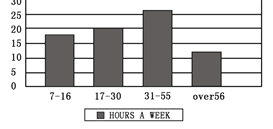
Chinese students spend the most time studying. Nearly half of Chinese students spend more than two hours on their homework every day. That’s much more than students of the US(26.4%), Japan(8.2%) and South Korea(5.2%).

Who sleeps most often in class?

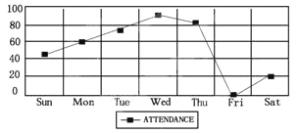
Japanese students fall asleep in class most often. About 45% of them said they sometimes doze off(打瞌睡) in class. In South Korea is 32%, in the US, 21%, and 5% in China.

South Korean students don’t like taking notes. About 70% said they write down what the teacher says in class, much fewer than in Japan(93%), China(90%) and the US (89%).

Who is the most distracted(分心的)?

American students are the most active in class, but also the most distracted: 64.2% said they talk with friends in class, 46.9% said they eat snacks( 点心) in class; and 38.9% said they send e-mails or read unrelated(无关的) books in class.

What do they do after school?

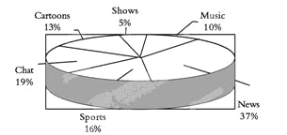
In their free time, most Chinese students study or surf the Internet. Most American students go out with their friends. Most Japanese students do physical exercises. Most South Korean students watch TV.

1.In the report, who studies hardest?

A. Japanese students. B. Chinese students.

C. American students. D. South Korean students.

2.Which of the following is TRUE according to the passage?

A. 93% Japanese students like taking notes in class.

B. Most Chinese students do physical exercises after class.

C. 38.9% American students talk with friends in class.

D. South Korean students fall asleep in class most often.

3.In China, how many students fall asleep in class?

A. 45%. B. 32%. C. 21%. D. 5%.

4.What is the article about?

A. It is a report about the students’ lessons in four countries.

B. It is an article about the students’ study and life in four countries.

C. It is a story about students’ sports after class.

D. It tells us that American students don’t like studying.

阅读下面短文,根据短文内容完成表格中所缺信息,每空一词。

In the USA, there are many kinds of restaurants.

Fast food restaurant are very famous. You can find McDonald’s and Kentucky Fried Chicken in many countries around the world. You look at a menu(菜单) on the counter(柜台), and say what you’d like to eat. You pay the person who brings food to you. You take your food and sit down or take it away. There’s no need to leave a tip(小费).

In a coffee shop, you sit at the counter or at a table. You don’t wait for the waitress to show you where to sit. She usually brings you coffee when you sit down. You tell her what you’d like to eat and she brings it to you. You pay the cashier(收银员) as you leave.

In a family restaurant, the waitress shows you where you can sit. Often the waitress tells you her name, but you don’t need to tell her yours. If you can’t finish eating everything, your waitress gives you a bag to take the rest(剩余的) of food home. You should add (增加) fifteen per cent(百分比) to the bill(账单) as a tip.

In top class restaurants, you had better order before you come, and you need to arrive on time. The waiter shows you where to sit .If you have wine there, he may ask you to taste it. You can only refuse it if it tastes bad. When you get your bill, check it and then add fifteen to twenty per

cent to it as a tip for the waiter.

The 1.in the USA

What you can do

Tips

Fast food restaurants

You can look at the menu and then2.your food.

You can eat your food there or take it away.

You don’t 3. to leave a tip.

In a coffee shop

After you sit at the counter or at a table, the waitress will bring you4.

You pay the cashier as you leave.

In a family restaurant

The waitress shows you your5.

She tells you her name, but you needn’t tell her your 6.

You can take away the rest of food.

If your bill is $100, your tip is $ 7.

In top 8.restaurant

You had better order first, then the waiter will show you where to sit.

You can refuse the wine if it doesn’t taste

9..

If your bill is $200, you can give the waiter a tip from $30 to $10.

 0  131735  131743  131749  131753  131759  131761  131765  131771  131773  131779  131785  131789  131791  131795  131801  131803  131809  131813  131815  131819  131821  131825  131827  131829  131830  131831  131833  131834  131835  131837  131839  131843  131845  131849  131851  131855  131861  131863  131869  131873  131875  131879  131885  131891  131893  131899  131903  131905  131911  131915  131921  131929  159627 

违法和不良信息举报电话:027-86699610 举报邮箱:58377363@163.com

精英家教网