任务型阅读

Jeff Gaye, the young American swimmer, is becoming more and more famous. He has his own teacher, driver and even his own cook.3. Each time people hear him speak on television, they can’t believe he’s only 13. Jeff’s father is an engineer but he is also his son’s manager. He says, “I don’t make Jeff do anything he doesn’t want to do. He chooses which competition to swim in. But he works hard and wins nearly every race. I cut out all the newspaper articles about him and put them in a big box!”

Jeff is very busy every day because people want to write about him or photograph (给……拍照) him for magazines. “When I’m at school,” Jeff says,4 “我就想像我的同学们一样。 That’s really important to me.” But Jeff doesn’t have a normal schoolboy’s life. He often has to travel for international races and has little free time. “I go to the pool every day and swim there for at least six hours. When I’m in the pool, I love every minute.”

1.What does Jeff’s father do?

____________________________________________________________________

2.How long does Jeff swim in the pool every day? 

____________________________________________________________________

3.把第3句译成汉语。

____________________________________________________________________

4.把第4句翻译成英语。

____________________________________________________________________

5.给短文拟一个恰当的英文标题。

_____________________________________________________________________

阅读下面短文,掌握大意,然后从A、B、C、D四个选项中选出最佳选项。

Mr. Smith had a small supermarket in a small town. All the people who lived nearby _____ to go to his supermarket and buy things there. But several years ago, a big chained store ______ in that area and it sold all kinds of things from the toothbrush to TV and, above all, the price was pretty _______. So a lot of small shops _______ except Mr. Smith’s. The manager of the chained store wanted to explore ______ was hidden behind Mr. Smith’s success, so he decided to drop into Mr. Smith’s supermarket and he saw a lady buying things there. He stopped her _______ and asked “Madam, why don’t you go to the big chained store?”

With a smile, the lady told him it was because of a pair of shoes. She told him a story. Three years ago, ______ her divorce (离婚), she worked hard to raise her family and one day when she bought things in a supermarket, Tom, one of her little children, ______ the supermarket and asked her to buy him a new pair of shoes. He cried, “Today I had a basketball match, but all the people ______ me because of the shoes.” She wanted to buy him a pair of shoes but the money in her pocket was ______ enough for a milk. “I am sorry but I ______ when we have money,” the mother said. Seeing that there was no hope, Tom ran away. The woman stood there weeping (哭泣). Later she realized that ______ was patting on her back. ______, she found it was Mr. Smith. He took a pair of shoes that the son wanted to buy.

“Take them,” he said.

“But I don’t have enough money,” the woman shook her head.

“Take them, your son can’t wait. You can pay me later,” Mr. Smith told her.

Now the manager of the chained store knew the ______ for Mr. Smith’s success. He decided that he would follow in Mr. Smith’s footsteps, putting his heart into whatever he did with the hope of attracting more customers. And he did so after the years that followed, which also ________.

1.A. disliked B. liked C. refused D. decided

2.A. disappeared B. reached C. appeared D. entered

3.A. low B. wrong C. unfair D. high

4.A. turned off B. opened up C. showed up D. closed down

5.A. who B. why C. how D. what

6.A. rudely B. politely C. loudly D. proudly

7.A. before B. after C. until D. since

8.A. called in B. dropped by C. rushed into D. passed by

9.A. laughed at B. quarreled with C. believed in D. made friends with

10.A. normally B. mainly C. only D. surely

11.A. doubt B. expect C. imagine D. promise

12.A. anybody B. everybody C. somebody D. nobody

13.A. Looking ahead B. Turning around C. Turning down D. Coming back

14.A. rule B. answer C. meaning D. reason

15.A. made B. accepted C. worked D. suggested

As long as everyone contributes a little, the world 吐 ll become a much better place.

Most people are kind-hearted and want to lend a helping hand. Now let's share some memorable moments.

Linda: Once, when I was on my way back to my hometown, I lost my purse without even knowing it. I was told over the train’s loudspeaker that my purse was at the railway station's lost and found office. But the train had already started. Seeing my helplessness, a kind hostess offered to lend me some money. I went back to the railway station and got my purse. I am still thankful to the railway staff and the person who found my purse.

Scott: When I was a little boy, there was a time when I went to fish with my elder sister. All of a sudden, I slipped into the river. The next thing I remember is my father holding me in the hospital. Today I still don’t know who got me out of that river. I have been trying to help other people whenever I can all these years.
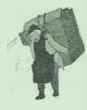
Tina: One of my neighbors is an old man who cannot speak. He makes money by recycling waste. Our other neighbors don't like his behavior. But in my opinion, it's his way to support his family. Once, after cleaning my house, I placed some cardboard boxes in his garden and left my rubbish beside my door. However, when I was about to go out, I found nothing outside my door but a note: "I have thrown away your rubbish. You are a nice girl. Thanks a lot!"

1.According to the passage above, we know that

A. the hostess found Linda's purse

B. Linda knew where she lost her purse

C. Scott still doesn't know who got him out of the river

D. some cardboard boxes were stolen by Tina's neighbor

2.The writer is trying to tell us the value of

A. health

B. kindness

C. money

D. safety

3.The passage above is probably a .

A. report

B. diary

C. novel

D. letter

When our son Bradley was ten, the new bicycle he had received earlier that year was stolen. Owning a bicycle was a big deal to our children when they were little. They spent hours and hours, day after day, on their bicycles, riding up and down the footpath, and at the front of the house. We also rode together as a family a lot. Bicycling was a great way to get the kids out of the house and into the fresh air without spending any money.

Bradley had discovered that his bicycle had been stolen from our backyard in Campbelltown, South Australia, when he and his sister went outside for a morning ride. He couldn't believe that someone would do this.

He got a large piece of cardboard, painted a sign begging for the bicycle to be returned, and tied the sign to the letterbox. The following morning, when I went out to collect the mail, I found a white envelope with the magical words, "Buy yourself a new bicycle", There was a $100 banknote inside.

We were very touched that someone had the heart to do this. We’ve never been able to thank the person but we suspect(猜想)that it may have been one of our wonderful neighbors, Bradley painted a big “____▲______!” on the sign and we left it outside for a couple of weeks afterwards, hoping the kind stranger would drive down our street.

A delighted Bradley was able to buy a new bicycle. As the years went on, the bicycles became bigger and more expensive but remained just as important for those family bicycle rides, Now Bradley is 25. Sometimes I miss the days when receiving a bicycle was the best thing in the world to them.

All these years later we are still thankful for the strangers kindness. We were a young family with three little children and it meant a lot to us. We still talk about it and, even now, wonder who the kind stranger was.

1.According to the passage, Bradley often______ when he was a child.

A. rode a bike B. made signs C. took a walk D. collected mail

2.Which of the following is the best to fill in the blank in Paragraph 4?

A. Come back B. Thank you C. A new bicycle D. A good boy

3.From the action of the stranger, we can learn that______.

A. love builds a warm family B. a special memory lasts long

C. happiness makes a better life D. a kindness helps others a lot

4.The best title for the passage can be_____.

A. A rich stranger B. A thankful mother

C. A bicycle for Bradley D. A banknote for the family

Every 14 days, another language dies. There are many reasons for this. Some people think more common languages have more economic(经济的)power. Because of this, young people choose to learn a common language as they think it is more useful. Another reason is that some languages aren't written down. Guujaaw is a leader of the Haida Nation, whose people have lived on the Queen Charlotte Islands, Canada, for more than 10, 000 years. Their language is endangered. Traditionally, it wasn’t written down, and, as a result, some people are worried that it will die one day. Guujaaw replies to this, "We talk to each other, listen, visit, and believe in the spoken word. Expressing yourself without writing is natural." However, if Guujaaw's language and others like it are going to stay alive, writing may have to become part of their lives.

When a language dies, a lot of knowledge dies with it. To begin with, language is a huge part of the culture of the people who speak it. Language allows speakers to say certain things: words that describe a cultural idea may not translate exactly into another language. Furthermore, many endangered languages have rich spoken cultures, Stories, songs and histories are passed on from older people to younger generations(一代), Elizabeth Lindsey, an expert in languages, emphasizes(强调) this. “When an elder dies, a library is burned,” she says.

Also, language death affects our knowledge about nature. Local people often have a deep understanding of plants, animals, and the relationship between them. David Harrison, a researcher on endangered languages, reflects, “80% of plant and animal species(物种)have been undiscovered by science. But that doesn’t mean they're unknown to humans.”

Many languages are endangered. However, it s not too late. Children often grow up speaking two languages. "No one ..becomes richer by giving up… one language to learn another,” Harrison said. If children feel both languages are important, they will use both. So, it is necessary that children realize how useful their local language is.

1.How many reasons are mentioned for endangered languages in Paragraph 1?

A. 2 B. 3. C. 4 D. 5.

2.In Paragraph 2, the writer mainly tells us_____.

A. how cultures are passed on B. how cultures are discovered

C. why languages are written down D. why languages are important to cultures

3.The underlined word "affects" in the passage means “_______”.

A. waits for B. depends on

C. is different from D. has an influence on

4.Which of the following is the writer's opinion?

A. People need to use common languages more often.

B. The spoken word is more important than the written word.

C. Children are the hope to stop the local language from dying.

D. Many animals and plants are in danger because of dying languages.

下面文章中有五处需要添加小标题。请从以下选项(A、B、C、D、E和F)中选出符合各段意思的小标题。选项中有一项是多余项。

A. Places to Stay B. Places to Visit C. Weather

D. Shopping E. History F. Restaurants

Savannah City Guide

1.

If you want to spend the night in Savannah, you have lots of place to choose from. You can stay at a big hotel a small inn, or a comfortable motel. Savannah's hotels, motels and inns are famous for their friendly service. Call one of these places to make your reservation.

2.

Savannah is well known for its wonderful restaurants Many restaurant serve local, seafood or old-fashioned Southern food. The following are sonic of the best restaurants in the area.

3.

If you like to shop, Savannah is the place for you! You'll find all kind of stores in Savannah. You can go shopping in small stores or big shopping malls. Are you looking for a special treasure or a great deal? You'll find it in Savannah.

4.

There are so many things to do and see in Savannah. The sightseeing is great. You can visit beautiful historic homes and museums. You can take a boat tour or visit Civil War forts. With all of Savannah's history, art, and beautiful buildings, be sure to take the time to enjoy all that Savannah has to offer!

5.

Savannah has lots of sunshine throughout the year. Summer are hot and humid. Winters are generally mild. Temperatures usually range between 30 degrees Fahrenheit (-1 degree Centigrade) and 90 degrees Fahrenheit (33 degrees Centigrade).

Savannah City Guide

6.

If you want to spend the night in Savannah, you have lots of place to choose from. You can stay at a big hotel a small inn, or a comfortable motel. Savannah's hotels, motels and inns are famous for their friendly service. Call one of these places to make your reservation.

7.

Savannah is well known for its wonderful restaurants Many restaurant serve local, seafood or old-fashioned Southern food. The following are sonic of the best restaurants in the area.

8.

If you like to shop, Savannah is the place for you! You'll find all kind of stores in Savannah. You can go shopping in small stores or big shopping malls. Are you looking for a special treasure or a great deal? You'll find it in Savannah.

9.

There are so many things to do and see in Savannah. The sightseeing is great. You can visit beautiful historic homes and museums. You can take a boat tour or visit Civil War forts. With all of Savannah's history, art, and beautiful buildings, be sure to take the time to enjoy all that Savannah has to offer!

10.

Savannah has lots of sunshine throughout the year. Summer are hot and humid. Winters are generally mild. Temperatures usually range between 30 degrees Fahrenheit (-1 degree Centigrade) and 90 degrees Fahrenheit (33 degrees Centigrade).

 0  131545  131553  131559  131563  131569  131571  131575  131581  131583  131589  131595  131599  131601  131605  131611  131613  131619  131623  131625  131629  131631  131635  131637  131639  131640  131641  131643  131644  131645  131647  131649  131653  131655  131659  131661  131665  131671  131673  131679  131683  131685  131689  131695  131701  131703  131709  131713  131715  131721  131725  131731  131739  159627 

违法和不良信息举报电话:027-86699610 举报邮箱:58377363@163.com

精英家教网