
After that, we went on down the river. It was very dark that night and it wasn’t easy to see where we were going. Suddenly, a big steamboat came at us very fast, and the next minute it was right over us. Jim and I jumped off the raft (木筏) into the water. The boat hit the raft and went on up the river.

When I came up out of the water, I couldn’t see Jim anywhere. I called out his name again and again, but there was no answer. “He’s dead!” I thought. Slowly, I swam to the side of the river and got out. I saw that I was near a big old wooden house. Suddenly a lot of very angry dogs jumped out at me. They made a terrible noise and someone called from the house, “Who’s there?”

“George Jackson,” I answered quickly. “I’ve fallen off a river boat.”

Well, the people who lived in that house were very kind, and they took me in and gave me some new clothes and a good meal. I told them that my family were all dead, so they said I could stay with them as long as I wanted. It was a beautiful house and the food was good there, so I stayed.

A few days later one of the slaves in the house came to me and said, “Come with me!” Together, we went down to some trees by the river. “In there!” he said and went away.

On the ground, I found a man, asleep. It was Jim! I was really pleased to see him. When the steamboat hit the raft, Jim told me, the raft didn’t break up. Jim swam after it and caught it. Then he began to look for me.

We decided to leave at once. It’s all right living in a house for a little while, but you feel more free and easy and comfortable on a raft.

1.What happened LAST in the story?

A. George saw a big house. B. George got some new clothes.

C. George found Jim on the ground. D. George jumped off the raft into the water.

2.Why did George Jackson answer “quickly” when someone called from the house?

A. George felt afraid and nervous. B. George felt happy and lucky.

C. George really wanted to stay there. D. George didn’t want to lie to him.

3.Which of these old sayings best fits this story?

A. It never rains but it pours. B. Every dog has its day.

C. Burn the candle at both ends. D. Many hands make light work.

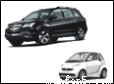
In Europe, small cars have always been more popular than large cars. In the United States, large cars and midsize cars are more popular than smaller cars. As a result, European automakers used to make different kinds of small cars while American automakers used to build bigger, heavier cars. However, these days, automakers in both America and Europe produce cars of different sizes. This is because most automakers sell their cars all over the world.

The price of gasoline (汽油) is one reason for differences in car choices. Since gasoline is more expensive in Europe, many Europeans want smaller, lighter cars that will travel a long way on a gallon (加仑) of gasoline.

Other reasons also enter into the big or little car decision. Many European cities have narrow, winding (弯曲的) streets. In these cities a small car is easier to control than a large one.

For a long time, few Americans bought small cars. Instead they chose large cars, because these roomy cars were more comfortable for large families and long trips. Some people also liked the powerful engines (发动机) that large cars had. Since gasoline was cheap, drivers did not mind that the large cars used a lot of gasoline.

But in the 1970s, there were gasoline shortages in the United States. The price of gasoline went up. Though large cars were still more popular than smaller cars, sales of small cars increased. Some people also bought small cars because these cars caused less air pollution than larger cars.

Today, Americans’ car choices are still changing. Though Americans are still buying many small cars, the fastest growing sales are for certain kinds of large cars. These types of cars are called minivans and sport utility vehicles (SUV). They are very popular today. But of course, that could change tomorrow.

1.Which of the following does the article lead you to believe?

A. Sport utility vehicles are small cars.

B. Minivans are becoming less popular.

C. European car companies sell many cars in America.

D. Cars with powerful engines caused less air pollution.

2.What does the word “roomy” in Paragraph 4 mean?

A. having much space B. having little space

C. having a large room D. having a small room

3.What can we infer (推断) from the article?

A. Small cars are better than large cars.

B. The price of gasoline is always rising.

C. Large cars will always be popular in the United States.

D. People like to have different kinds of cars to choose from.

Do you know of anyone who uses the truth to deceive(欺骗)? When someone tells you something that is true, but leaves out important information that should be included, he can give you a false picture.

For example, someone might say, “I just won a hundred dollars on the lottery(彩票). It was great. I took that dollar ticket back to the store and turned it in for one hundred dollars!”

This guy is a winner, right? Maybe, maybe not. We then discover that he bought $ 200 worth of tickets, and only one was a winner. He’s really a big loser!

He didn’t say anything that was false, but he left out important information on purpose. That’s called a half-truth. Half truths are not technically lies, but they are just as dishonest.

Some officers often use this trick. Let’s say that during Governor Smith’s last term, her state lost one million jobs and gained three million jobs. Then she tries another term. One of the persons who don’t support her says, “During Governor Smith’s term, the state lost one million jobs!” That’s true. However, an honest statement would have been, “During Governor Smith’s term, the state had a net gain of two million jobs.’’

Advertisers will sometimes use half—truths. It’s against the law to make false statements so they try to mislead you with the truth. An advertisement might say, “Nine out of ten doctors advised their patients to take Yucky Pills to cure toothache. ”It fails to mention that they only asked ten doctors and nine of them work for the Yucky Company.

This kind of thing happens too often. It’s a sad fact of life: Lies are lies, and sometimes the truth can lie as well.

1.We may infer that the author believes people should ________.

A. buy lottery tickets if possible

B. make use of half—truths

C. be careful about what they are told

D. not trust the Yucky Company

2.How many examples does the writer give to show how the truth is used to deceive?

A. One B. Two C. Three D. Four

3.Which of the following is true according to the passage?

A. Using half truths is against the law.

B. Technically, half truths are in fact lies.

C. Yucky Pills is a very good medicine for toothache.

D. Governor Smith did a good job during her last term.

4.Which of the following best expresses the main idea of the passage?

A. He’s really a big loser!

B. Sometimes the truth can lie.

C. Advertisers will sometimes use half truths.

D. It’s against the law to make false statements.

Two days ago, I had taken a test in Biology, and I knew that I would get my scores in the same class today.

After the bell rang, every students sat in his or her seat impatiently. Then, one by one, the teacher called our names.

As each paper was given back to the correct student, the front of the answer paper would always be turned to face the ground and the paper itself would be slightly folded (折叠) to prevent anyone from seeing.

In fact, folding each test paper is a way to make sure that each student sees only his or her own scores. The scores are seen as private information not to be announced or shown to others. As a way to keep the students' score records secret, each student is given an online account (帐号) with which to check his or her grades posted on the official school website.

Protecting students' private information always comes first in US schools that want to free students from unnecessary pressure. Academic (学业上的) reports are guarded closely to prevent poor academic grades from damaging a student's dignity and reputation (有损学生的尊严和声誉), which are for himself or herself only.

However, some insist that although students' feelings and self-dignity are easily hurt, they cannot be forever protected. They say that school also teach their students to make themselves stronger in mind, and the classroom should show the reality of competition in society. Scores that everyone can see might better encourage students to work harder to be better than others.

Protecting of students' privacy (隐私) in US schools

The writer's 1.

※After the bell rang, it’s 2. of students to sit and wait for their

scores for a test in Biology.

※The teacher called students' names and handed out the papers.

※He received test papers facing down and folded several times.

Other way taken

※Each student is even 3. with an online account with

which to check his or her grades on the official school website.

Reasons behind

※Schools want to free students from unnecessary pressure.

※Schools are trying to prevent poor academic from damaging a student's

4. dignity and reputation among his or her classmates.

Different ideas

※Some think students are overprotected.

※Schools should teach their students to be stronger in mind and try to

make greater 5. than others.

※The classroom should show the reality of competition in society.

 0  124589  124597  124603  124607  124613  124615  124619  124625  124627  124633  124639  124643  124645  124649  124655  124657  124663  124667  124669  124673  124675  124679  124681  124683  124684  124685  124687  124688  124689  124691  124693  124697  124699  124703  124705  124709  124715  124717  124723  124727  124729  124733  124739  124745  124747  124753  124757  124759  124765  124769  124775  124783  159627 

违法和不良信息举报电话:027-86699610 举报邮箱:58377363@163.com

精英家教网