Do you think that living a hungry life is last century’s story? Well, it may be this century’s headline.

The world has growing about a global food shortage. Right now, there are still 870 million hungry people in the world, according to a survey of the UN’s Food and Agriculture Organization. Children can’t this, either. Around fifteen million children die of hungry each year.

What’s causing food shortages? There are several .

There are now more droughts and floods. This is very to farmers and their ability to grow food.

Besides, with the growing , feeding everyone becomes more difficult. There are a little more than seven billion people in the world. By 2050, the world population will be more than nine billion.

Another reason is food waste. The average person throws away 50kg of food every year.

How can we help with food shortages? The easiest way is to on food waste.

Next time before throwing away the food on your plate, just think work has been done to make it. By buying less, we waste less. This takes the pressure off producing so much food. And it helps to solve the problem of food shortage.

You can also ask your schoolmates to join you.

In the early 2016, staff workers from the canteens of Xiamen No.1 High School put up short anti-waste slogans (标语) in dining rooms “Think Before You Waste”. Guess what happened? Students wasted fifteen percent food after that!

Let’s take action! We don’t need a huge activity to make a difference.

1.A. numbers B. thoughts C. worries

2.A. escape B. refuse C. have

3.A. results B. reasons C. clues

4.A. difficult B. harmful C. close

5.A. people B. population C. popularity

6.A. cut down B. cut off C. cut into

7.A. how many B. how much C. how

8.A. less B. fewer C. more

There was once a shepherd boy (牧童). He was famous for his wise answer to every question he was asked. The people in the country all knew his name.

On a sunny afternoon, when the king was talking with his people, he heard of the boy. He didn’t believe it, so he sent for the boy.

As the boy came, the king said to him, “I’ll ask you some questions. If you can answer them, you can live in this large palace with me.”

The boy asked, “What are the questions?”

The king said, “The first is: how many drops of water are there in the ocean?” The boy answered, “That’s easy. If you can have all the rivers on the earth dammed up (筑坝) until I have counted it, I’ll tell you how many drops there are in the ocean.” After hearing what the boy said, the king was satisfied.

Then the king continued, “The next question is: how many stars are there in the sky?” They boy said, “Give me a piece of white paper, please.” Then he made so many small points on it with a pen that it was impossible to count them. Then he said, “There are as many stars in the sky as there are points on the paper.”

The king was happy and said, “You’ve answered my questions wisely. Now move into my palace and live with me.”

1.The story happened on a .

A. sunny morning B. sunny afternoon C. windy afternoon

2.The king asked question(s).

A. one B. two C. three

3.The boy asked for to answer the last question.

4.We can learn that the boy was according to the story.

A. hard-working B. friendly C. clever

5. We can learn from the story that .

A. the boy gave the king the exact number to answer question one

B. the king was pleased with the boy’s answers

C. the boy made the king angry

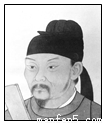
Shakespeare is to literature in English, so is the poet Du Fu to the Chinese literary tradition. Du Fu, known as the Sage of Poetry, lived and wrote in the eighth century, and his work is still available to modern Chinese readers. Du Fu, in fact, is still widely quoted (引用) in China today, and he has had a great influence on Chinese poetry in the past 1,200 years. However, the poet’s complete works weren’t unavailable in English translation in the past.

Conant University Professor Stephen Owen, who spent eight years on The Poetry of Du Fu, a 3,000-page translation published by De Gruyter, has completed the first English translation of the complete works of Du Fu.

Because Du Fu, like Shakespeare, is known for great width — in subject, in the way he uses language to pass on different registers (不同场合用的语言和文体) (see “Out with the Sake, In With the Wine”) and layered (多层次的) meanings — he is one of the most challenging poets to translate. Chinese poetry, a literary tradition in which tenses are absent, pronouns rare, and the use of the singular and plural forms are hard to understand, is well known for seeming ambiguous (模糊不清的) at times. Within that tradition, the interpretation of Du Fu’s work is especially contested. Owen’s critical edition, in which his translations face the original texts, brings a scholarly aid for the first time to English-speaking readers ready to engage with China’s literary lion.

1.“Shakespeare is to literature in English, so is the poet Du Fu to the Chinese literary

tradition.” means “ ”.

A. Du Fu has the same important literary status as Shakespeare in their own countries

B. Du Fu is not as well-known as Shakespeare in China

C. Du Fu is much more famous than Shakespeare in England

2.The Poetry of Du Fu is translated into English by .

A. Shakespeare B. Du Fu C. Stephen Owen

3.The underlined sentence is closer to the original Chinese version “ ”.

A. 零落栖迟一杯酒,主人奉觞客长寿

B. 莫思身外无穷事,且尽生前有限杯

C. 花间一壶酒,独酌无相亲

4.Chinese poems are hard to translate because of the following factors EXCEPT .

A. the use of singular and plural forms

B. too many characters

C. tenses and pronouns

5.According to the passage, the following statement “ ” is TRUE.

A. The Poetry of Du Fu is the first English translation of the complete works of Du Fu.

B. There was no English translation of Du’s works in the past.

C. Du’s works are out of style in China today.

If you ever go to the US and eat at a restaurant, there’s a very important difference you should know about. US people have a custom to give money to waiters and waitresses as a tip for their work.

But why is this? Shouldn’t waiters get paid enough by their bosses? Well, many waiters and waitresses get paid below the US minimum wage (最低工资) and work for tips to make up for that. According to the American travel website TripAdvisor, some states pay their servers (服务员) only $2.13 (about 14 yuan) per hour.

While no one makes you tip, if you are at a sit-down restaurant, it is usually expected that you tip your waiter 15 to 20 percent of what your bill is.

It’s not just for waiters either. Hotel maids, hairdressers and taxi drivers also usually work for tips. But it is much more expected to tip waiters.

The US hasn’t always had this tipping culture. In fact, people were mostly against it until the Prohibition Era (禁酒令时代) in the 1920s. The government said no one could sell alcohol (酒). Then, restaurants had trouble making enough money. So they started to ask people to tip their waiters.

This tipping culture has lasted through the years, but most people don’t like it. Some think restaurant bosses use it as an excuse to not pay their workers well. There isn’t much action being taken to make a change yet. So for now, be sure to tip your waiter when in the US.

1.If a server works eight hours a day, he can get from his boss.

A. $2.13 B. $17.04 C. ¥14

2.Besides waiters and waitresses, also works for tips in the US.

A. customers B. taxi drivers C. restaurant bosses

3.When the restaurants couldn’t sell alcohol, .

A. they were bankrupt (破产的) and closed down

B. the bosses still made much money

C. they started to ask people to tip

4.We can learn from the passage that .

A. the waiters and waitresses aren’t well paid in the US

B. the custom of giving tips only appears in the US

C. all Americans are glad to tip their waiters

5.About American’s tipping culture, foreign visitors think .

A. they need to fight for their own rights

B. they should “do as the Romans do”

C. they can leave it alone

① Some days, don’t you think, “Wouldn’t it be nice if the laundry would just do itself?” Self-cleaning clothes may sound crazy. But Australian researchers have found a way to make something like this possible!

② A team at RMIT University in Melbourne, Australia, found a way to put special nanostructuresinto clothing, which can then clean the clothes. When sunlight hits the nanostructures, they break down the dirt and stains (污渍) that don’t belong on your clothes.

③ The nanostructures don’t break down the actual clothing because cotton and the other clothing materials are too strong to be broken down. According to CNN, the researchers cover the clothing in a solution made of silver and copper (铜) nanostructures. All it takes is 40 minutes of sunlight and your clothes will look as good as new.

④ So if you spill on yourself during lunch, you can step outside for a walk, and it will be clean by the time you go inside. It not only makes your life easier, but it can also be good for the environment.

⑤ According to the US Department of Energy, the average load of laundry uses about 25 gallons (about 94 liters) of water. Water is a very important resource, so using less of it to wash clothes is better for the environment. But one of the scientists at RMIT University knows more needs to be done.

⑥ “There’s more work to do before we can start throwing out our washing machines,” said Dr Rajesh Ramanathan, “but this is a strong foundation (基础).”

⑦ So what’s the next step? Ramanathan wants to either start selling the solution by itself or convincing clothing makers to treat the clothing with the solution while clothes are being made.

1.According to the first three paragraphs, _____.

A. the nanostructures can break down dirt and stains on clothes

B. people can use the self-cleaning clothes on rainy days

C. the self-cleaning clothes easily wear out

2.The underlined word “solution” in Paragraph 3 means “ ” in Chinese.

A. 方案 B. 溶液 C. 水盆

3.Paragraphs ④ - ⑤ talk about .

A. what advantages the self-cleaning clothes have

B. what helps the self-cleaning clothes work

C. how the self-cleaning clothes work

4.From the passage, we learn that .

A. it’s time to throw out our washing machines

B. clothing makers like the solution

C. the solution is not on sale yet

5.The best title of this passage is .

A. Difficulties in clothes cleaning

B. Cleaning clothes gets easier

C. Steps to clean your clothes

 0  112967  112975  112981  112985  112991  112993  112997  113003  113005  113011  113017  113021  113023  113027  113033  113035  113041  113045  113047  113051  113053  113057  113059  113061  113062  113063  113065  113066  113067  113069  113071  113075  113077  113081  113083  113087  113093  113095  113101  113105  113107  113111  113117  113123  113125  113131  113135  113137  113143  113147  113153  113161  159627 

违法和不良信息举报电话:027-86699610 举报邮箱:58377363@163.com

精英家教网