题目内容
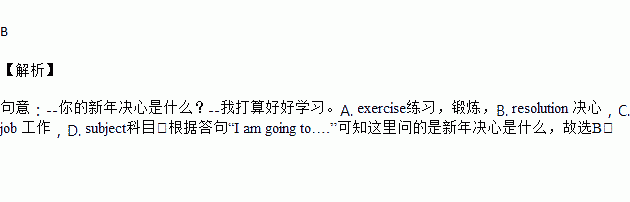
--What is your New Year’s _____ ?
--I’m going to study a lot.
A. exercise B. resolution C. job D. subject
(题文)---______ the heavy rain, we didn’t go camping last Sunday.
---What a pity!
A. Thanks to B. Because of C. Instead of D. As for
Football is so exciting that _____ people in the world play it
A. million of B. millions of
C. two million of D. two millions
— Do you have _______ car, Mr Green?
—Yes, I do.
A. own B. your own C. own your D. yours own
—What’s on the wall?
—There are_______ pictures on the wall.
A. lot of B. a lot C. much D. many
(题文)I’m going to travel _____.
A. a place interesting B. a interesting place
C. somewhere interesting D. interesting somewhere
Different countries have different customs in giving presents.
IN CHINA you must never give a clock to a Chinese person, because the sound of the word for “clock” is similar to the sound for “death” in Chinese. Also, don't wrap(包裹) a present in white, black, or blue paper, because these are the colours for funerals(葬礼). Don't give a knife, because something sharp(锋的) can cut a friendship.
IN RUSSIA if we give flowers as a present, we have to give odd numbers of them (one, three, five, etc.) because even numbers of flowers (two, four, six, etc.) are for funerals.
IN GERMANY flowers are a good present to take to your dinner hostess, but don't take her red roses because it means you are in love with her. Don't take thirteen of anything because it's an unlucky number. Don't take an even number of anything, either. Don't wrap your present in white, brown, or black paper.
1.Why can't we give a clock as a present to a Chinese? Because in Chinese ________.
A. the word “clock” has the same meaning with the word “death”
B. the word “clock” has the same sound with the word “death”
C. the word “clock” has the same meaning with the word “knife”
D. the word “clock” means “dangerous”
2.You may take ________ if you go to a birthday party in Russia or in Germany.
A. 10 flowers B. 13 flowers
C. 9 flowers D. 11 red roses
3.________ thirteen is an unlucky number.
A. In China B. In Russia
C. In Japan D. In Germany
4.What's the Chinese meanings for “odd number” and “even number”?
A. 自然数和偶数
B. 基本数和奇数
C. 奇数和偶数
D. 幸运数字和不幸运数字
5.Which of the following is TRUE?
A. Neither Chinese nor Germans wrap presents in black or white paper.
B. Both Chinese and Russians wrap presents in black or white paper.
C. Both Chinese and Germans wrap presents in black or white paper.
D. Neither Chinese nor Russians wrap presents in black or yellow paper.
They celebrate the festival by _____ a big meal with their family.
A. have B. has C. having D. to have
I don't _______ the heat, for I'm used to hot weather.
A. like B. mind C. know D. stand