题目内容
It ________ there often.
[ ]
A
B
C
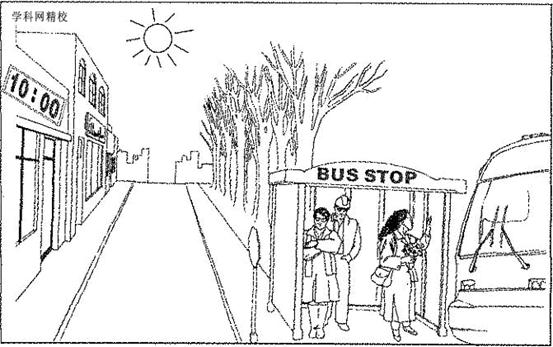
看图填空,一空一词(含缩写词)。【小题1】What time is it now? It' s o' clock in the .【小题2】How' s the weather? a day.【小题3】Where are these people? They are at a 【小题4】Is the place in this picture a busy and crowded one?No, it __, because only persons are there.【小题5】What do you think they are doing?I think they are a bus.
根据短文内容及首字母提示, 补全空格内单词,请写出完整单词。Amanda is an American filmmaker and actress. She came to China three years ago to study Performance at Beijing Film Academy. Last month, she m 【小题1】 to Japan to study Economics at the University of Tokyo. On June 10th, she r 【小题2】 to the USA. She chatted with her parents about the cultural d 【小题3】 between the two countries.“The people in b 【小题4】 countries are very friendly to f 【小题5】. But they have different cultures. For example, when I spoke Chinese in China, the people there always showed s 【小题6】 on their faces. But when I came to Japan, I found it was o 【小题7】 . Most local people there hoped I could talk with them in Japanese, t 【小题8】 I was not good at it,” she said.Amanda thought this might have something to d 【小题9】 with the fact that the western group in Japan is o 【小题10】 than the one in China. They have stayed in Japan for a long time. And most of them speak Japanese well. But Westerners in China are still quite a new group. They’re usually treated as guests and tourists.
看图填空,一空一词(含缩写词)。
1.What time is it now?
It' s o' clock in the .
2.How' s the weather?
a day.
3.Where are these people?
They are at a
4.Is the place in this picture a busy and crowded one?
No, it __, because only persons are there.
5.What do you think they are doing?
I think they are a bus.
1根据短文内容及首字母提示, 补全空格内单词,请写出完整单词。
Amanda is an American filmmaker and actress. She came to China three years ago to study Performance at Beijing Film Academy. Last month, she m 1. to Japan to study Economics at the University of Tokyo. On June 10th, she r 2. to the USA. She chatted with her parents about the cultural d 3. between the two countries.
“The people in b 4. countries are very friendly to f 5. . But they have different cultures. For example, when I spoke Chinese in China, the people there always showed s 6. on their faces. But when I came to Japan, I found it was o 7. . Most local people there hoped I could talk with them in Japanese, t 8. I was not good at it,” she said.
Amanda thought this might have something to d 9. with the fact that the western group in Japan is o 10. than the one in China. They have stayed in Japan for a long time. And most of them speak Japanese well. But Westerners in China are still quite a new group. They’re usually treated as guests and tourists.

 同步练习强化拓展系列答案同步练习强化拓展系列答案