题目内容

A few years ago, when people had problems, they usually went to their families or friends to get advice. Today it is possible to get advice from radio shows, TV programmes and telephone hot lines.

A hot line is a telephone line. It offers a way of getting in touch with(联系、接触) advisers. Most hot lines are completely anonymous. That is to say, callers do not have to say their names or telephone numbers. Most hot lines are free. Callers do not have to pay for the advice or the phone calls. At some hot lines, the advisers are volunteers. Other hot lines pay their advisers for their work. Usually the advisers are full-time-job people with years of education(教育) and experience, but sometimes, the advisers have only taken a short class before starting to work on the hot line. All the advisers listen to people and help them solve their problems.

1.How did people get advice when they had problems a few years ago?

A. They listened to the radio.

B. They went to their families or friends.

C. They watched TV programmes.

D. They made telephone calls.

2. What is a telephone hot line?

A. A hot telephone.

B. A phone call to the listeners.

C. A telephone line for people to get advice.

D. A class on the phone.

3. What does the underlined word“anonymous”mean in Chinese in the passage?

A. 匿名的 B. 虔诚的 C. 开放的 D. 免费的

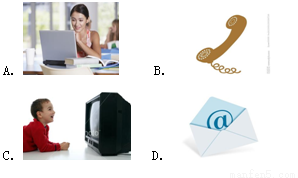
4.How does a caller get in touch with the adviser working on the hot line?
练习册系列答案
相关题目

根据短文内容, 完成下列句子

John: I’m 15 years old and I love football. I also like reading, especially(尤其是) stories about people from other countries. I don’t enjoy singing or playing computers. I think that rock music is terrible.

Ann: Hi, I’m Ann. I’m 16 and I like dancing and computers. I also like rock music. I hate hiking and I’m not interested in classical music. I don’t enjoy reading too much.

Steve: I’m 14 years old and I love skiing. Other favorite hobbies are reading and singing. I don’t like hiking. I think that rock music is too noisy and I think that football is boring.

Peter: I’m from Australia. I’m 15 and I am fond of singing. I sing a lot, and when I’m not singing, I listen to rock music or use my computer. I don’t like football and I think that classical music is terrible. I hate dancing!

Sarah:My name is Sarah and I’m 14 years old. My interests are reading novels, playing football and singing songs. I think that rock music is terrible, and I don’t like dancing. I don’t enjoy computers, either.

Joe:Hi, I’m Joe. I really like computers. I surf the Internet all the time and I like playing computer games. I don’t enjoy football and I hate hiking. Rock music is OK, and so is skiing.

1.Steve is a ___________ boy, Ann is a ___________ girl, but we don’t know Joe’s age.

2.___________, ___________ and ___________ don’t like hiking.

3.John and Sarah could be friends, because they both like ___________.

4.Ann and Sarah could not be friends, because they ___________.

5.Who do you want to be friends with?

___________, because ________________.

What Is Self-tracking All about

Perhaps you’ve tracked(观测) how many kilometers you’ve run, how many hours you’ve slept or how much you’ve eaten in a day.

If so, you’ve taken part in a popular movement called the “Quantified Self Movement” or “Self-tracking”. Maybe you’ve wanted to change a bad habit but couldn’t. Self-tracking may be your answer. The idea is to collect information about your everyday activities and analyze(分析) them to help improve and form a healthier lifestyle.

Recently, tools such as smartphones, apps, along with newly published wearable things, are making self-tracking easy. Today, one can use Fitbit, the Jawbone Up, Google Glass or a smart watch to record personal data(数据) including sleeping hours, stress levels, heart rate and mood.

So why does a person self-track? Someone may be trying to lose weight or improve their sleep. Another person feels tired after eating. Self-tracking could help him to know what foods make him sleepy and watch his diet.

Tracking daily activities isn’t a new concept. In years past, athletes and their coaches kept notes food, training and sleep in order to achieve an athletic goal. Similarly, doctors have also helped patients to record parts of their lifestyles and eating habits to help fight health problems. However, it wasn’t until 2007 that magazine writers Gary Wolf and Kim Kelly created the term (术语) “Quantified Self” or “self-tracking”.

Although self-tracking has many advantages, Dennis Nash, president of Data Speaks Health Solutions, says self-tracking has its disadvantages. Once people start tracking their daily activities, it can become an extra task people like to do often. Also, they might begin to worry too much about their health.

Though self-tracking doesn’t make sure that one’s quality of life will improve, it can encourage people to make healthier choices.

1.People choose self-tracking because _______.

A. it watches your eating habits

B. it increases your movement

C. it records how many kilometers you run every day

D. it collects personal data and leads to self- improvement

2.The writer mentions tools such as smartphones and apps in Paragraph 3 to show _______.

A. we depend too much on them

B. it is easier to do self-tracking

C. they do harm to people’s health

D. tools are necessary to do self-tracking

3.Self-tracking was firstly come up with by _______.

A. two magazine writers

B. athletes and their coaches

C. doctors and their patients

D. scientists of Data Speaks Health Solutions

4.You can find this article in the part of _______.

A. Education B. Sports C. Health D. News

违法和不良信息举报电话:027-86699610 举报邮箱:58377363@163.com

精英家教网