题目内容

书面表达(共1小题,满分20分)

你班新转入一位来自澳大利亚的同学,名叫Sophia。请根据表格提供的信息,写一篇短文,介绍Sophia及班级的情况,并对Sophia的到来表示欢迎。

About Sophia

About the class

from Sydney, 15 years old

hard-working

outgoing, happy

helpful, get along well

good at swimming

groupwork

注意:(1)短文内容可适当增加;

(2)文中不得出现真实的人名和校名;

(3)词数:80-100;

(4)短文首句仅供选择使用,不计入总词数。

短文首句:Hello, class, May I have your attention, please?

_________________ ____________________________________

_________________ ____________________________________

_________________ ____________________________________

练习册系列答案
相关题目

Here are two letters to George and his answers.

Dear George,

I’m fourteen and I’m much shorter for my age. What’s worse, I’m very fat. I want to lose

weight to be 55 kg and to be taller and then I can go to the school basketball team and enjoy

myself. Can you help me?

Bob

Dear Bob,

Don’t worry if you’re shorter than your friends. Teenagers(青少年)grow at different times.

It doesn’t matter how heavy you are. You are still the same person. Plan your meals with your

mum, and she can help you lose weight. Also, try to take more exercise.

George

Dear George,

I’m learning French but I don’t get good marks. I don’t know why. Sometimes I want to give

up. But I know I shouldn’t because languages are going to be very important. What should I do?

Alice

Dear Alice,

You are right. You should never give up, and I’m sure that you’ve made more progress than

you think. You can talk to your teacher and ask her what you should do to get a better grade. Talk to your friends who are good at French. Find something that helps you.

George

1. According to the letters, we know that George is ______.

A. a teacher

B. a doctor

C. a person who can give others advice

D. Bob and Alice’s friend

2.The weight of Bob is ______ now.

A. about 50 kg B. 55 kg

C. more than 55 kg D. less than 55 kg

3.Alice is worrying about ______.

A. her friends B. her marks

C. her height D. her weight

4.Bob should ______ according to George’s letter.

A. take more exercise B. talk to his friends

C. join a basketball team D. learn some French

5.George advises Alice to talk to ______ for help.

A. her mother B. her teacher

C. Bob’s teacher D. Bob’s friends
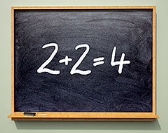
All the time you spent memorizing multiplication tables(乘法表)may have made you a better mathematician, according to a new study. A team of scientists from Stanford University, in California, have shown how the brain reorganizes itself as kids learn math.

After a certain amount of time spent practicing math, kids can put away the calculator(计算器). They don’t even need to count on their fingers. They simply know the answers to subtraction(?), addition (+), and multiplication (×) facts. The quicker kids can recall basic math facts, the easier it is for them to solve more difficult math problems.

The Stanford University researchers observed(观察)the brain activity of 28 students, ages 7 to 9, for the study. They took scans of the students’ brains as the students solved math calculations without the help of a calculator, pen or paper. A calculation—three plus four equals seven, for example—flashed on a screen. The students pushed a button to say if the answer was right or wrong. The scientists also recorded the response speed, and what parts of the brain became active as the kids pushed the button.

These observations showed a process called fact retrieval. Rather than using their fingers to count, or scrawling out equations(列算式)on a piece of paper, the students pulled the answers from memory. It’s as if the answers to basic subtraction, addition, and multiplication problems are kept in a long-term storage part in the brain. The storage part was built from repetition. “Experience really does matter,” said Dr. Kathy Mann Koepeke of the National Institutes of Health.

Children make the changefrom counting to fact retrieval when they are 8 to 9 years old, the study says. This is the time when most students are learning basic addition and subtraction. When kids have basic math facts memorized, the brain has more free space to learn more difficult math.

This process has benefits for the future. The study showed, as kids got older, their answers relied more on memory and became quicker and more correct. Less brain activity was involved in counting. Some children make this change quicker than others.

Scientists hope to use this research to develop new strategies(策略)to help kids learn math at all levels. One strategy the study suggests is for students to test themselves in different orders—solving five times three before five times two, for example. Mixing up the order keeps the brain active. Keep these trainings up, and you may be a math whiz in no time.

1. In the study, kids put away calculators because they can ______.

A. use calculators well

B. scrawl out equations

C. recalling basic math facts

D. count on their fingers

2.The process of “fact retrieval”in Paragraph 4probably means ______.

A. picking out results by working together with their partners

B. finding out answers based on practicing carefully and patiently

C. trying out ways of dealing with problems by attending training

D. working out problems according to what they have remembered

3.What can we know from the study?

A. Kids need to practice using calculators to keep their brains active.

B. Math learners should change to counting practice at the age of 8 to 9.

C. Training by mixing up the order of multiplication tables can help learn math better.

D. Less brain activity may be involved in solving difficult problems when kids get older.

4.What is the best title of the passage?

A. Math from Memory B. Strategy Development

C. Brain Reorganization D. Training by Repetition

违法和不良信息举报电话:027-86699610 举报邮箱:58377363@163.com

精英家教网