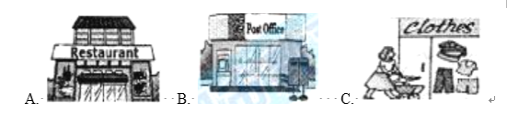
题目内容

请听下面一段独白。根据所听到的内容,写出可以填入下表1—5空格处的适当单词,每空限填一词。(独白读两遍)

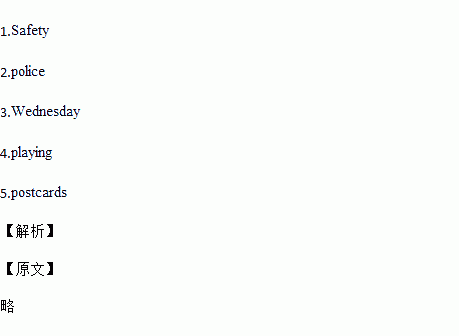
1.________

2.________

3.________

4.________

5.________
练习册系列答案
相关题目

Could the students from less developed areas in central and western China get the same educational chances as those in big cities in the east? Could the children in poor rural (农村) areas develop as well as those in rich cities? Maybe the answers were “No” in the past. But now, China is trying to change the situation.

In order to help rural students grow taller and stronger, China’s Nutrition (营养) Improvement Program started in 2011. According to the program, a lot more money was spent improving students’ meals. More than 36 million students from 134,000 primary and junior high schools in poor rural areas have benefited from the program. They are provided with healthy food like eggs and milk from Monday to Friday at school. And the result of a survey shows that the students in those areas are much taller and stronger than before.

It is true that there were differences between less developed areas and developed areas in education before. Recently, The Guideline for Popularizing High School Education (2017-2020) has come out. According to the guideline, above 90% students from all over the country will go to high schools by 2020. What’s more, the schools in central and western areas will get more support to improve their education.

Students from rural and poor areas also get more chances to receive higher education. A special college program makes it possible for more students from those areas to go to key (重点的) colleges and universities. The number will be increased by 10% in 2017.

With the guideline and the programs, we can expect a fairer and more balanced (均衡的) education in the future.

1.The number of 134,000 in Paragraph 2 is the number of _______ in poor rural areas.

A.the key schools B.the poor students

C.the key colleges and universities D.the primary and junior high schools

2.The underlined word “benefited” in Paragraph 2 means _______ in Chinese.

A.逃离 B.获益 C.受害 D.赚钱

3.If we put the passage into three parts, which of the following is the best?

(?=Para.(自然段) 1 ?=Para. 2 ?=Para. 3 ?=Para. 4 ?=Para. 5)

A.??;??;? B.?;??;?? C.?;???;? D.??;?;??

4.After reading the passage, we can infer(推断) that ________.

A.Liu Xi, a student from Chongqing, can go to any high school if she wants to

B.Li Mei, a student from a western rural school, can get a bag of milk every day

C.Hu Jia, a 12-year-old rural student, will more easily receive high school education

D.Han Lei, a student from Beijing, will have few chances to go to key universities

Making friends is a skill. Like most skills, it _______ patience(耐心). If you want to meet people and make friends, you must be willing to take some action. You must first go where there are people. You won’t make friends staying home _______.

Joining a club or group, talking to those who like the same things _______ you do is much easier. Or join someone in some activity.

Many people are _______ when talking to new people. _______ meeting strangers means seeing the unknown. And it’s human nature to feel a bit _______ about the unknown. Most of fears about _______ new people come from doubts (怀疑) about _______. We imagine other people are judging us — finding us too tall or too short, too this or too that. But don’t forget that they must be feeling the same way. Try to accept yourself as you are, and try to put the other at ease. You’ll both feel more comfortable.

Try to act self-confident(自信) _______ you don’t feel that way when you ________ a room full of strangers. Walk tall and straight, look at other people directly and ________.

If you see someone you’d like to ________, say something. Don’t wait for ________ person to start a talk.

Just meeting someone new does not mean that you’ll make friends with that person. ________ is based on mutual(相互的) likings and “give and take”. It takes time to ________ friendship.

1.A.costs B.needs C.spends D.wants

2.A.lonely B.yourself C.alone D.with you

3.A.as B.that C.which D.what

4.A.shy B.excited C.afraid D.worried

5.A.At all B.For all C.In all D.After all

6.A.unhappy B.usual C.worried D.unlucky

7.A.meeting B.talking C.visiting D.speaking

8.A.yourself B.himself C.yourselves D.ourselves

9.A.even when B.even if C.as if D.what if

10.A.come B.go C.enter D.step to

11.A.laugh B.smile C.cry D.jump

12.A.speak to B.talk about C.say to D.call up

13.A.other B.the other C.another D.others

14.A.Relation B.Friendship C.Connection D.Feeling

15.A.develop B.start C.keep D.change

违法和不良信息举报电话:027-86699610 举报邮箱:58377363@163.com

精英家教网