ÌâÄ¿ÄÚÈÝ

רÌâÆß

1.ÎÒ¿ÉÒÔ¸æËßËûÈκÎÊÂÒòΪËûÄܱ£ÊØÃØÃÜ¡£

_____________________________________________________________________________
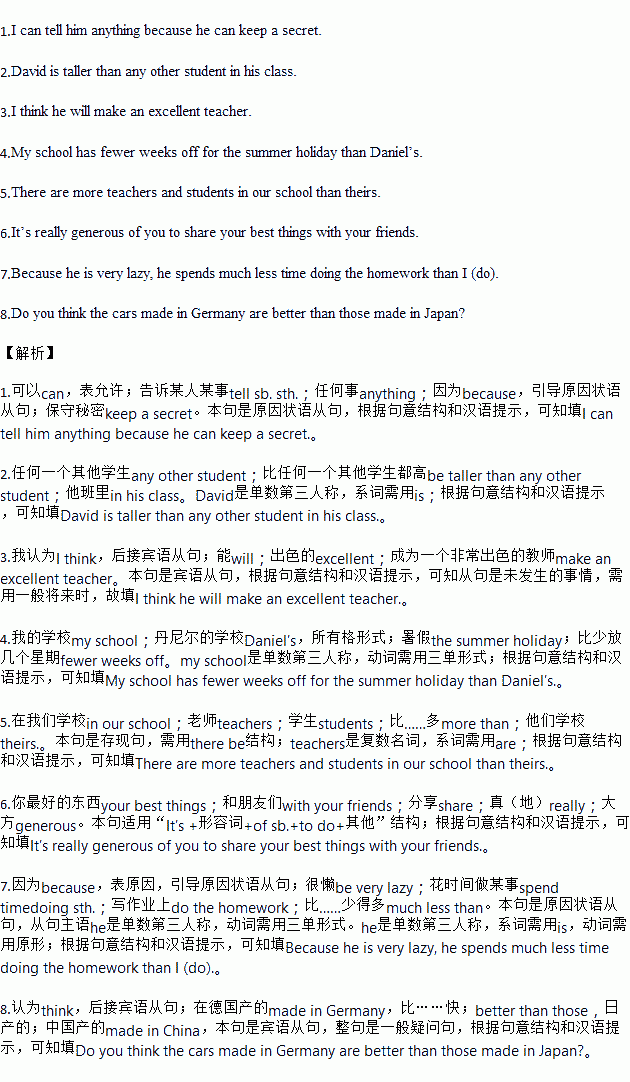
2.David±ÈËû°àÀïÈκÎÒ»¸öÆäËûѧÉú¶¼¸ß¡£

_____________________________________________________________________________

3.ÎÒÈÏΪËûÄܳÉΪһ¸ö·Ç³£³öÉ«µÄ½Ìʦ¡£

_____________________________________________________________________________

4.ÎÒµÄѧУ±Èµ¤Äá¶ûµÄѧУÊî¼ÙÉٷż¸¸öÐÇÆÚ¡£

_____________________________________________________________________________

5.ÔÚÎÒÃÇѧУ£¬ÀÏʦѧÉú±ÈËûÃÇѧУ¶à¡£

_____________________________________________________________________________

6.°ÑÄã×îºÃµÄ¶«Î÷ºÍÅóÓÑÃÇ·ÖÏí£¬ÄãÕæ´ó·½¡£

_____________________________________________________________________________

7.ÒòΪËûºÜÀÁ£¬ËùÒÔËû»¨ÔÚд×÷ÒµÉϵÄʱ¼ä±ÈÎÒÉٵöࡣ

_____________________________________________________________________________

8.ÄãÈÏΪÔڵ¹ú²úµÄÆû³µ±ÈÔÚÈÕ±¾²úµÄÆû³µºÃÂð£¿

_____________________________________________________________________________

Á·Ï°²áϵÁдð°¸
Ïà¹ØÌâÄ¿

Switzerland is famous for its watches. However, this country didn¡¯t invent the watch. It was the British who did. Here is a story of how the watch was brought to Switzerland.

Many years ago, an Englishman traveled to Italy. This Englishman traveled in a carriage. On his way, he stopped in s small town called Geneva in Switzerland.

There was a carriage watch in it. This was the earliest kind of watch. A blacksmith¡¯s assistant happened to see the watch. He wanted to know what it was and asked the Englishman about it. ¡°It is a carriage watch,¡± said the man. ¡°This machine can tell the time but it isn¡¯t working now.¡±

The blacksmith¡¯s assistant wanted to try to repair so the traveler handed him the watch. The assistant was a very clever man, so it was easy for him to repair it. He even remembered how it was made. As soon as the traveler had gone on his way, he made a watch of exactly the same type.

So the watch-making was started in Switzerland. Today, Swiss watches are sold in countries all over the world.

1.What is Switzerland famous for?

A. TVs. B. Pens. C. Watches. D. Shoes.

2.What can the carriage clock tell?

A. A story. B. A joke. C. The time. D. A lie.

3.Which of the following is TRUE?

A. The blacksmith¡¯s assistant didn¡¯t want to have a look.

B. The blacksmith¡¯s assistant wanted to wear the watch.

C. The blacksmith¡¯s assistant wanted to repair the watch for the man.

D. The blacksmith¡¯s assistant only wanted to keep the watch.

4.From the passage, we know that _____.

A. Japan started the watch-making.

B. Swiss watches are sold only in Switzerland.

C. the English traveler was the inventor of the watches.

D. Swiss watches are sold all over the world.

Î¥·¨ºÍ²»Á¼ÐÅÏ¢¾Ù±¨µç»°£º027-86699610 ¾Ù±¨ÓÊÏ䣺58377363@163.com

¾«Ó¢¼Ò½ÌÍø