ÌâÄ¿ÄÚÈÝ

-- Hello, I¡¯d like to go on a nature tour, could you tell me ________?

-- OK. Let me see

A. where I can go to B. where I can go C. where can I go D. where can I go to

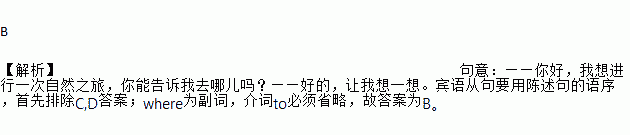
B ¡¾½âÎö¡¿¾äÒ⣺¡ª¡ªÄãºÃ£¬ÎÒÏë½øÐÐÒ»´Î×ÔȻ֮Âã¬ÄãÄܸæËßÎÒÈ¥ÄĶùÂ𣿡ª¡ªºÃµÄ£¬ÈÃÎÒÏëÒ»Ïë¡£±öÓï´Ó¾äÒªÓóÂÊö¾äµÄÓïÐò£¬Ê×ÏÈÅųýC,D´ð°¸£»whereΪ¸±´Ê£¬½é´Êto±ØÐëÊ¡ÂÔ£¬¹Ê´ð°¸ÎªB¡£
Á·Ï°²áϵÁдð°¸
Ïà¹ØÌâÄ¿

When you go to another country, you should learn to speak the language. This isn¡¯t something you can do with just a dictionary and a g1. book. Allow me to explain.

Words don¡¯t always have their literal meaning. When I went to Japan for the first time, I knew that Japanese word for ¡°yes¡± is hai, I went to d2. an important business issue. At the e3. of the meeting, I summarized my plan and asked my Japanese colleague, ¡°Do you agree?¡± He answered with hai. That night I called my boss and told him that Japanese company was r4. to go ahead with the plan. The next day I had to tell my boss that this wasn¡¯t t5.. It turns out that the Japanese often use hai to mean ¡°I¡¯ve heard you. I understand.¡±

Gestures are w6. than words. When my plane arrived in Sofia, I was tired. So I was happy that a taxi was right there. ¡°OK?¡± I asked, o7. the door. The taxi driver moved his head up and down, so I jumped in. ¡°Downtown, please. OK?¡± I said. The taxi driver nodded again, but n8. happened. Finally, I became a9. and jumped out. Guess what? In Bulgaria moving your head up and down means ¡°No¡± and s10.your head from side to side means ¡°Yes¡±.

1.grammar 2.discuss 3.end 4.ready 5.true 6.worse 7.opening 8.nothing 9.angry 10.shaking ¡¾½âÎö¡¿¶ÌÎĽéÉÜÁ˵½²»Í¬µÄ¹ú¼ÒÕÆÎÕÕâ¸ö¹ú¼ÒµÄÓïÑÔÒÔ¼°Ö«ÌåÓïÑÔµÄÖØÒªÐÔ¡£×÷Õß½éÉÜÁË×Ô¼ºÔÚÈÕ±¾µÄÒ»¶Î¾­Àú¡£Ê×Ïȵ¥´Ê²¢²»×ÜÊÇÓÐ×ÖÃæÒâ˼£¬ÈÕ±¾È˳£³£Óá°hai¡±À´±íʾ¡°ÎÒÌý...

Î¥·¨ºÍ²»Á¼ÐÅÏ¢¾Ù±¨µç»°£º027-86699610 ¾Ù±¨ÓÊÏ䣺58377363@163.com

¾«Ó¢¼Ò½ÌÍø