题目内容

--The stuntman is planning to walk on the wings of a flying plane.

--What? I’ve never heard of idea before.

A. a crazier B. the crazier C. a craziest

A 【解析】句意:-这个特技演员正计划在一个飞行的飞机的翅膀上走路。-什么?我以前从来没有听说过比这更疯狂的想法。a crazier一个更加疯狂的…;the crazier两者中更疯狂的;a craziest一个最疯狂的。根据句意可知,这里表示以前的想法和这个想法相比较,应用比较级形式,idea是可数名词单数,前面应有不定冠词a,故选A。
练习册系列答案
相关题目
Would you like to live in a city where buildings turn the lights off for you, and self-driving cars will find the nearest parking space themselves? Although it might sound a lttle far from you, living in a "smart" city like this could happen sooner than you think.

Great changes have taken place in towns that we have lived in for centuries, while completely new cities are being built. One such place is the city of Songdo. Every home there will have a "telepresence system(远程遥控系统)-- allowing users to control the heating and locks, take part in video meetings, and receive education, health care and government services. Around the city, escalators ( 自动扶梯 ) will only move when someone is on them, and offices and schools will all be connected to the system.

The great mind behind Songdo is from the company Cisco. In fact, technology companies around the world such as IBM, Siemens and Microsoft are already in the business.

About 75% of the world's population will live in cities by 2050, so cities will need to be more modern to deal with the coming problems. Making cities smarter is one way out, and I think this will in turn make cities greener, said Dan Hill, head of a research company.

1.According to the text, living in a "smart" city ______

A. is not a green way B. will be far from you

C. will soon become true D. is completely impossible

2.What is Paragraph 2 mainly about?

A. A city of the future. B. A meeting in Songdo.

C. A plan to build a house. D. A report on public health.

3.Which company offers the great mind to build Songdo?

A. Cisco. B. IBM. C. Siemens.yagnoOLED D. Microsoft.

4.Dan Hill thinks that making cities smarter is one way to______.

A. drive people out of cities B. control the world's population C. develop his own company D. solve the cities' coming problems

5.Which of the following might be the best title for the text?

A. Future Education B. Smart Cities C. Government Services D. Famous Companies

1.C 2.A 3.A 4.D 5.B 【解析】文章讲述了未来的智能城市的生活情况。 1.根据 living in a "smart" city like this could happen sooner than you think.可知生活在智能城市里,不久就会实现;故选C 2.根据第二段的内容,可知主要讲述未来的生活怎样;故选A 3.根据The...

When you watch TV programs about wild animals, it is surprising to see how an antelope can run away from a lion. In the wilderness, everyone has his own way to protect himself. Even plants have their own ways of fighting off enemies.

Over millions of years of evolution, plants have developed their own defence system(防御系统). Chemicals are wildly used for survival(生存). By making their leaves, flowers, roots and fruits distasteful or poisonous(有毒的) to enemies, plants can fight back.

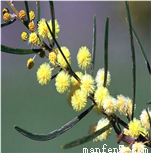
One such plant is the Golden Wattle tree. The British scientist David Cameron has found when an animal eats the tree’s leaves, the amount of poison increases in the other leaves. “It’s like the damaged leaves telephoning the others telling them to fight together against the enemy, ” he said.

The tree also sends defence messages to neighboring plants by giving out a special smell. Golden Wattle trees in the surrounding 45 meters will get the message and produce more poison within 10 minutes. Now, if an enemy eats too many of the trees’ leaves, it will die.

Every species of plant or tree is good at the production of a particular set of chemicals. A herbivore that can safely eat the leaves of one tree may be poisoned by its neighbor.

In this way, plants have developed not only individual defence system, but also shared it with others. This makes it impossible for a single animal to destroy even a small area of forest.

1.From the first 2 paragraphs,we can learn that________

A. plants can do nothing against their enemies.

B. Chemicals are quite useful for plants to survive.

C. An antelope can always run away from a strong lion.

D. Leaves,roots,flowers and fruits of plants are poisonous.

2.If animals eat one Golden Wattle tree’s leaves,the tree can________

A. kill the animals with special smell.

B. tell other trees to come to protect it.

C. warn other trees against the animals on the phone.

D. send defence messages to the neighboring plants.

3.The word “herbivore” in the 5th paragraph probably means animals which ____.

A. produce poison

B. live on small animals

C. like to eat rabbits

D. feed on plants or grass

4.The last paragraph of the passsage suggests that this kind of defence system is_____

A. bad for animals

B. good for forests

C. helpful to some animals

D. harmful to forests.

5.The passage is mainly about______

A. the example of protecting forests

B. the balance between animals and plants

C. the ways of plants fighting against enemies

D. the relationship between lions and antelopes

1. B 2. D 3. D 4. B 5. C 【解析】 短文大意:这篇短文主要以几种植物为例,讲述了植物的自保方式. 1. 2. 3. 4. 5.

Ten-year-old Johnny was one of the laziest boys in his class. His homework was always____and it was usually wrong. He only did half the number of math problems____the other children did and in his compositions he____half the number of words. And usually the words were____spelled because he was too lazy to use a____

One day his class went on a bus trip. The___ did not want to take Johnny with them. But there was no one to look after Johnny at the school so she had to take____"Now, children," the teacher said, "On our bus trip we will____old buildings, some beautiful countryside, and many other things. I want you to write about____nteresting you see on the trip. "The bus trip____. The children looked out of the windows at all the interesting things.

They took notes____their notebooks. The teacher was very____with them. Then she saw Johnny____on the floor of the bus and went up to him.

"Are you____?" she asked him.

"No." he said.

"Then____are you lying on the floor?"

"If I can't see anything," he said, "I can't write about it, can I?"

1.A. late B. early C. good D. fine

2.A. that B. who C. what D. whom|

3.A. learned B. made C. wrote D. read

4.A. badly B. well C. correctly D. nicely

5.A. radio B. pen C. library D. dictionary

6.A. driver B. mother C. father D. teacher

7.A. him B. himself C. his D. he

8.A. hear B. listen to C. see D. feel

9.A. nothing B. something C. nobody D. everybody

10.A. ended B. began C. finished D. closed

11.A. over B. by C. in D. at

12.A. angry B. pleased C. sad D. careful

13.A. standing B. sitting C. eating D. lying

14.A. busy B. sick C. happy D. glad

15.A. where B. what C. how D. why

1.A 2.A 3.C 4.A 5.D 6.D 7.A 8.C 9.B 10.B 11.C 12.B 13.D 14.B 15.D 【解析】试题这篇短文讲述了Johnny,一个很懒的孩子。他作业总是做错,作文只写一半并经常拼写错误。一次班上举办汽车旅行,其他孩子都把看到的东西写下来,Johnny却躺在地上,他...

违法和不良信息举报电话:027-86699610 举报邮箱:58377363@163.com

精英家教网