题目内容

【题目】This hospital needs ____X-ray machine, _____ machine is used for checking for patients.

A. a,a B. an, an

C. an, the D. a, the

【答案】C

【解析】

试题分析:句意:这所医院需要一台X光机器,这台机器被用作为病人检查。此题考查冠词,因为X是以元音音素开头的的词,后面指的是特指的这台机器,根据句意,应选C

练习册系列答案
相关题目

【题目】

In ancient China, people’s names had three parts: their family name, given name and courtesy name ().

Take Li Bai, a famous Tang Dynasty poet as an example. His family name was Li, his given name was Bai, and his courtesy name was Taibai.

People used their given name when they were among family members. But in social (社交的) life, they called each other by their courtesy names to show respect(尊重).

Men would get their courtesy name when they turned 20. It was a symbol of adulthood (成年). Women would get their courtesy name after getting married (结婚).

One’s courtesy name often had something to do with one’s given name. For example, Mencius’ name was Meng Ke (孟轲). His courtesy name was Ziyu (子舆). Both Ke and Ziyu mean “carriage (马车)”. Zhuge Liang’s given name was Liang (), which means “bright”. His courtesy name was Kongming (孔明), and it means “very bright”.

1According to the text, Li Bai maybe get the name Taibai .

A.before he was 20B.before he was an adultC.when he was 20D.when he get married

2People often used their when they were with family members.

A.family namesB.given namesC.courtesy namesD.first names

3The underlined words " had something to do with" mean " " in Chinese.

A.……有关B.……完全一样C.……不一样D.……无关

4The courtesy names often sound like their .

A.family nameB.given nameC.father's nameD.mother's name

5What's the main(主要的) idea of the text?

A.Why did ancient Chinese have more than one name?

B.When did ancient Chinese have more than one name?

C.Where did ancient Chinese get more than one name?

D.How did ancient Chinese get more than one name?

【题目】

It was one of the hottest days of the dry season. We had not seen in almost a month. The crops were dying. If we didn’t see some rain soon, we would lose everything.

I was in the kitchen that day when I saw my son, Billy, walking toward the . Trying to be as still as possible, he was obviously walking with great . Minutes after he disappeared into the woods, he came running out again, toward the house. Moments later, however, he was once again walking in that way toward the woods. I couldn’t take it any longer and I him.

He was cupping both hands in front of him as he walked, being very not to spill (溢出) the water he carried.

As I came closer, I saw the most surprising sight. Several large deer stood in front of him. Billy walked right up to them. But the deer did not hurt him nor move as Billy knelt down. And then I saw a baby deer lying on the ground, obviously thirsty, lift its head to lap up the water in my boy’s hands. When the water was gone, Billy jumped up to run back to the house. I followed him back to a spigot (水龙头). Billy opened it and let the drip slowly up his “cup”.

When he stood up and began to turn back, I was there in front of him. His little eyes were filled with tears. “I’m not ,” was all he said. The week before, he had made the same trouble with our horses, which caused him a lecture from his father about the importance of not wasting water.

This time, I him, with a small pot of water from the kitchen. I let him take care of the baby deer alone for it was his job. As the tears that rolled down my face began to hit the ground, they were suddenly joined by other drops… more drops… and more. I looked up at the sky. All I can say is that the rain that came that day saved our farm, just like the actions of one little boy saved another.

【1】 A. wind B. snow C. rain D. cloud

【2】 A. woods B. school C. house D. rivers

【3】 A. surprise B. effort C. doubt D. notice

【4】 A. natural B. obvious C. popular D. unusual xk.Com]

【5】A. stopped B. followed C. accepted D. controlled

【6】 A. careful B. noisy C. comfortable D. polite

【7】 A. ever B. yet C. even D. never

【8】A. set B. fill C. put D. place

【9】 A. interrupting B. joking C. complaining D. wasting

【10】A. received B. believed C. joined D. pushed

【题目】If I were to ask you to close your eyes and I gave you a piece of apple to eat, would you be able to tell me what it is just by tasting it? Of course, you could. Your tongue (舌头) helps you know what different foods taste like. Do you know that foods would taste different if you did not have a nose?

What You Need

a friend to help

small pieces of any food like carrot, orange, banana—whatever you have

small pieces of apples, raw (uncooked) potato and (if you are brave) onion (洋葱)

What You Do

There are actually three different experiments. You and your friend should take turns trying them on each other.

Experiment 1:

Have your friend close her eyes and open her mouth. Give her a piece of the food and ask her to taste it. Then, ask her what she thinks it is. She will probably guess correctly.

Experiment 2:

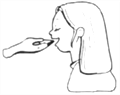
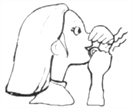
While your friend has her eyes closed, give her a piece of raw potato. At the same time, hold a piece of apple right under her nose. Ask her to eat the potato and tell you what she thinks it is. She will say it is a piece of apple! You can even do it the other way around, and she will think she is eating a potato, or, perhaps, she won’t be able to name what she is eating.

Experiment 3: (for the brave)

Take a piece of raw onion. You don’t have to close your eyes this time. Press your nose closed with your other hand so that no smells can get into your nose. Now eat a small piece of the onion. Surprise! As long as you hold your nose, you will not be able to taste the onion.

The Science Secret

You already know the science secret. Your nose and your tongue work together to make food taste the way it does. Your tongue, however, can taste only certain flavors like salty, bitter, sour, and sweet. All of the other “tastes” are actually “smells”, and you need your nose to taste them.

Oh, you might use this science secret the next time you are forced to eat something you don’t like the taste of. If you hold your nose while you eat it, you won’t “taste” it at all.

1According to this article, what could a person know about food?

A. People hold their noses to eat onions.

B. If you close your eyes, food will taste better.

C. People need a sense of smell to taste some food.

D. If you can smell potatoes, you will taste apples.

2What is the most probable reason Experiment 3 is called “for the brave”?

A. You have to eat a raw onion. B. You keep your eyes open.

C. You have to hold your nose. D. You do the experiment alone.

3What can we learn from the passage?

A. Knowledge comes from personal experience.

B. Team work helps us to find out science secrets.

C. We should have courage while doing experiments.

D. We can’t draw a conclusion simply from the feeling.

4What’s the passage mainly about?

A. Why different foods can smell the same.

B. How smell influences the way food tastes.

C. Why some things smell better than others.

D. How smell changes the way we see things.

违法和不良信息举报电话:027-86699610 举报邮箱:58377363@163.com

精英家教网