题目内容
subcultures as the United States, is a complex task.
B. the one
C. that
D. such

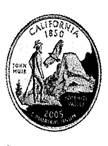
Look carefully at the back of a California state quarter. A man with a walking stick is pictured there. A bird called a California condor(大秃鹫)is flying overhead. Who is this man, and why is he so important that he is featured(处于显著地位)on the back of a coin?
The man on this quarter is John Muir. Even as a child, Muir loved watching nature. As a young man, he spent much of his life exploring the beauty of the wilderness. He walked more than a thousand miles across the country, through fields and woods. John Muir liked writing about the places he visited, describing their beauty.
Muir also wrote about problems. In order to create more farmland for sheep and cattle, many trees were being cut down. This made Muir unhappy and worried, because he knew that trees were important to forests and to the animals that lived in them.Muir believed that nature should be conserved(保护)instead of being changed by human beings. He wrote articles in magazines and newspapers to spread the word about conserving forests. Soon, others began to listen.
Muir wrote letters to important people, such as President Theodore Roosevelt. The president admired Muir’s love for nature. When Roosevelt came to visit Muir in California. Muir convinced(说服)the president to go camping with him for three nights under the trees so they could talk about conservation. Later, President Roosevelt set aside 148 million acres of land for national forests and established(建立)five national parks. National parks are large areas of land that are protected from development. This means that people cannot build homes or businesses there. One of these parks is Yosemite National Park, the area that is featured on the back of the California quarter.
Though it has been almost one hundred years since John Muir died, people continue his work today. His work as a conservationist helped us to see the beauty of our natural world. John Muir made us understand the importance of protecting our earth and our resources---then, now, and for the future.
【小题1】Why did President Theodore Roosevelt visit John Muir?
| A.Because Roosevelt loved watching nature. |
| B.Because Roosevelt received letters from John Muir. |
| C.Because Roosevelt admired John Muir’s love for nature. |
| D.Because Roosevelt was sad about the problems with farmland. |
| A.Because he walked over a thousand miles across the country. |
| B.Because he helped people understand the importance of protecting the natural world. |
| C.Because he wrote articles to spread the word about conserving forests. |
| D.Because he once wrote several letters to President Theodore Roosevelt. |
| A.To advise readers to become active conservationists. |
| B.To make us interested in the story about a great man. |
| C.To tell us something about an important person in history. |
| D.To give information about how to conserve the environment. |
·Basic Study Manual Hardcover: $37
Future success depends on the ability to learn. Here are the answers to the questions most often asked by parents, teachers, business trainers and by students themselves. Read this book and learn:
▲ What the three barriers to study are — and what to do about them.
▲ What to do if you get tired of a subject you are studying.
▲ Twenty-six simple drills to help you to learn how to study easily, rapidly and with full understanding.
▲ Buy and read the Basic Study Manual and use it to dramatically improve your ability to study.
·Study Skills for Life Hardcover: $32
L. Ron Hubbard’s study technology for teenagers opens the door to their future success by giving them the ability to study and learn. Fully illustrated (插图)for easy comprehension.
·Learning how to learn Hardcover: $25
The basics of effective study for 8 to 12-year-olds, fully illustrated. Children who read and apply the materials in this book regain their liking for study and their ability to apply this knowledge in life. Get this book for a child you want to see win at his studies!
·How to Use a Dictionary Picture Book for Children Hardcover: $36
In spite of billions of dollars spent on “educational research”, children are not taught the most basic skills of learning, even the most basic of these: how to use a dictionary. In fact, a search of educational books for children found not one that told them how to use a dictionary — or that one should. Written for children 8 to 12-year-olds, this fully illustrated book will teach your child:
▲ How to find words in a dictionary.
▲ The different ways that words are used.
▲ What the different marks and symbols that are used in a dictionary mean.
▲ How to use a dictionary to correctly pronounce words.
It includes a section for parents and teachers showing you how to use this book with children. Buy this book and give it to your children to unlock their education. What’s more, you’ll just pay 50% for it before May 1, 2011.
【小题1】According to the advertisements, the four books are all intended for ______.
| A.teachers | B.adults | C.children | D.women |
| A.make them suitable to different readers | B.persuade readers to buy them |
| C.reduce the cost of them | D.help readers understand them |
| A.$130 | B.$65 | C.$112 | D.$18 |
| A.introduce some cheap books to readers | B.sell the four books to readers |
| C.enrich students’ knowledge about nature | D.help children to learn English |