题目内容
听下面一段较长对话,回答以下小题。
1.What fruit do they need to make salad?
A. Bananas and apples. B. Bananas and oranges. C. Oranges and apples.
2.How much honey do they need?
A. One cup. B. Two spoons. C. One spoon.
 1. A
2. B
【解析】
此题为听力题,解析略。
1.此题为听力题,解析略。
2.此题为听力题,解析略。
1. A
2. B
【解析】
此题为听力题,解析略。
1.此题为听力题,解析略。
2.此题为听力题,解析略。

Look! There is at the door. Who can it be?
A. everybody B. nobody C. somebody D. anybody
C
【解析】
句意:看!门口有人。它是谁?考查不定代词辨析题。A. everybody每个人;B. nobody没有人;C. somebody某人/有人;D. anybody任何人。根据后面的疑问Who can it be?,可知有人在那,故选C。 The old farmer is counting ______ money and _______ cows he had.
A. the amount of, the number of B. an amount of, a number of
C. the number of, the amount of D. a number of , an amount of
A
【解析】
句意:那位老农民正在数钱的数量和他拥有的牛的数量。the amount of…表示……的数量;a number of表示许多,大量;the number of…表示……的数目。根据题意,故选A。 Last night, I went to bed late, _______ I am really tired now.
A. so B. or C. but
A
【解析】
句意:昨天晚上,我睡觉很晚,所以我现在真的很疲倦。so因此,所以;or或者;否则;but但是。根据句意可知,上一句话中went to bed late是原因,后面am really tired是结果,故应选A。 The girl ______ long black hair is Lily. She is pretty.
A. with B. at C. in
A
【解析】
句意:这个有着黑色的长发的女孩是Lily,她非常漂亮。with有,带有;at在具体时刻或地点;in在…里面。这里用介词with表示“有,带有”,作后置定语,修饰名词The girl。故选A。 A. Books. B. Chinese. C. Volleyball.
B
【解析】
此题为听力题,解析略。 Wol f Warrior II
Introduction :
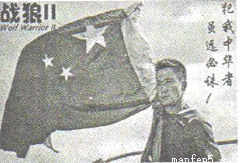 In the film Wolf Warrior II , Leng Feng, played by Wu Jing, is a Chinese soldier who takes on special tasks around the world. He helped Chinese workers and local Africans flee (逃离). The film tells us: When we meet danger in a foreign land, do not give up! Please remember, at our back stands our strong motherland- China.
Dates: June 15th~ June 21st
Weekdays 10:30 a. m. , 7:30 p. m.
Weekends 10:00 a. m. , 2:00 p. m. , 7:00 p.m.
Place: Heze People’s Movie Theater
Time: 126 minutes
Ticket price: 50 yuan (day shows)
70 yuan (evening shows)
Children under 5 years old: free
Tel: 0530—1234567
1.Wol f Warrior II is about how Leng Fang_________.
A. helped Chinese workers and local Africans flee
B. fought against the Japanese soldiers
C. protected the safety of the world
2.You can see the film .
A. at 2:00 p. m. on Tuesday
B. at 7:00 a.m. on Saturday
C. at 10:00 a. m. on Sunday
3.If Mr. and Mrs. Green go to see the film with their 3-year-old son at 7:00 p. m. , how
much will they pay?
A. 140 yuan. B. 100 yuan. C. 120 yuan.
4.In which part of the newspaper can we read The passage?
A. Sports. B. Advertisements. C. News.
1.A
2.C
3.A
4.B
【解析】
短文大意:本文是《战狼2》的相关广告信息,包括故事简介、放映日期时间、价格和通联方式。
1.题意:《战狼2》是关于冷芳如何 。考查细节理解题。根据He helped Chinese workers and local Africans flee. 他帮助中国工人和当地非洲人逃离,可知选A。
2.题意:你可以在 看这... 从对话后的选项中选择适当的选项补全对话,并涂在答题卡上相应的位置。每个选项限用一次。
A
A: Hi! Dave. Haven't seen you for a long time. Did you go anywhere interesting?
B: Yes, I did. 1.
A: What did you do there?
B: We enjoyed the beautiful sights in the mountain and ate many kinds of wild vegetables that are offered by the villagers there.
A: Sounds fantastic.2.
B: We sent some books to the students there. In fact, I felt a little sad when I came into their classroom.
A: Why did you have that kind of feeling?
B: The students there studied in poor learning conditions.3.
A: Can you tell me what you are going to do?
B: We are going to provide the students with new desks and chairs.
A:4.I am willing to join you.
A. Many of us have promised to give more help to them.
B. My friends and I went to a village this vacation.
C. Being a volunteer is really great.
D. What else did you do?
1.B
2.D
3.A
4.C
【解析】
文章大意:本文是Dave和另一个人的对话。另一个人问Dave好久不见,去了什么有趣的地方,Dave告诉另一个人假期去了一个村庄,很欣赏那里山上的美景,吃着当地村民提供的各种野菜,给那里的学生送了一些书,但刚走进教室时有点难过,因为那里的学生学习条件很差,所以Dave他们许多人承诺给予他们更多的帮助,并且打算为学生们提供新桌椅。...