题目内容
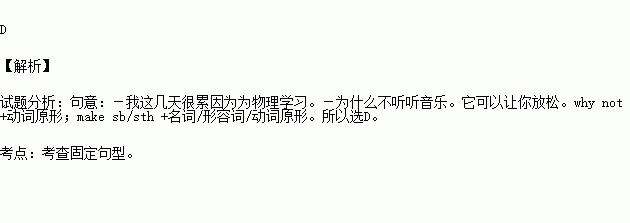
-I’m very tired these days because of studying for physics.
-Why not____muisc.It can make you_____.
A.listen to; relaxing B.to listen to;to relax
C.listening to; relax D.listen to; relax

In Canada and the United States, people enjoy entertaining(请客) at home. They often invite friends over for a meal, a party or just for coffee and conversation.
Here are the kinds of things people say when they invite someone to their homes:
"Would you like to come over for dinner this Saturday night?" "Hey, we're having a party on Friday. Can you come?"
To reply to an invitation, either say thank you and accept, or say you're sorry and give an excuse. "Thanks, I’d love to. What time would you like me to come?" or "Oh, sorry. I've tickets for a movie. "
Sometimes, however, people use expressions that sound like invitations but which are not real invitations. For example; "Please come over for a drink sometime. " "Why not get together for a party sometime?" " Why don't you come over and see us sometime soon?"
They are really just polite ways of ending a conversation. They are not real invitations because they don't mention a certain time or date. They just show that the person is trying to be friendly. To reply to expressions like these, people just say "Sure, that would be great!" or "OK. Yes, thanks. "
So next time when you hear what sounds like an invitation, listen carefully. Is it a real invitation or is the person just being friendly?
Title. 1. ________
Situations | Answers |
Canadians and Americans often invite friends for meals at home. | Because they2.______ |
Someone says "I've two movie tickets, can you go with me after supper?" | You want to go, and your answer should be "Thanks, 3._____" |
Someone invites you to dinner, but doesn't mention the time and date. | You'd better answer "Sure, 4.___. " |
Western people use "an unreal invitation" in their daily conversation. | They really mean to be______5. |