Beijing is the capital of China. It is also one of the birthplaces of the Chinese civilization (文明) and one of the six ancient capital cities in China. It is the second biggest city with an area of 17,020 square kilometers. Beijing is changing every day and it is becoming more and more beautiful. Now there are a lot of new buildings, modern shopping malls and large markets.
In the past, Beijing was very clean and quiet and most people went to work or school by bike. Things have changed a lot. Now people can take the bus, the underground or the taxi to go to work or school. It is fast and convenient.
The changes in Beijing have brought many advantages but they have also caused some problems: air pollution, noise pollution, sandstorms and lots of traffic. 
【小题1】How many ancient capital cities are there in China?

A.oneB.fiveC.sixD.seven
【小题2】How many kinds of problems are mentioned in this passage?
A.fourB.fiveC.sixD.seven
【小题3】In the past, people went to work or school ___________.
A.by carB.by taxiC.by underground D.by bike
【小题4】Which statement is the right?
A.Beijing is the biggest city of China.
B.There were many tall buildings in Beijing in the past.
C.The transport in Beijing is fast and convenient.
D.The changes to Beijing have only brought advantages.
【小题5】Which is the best title of this passage?
A.Beijing is the capital of China.B.Birthplace of China.
C.The problems Beijing have now.D.Beijing’s past and present.

Beijing is the capital of China. It is also one of the birthplaces of the Chinese civilization (文明) and one of the six ancient capital cities in China. It is the second biggest city with an area of 17,020 square kilometers. Beijing is changing every day and it is becoming more and more beautiful. Now there are a lot of new buildings, modern shopping malls and large markets.

In the past, Beijing was very clean and quiet and most people went to work or school by bike. Things have changed a lot. Now people can take the bus, the underground or the taxi to go to work or school. It is fast and convenient.

The changes in Beijing have brought many advantages but they have also caused some problems: air pollution, noise pollution, sandstorms and lots of traffic. 

1.How many ancient capital cities are there in China?

A.one              B.five              C.six               D.seven

2.How many kinds of problems are mentioned in this passage?

A.four             B.five              C.six               D.seven

3.In the past, people went to work or school ___________.

A.by car            B.by taxi            C.by underground    D.by bike

4.Which statement is the right?

A.Beijing is the biggest city of China.

B.There were many tall buildings in Beijing in the past.

C.The transport in Beijing is fast and convenient.

D.The changes to Beijing have only brought advantages.

5.Which is the best title of this passage?

A.Beijing is the capital of China.              B.Birthplace of China.

C.The problems Beijing have now.            D.Beijing’s past and present.


Maybe you know floods, droughts, earthquakes, sandstorms and so on. But have you ever heard of typhoons?

Typhoons are some of the worst storms, usually around the Pacific Ocean and the South China Sea. Most happen in July, August and September.

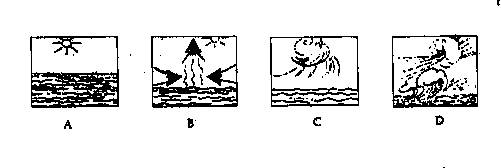
How does a typhoon happen? When lots of sea water gets hot in the summer sun, it evaporates into the air. This makes the air hotter. When the air gets warm enough, it starts to move higher up into the sky. Then, cooler air around it rushes in. It fills the space that is left. After the air gets warmer, it starts to move quickly, making wind. The wind goes in circles, and it keeps moving higher in the sky. The warmer the air gets, the quicker the wind moves. And when the wind moves faster than 30 meters a second, a typhoon begins.

A typhoon has two parts. One is called the "eye". In the eye, the wind does not move so fast. The other part is the wall of clouds around the eye. This is where the strongest wind and hardest rains are.

Typhoons are very dangerous. In 2004, Typhoon Yunna killed 164 people in Zhejiang, and 24 people were missing. In May 2006, Typhoon Pearl hit Guangdong and Fujian, and thousands of houses were damaged.

What to do when a typhoon hits:

·Stay inside, close all the windows and stay away from them.

·Try to bring all of your things inside. Strong winds could even blow away your bikes!

·Listen to the radio or TV for important information.

·If you're told to go to a safer place, do so right away.

1.Which picture can tell meaning of the underlined sentences "... it starts to move higher up into the sky. Then, cooler air around it rushes in. '?

2.When a typhoon comes, we cannot

A.close all the windows

B.listen to typhoon news

C.stay outside with our bikes

D.stay inside the strong house

3.Which of the following is TRUE according to the passage?

A.The warmer the air gets, the slower the wind moves.

B.This year Typhoon Peal killed 164 people in Zhejiang.

C.The strongest winds and hardest rains are in the eye of typhoon.

D.A typhoon will happen when the wind goes faster than 30 meters a second.


违法和不良信息举报电话:027-86699610 举报邮箱:58377363@163.com

精英家教网