题目内容
【题目】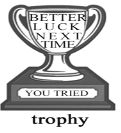
I recently watched a TV program Real Sports where the presenter looked into the culture of handing out participation(参与)trophies to children. There's no doubt that today's kids live in a world of scoreless games and everyone gets a trophy. Sometimes when a league decides to award(奖励)just the winners instead of all participants, the parents buy their own trophies for the whole team!
However, when we try to protect children from losing at the early ages, are they less prepared when real competition kicks in? People who support giving trophies say they want to make each child feel special, but how does this make them feel special? Stanford University looked at this recently and found that although kids react positively to praise-they enjoy hearing that they're talented, smart and so on, they break down at the first experience of difficulty. Discouraged by their failure, they say they'd rather cheat than risk failing again.
There are also endless social-science studies showing the harmful effects of easy competition, not just on the psyche(精神)but more surprisingly on achievement. If children know they will get an award simply by showing up, what is the reason for improvement? Jean Twenge, writer of Generation Me, warns that when living rooms are filled with participation trophies, it's part of a larger cultural message: to succeed, you just have to show up. In college, those who've grown up receiving these endless awards do the required work, but don't see the need to do it well. In the office, they still believe that attendance is all it takes to get a promotion(晋升).
When I was a child, I earned my fair share of trophies but none of them was for just showing up. I also missed out on even more and had to watch my friends collect them while I stood by and clapped. I realized that in life, I'm going to lose more often than I win, even if I'm good at something, and I've got to get used to that to keep going.
When children make mistakes, our job should not be to turn those losses into decorated(装饰性的)victories. Instead, our job is to help kids overcome difficulties, to help them see that progress over time is more important than a certain win or loss, and to help them politely congratulate those who succeed when they fail. To do that, we need to refuse all the meaningless trophies.
【1】The writer mentions Stanford University's study to show that
A.kids should be awarded for their special talents
B.necessary protection helps kids deal with failure
C.parents should try their best to keep kids out of competition
D.overpraise is likely to reduce kids' ability to face difficulties
【2】The writer probably agrees that
A.attendance is the key to making progress
B.participation is more important than victory
C.getting awards easily stops kids from working hard
D.participation trophies give kids a sense of achievement
【3】From his childhood experience, the writer has learned that
A.it's difficult to accept friends' victories
B.it's beneficial to learn from teammates
C.it's important to face winning or losing properly
D.it's necessary to be excellent at something to succeed
【4】Which of the following would be the best title for the passage?
A.Participation Trophies: Do They Really Matter?
B.Participation Trophies: Why Are They Special?
C.Participation Trophies: How Do They Help Kids?
D.Participation Trophies: Who Should Award Them?
【答案】
【1】D
【2】C
【3】C
【4】A
【解析】
本文讲述了作者因为看了一个电视节目而引发的关于当今社会孩子们总是成长在一个不断被表扬被称赞的环境中的深思。在这样的环境下,孩子们如果遇到了挫折他们会逃避而不会想着如何去克服困难。而我们要告诉孩子们,进步比短暂的失败和胜利都重要。
【1】细节理解题。根据文中“Stanford University looked at this recently and found that…,they break down at the first experience of difficulty. Discouraged by their failure, they say they'd rather cheat than risk failing again”,可知,过度的表扬会导致降低孩子们面对困难的能力,他们宁愿欺骗也不愿意再承受失败的风险。故选D。
【2】推理判断题。根据文中“If children know they will get an award simply by showing up, what is the reason for improvement?”,如果孩子们知道他们很容易的得到奖励,那改进的理由是什么呢?可知,作者认为轻易的得到奖励会阻止孩子们更加的努力。故选C。
【3】细节理解题。根据文中“I realized that in life, I'm going to lose more often than I win, even if I'm good at something, and I've got to get used to that to keep going”,我意识到在我的生活里,我失去的比我得到的多。可知,从作者的童年生活,作者明白要积极面对得与失。故选C。
【4】主旨大意题。根据文中第一段“I recently watched a TV program Real Sports where the presenter looked into the culture of handing out participation trophies to children…”,作者通过看了一个电视节目对于每个参与的小朋友都颁发奖品而引发的关于当今社会的现象感悟。由此可知,本文最合适的题目是:在孩子的生活中,这些参与奖对孩子们真的重要吗?故选A。

 天天向上一本好卷系列答案
 小学生10分钟应用题系列答案
【题目】 Middle school students are encouraged to read famous books in Chinese class. Mr. Wu, a Chinese teacher from Xinhua middle school introduces some books for Grade Eight students in the school newspaper.
| Red Star Over China was written by Edgar Snow. It is one of the most powerful books on Western understanding for Red China in the 1930s. Edgar Snow was from America. He was the first Westerner to meet MaoTse-tung and the other Chinese Communist(中国共产党)leaders in 1936.He recorded Mao’s life and a history of the famous Long March(长征). |
| Journey to the West is a historic Chinese novel that is considered one of the four classics from the Ming Dynasty. It is a story about a Buddhist monk(和尚)and several animals with human characteristics. They travelled west to India to find scriptures(经文). The author Wu Cheng’en creates an imaginary world and gives us a look of the different sides of human nature. |
| Jane Eyre was written by Charlotte Bronte. The book shows us one of the most unforgettable heroines(女主角). Jane Eyre, an orphan, must find her own way in the world. She makes a living all by herself and has to learn about friendship, love, trust, and how to deal with dark secrets independently. Jane Eyre is a symbol of bravery and independence. |


【1】Who does Mr. Wu want to introduce these books to?
A.Students in Grade Eight.B.Students in Grade Seven.
C.Children aged three to eight.D.Teachers in Grade Eight.
【2】Jim wants to learn about Chinese history from 1935 to 1937, which book should he read?
A.Red Star Over China.B.Journey to the West.
C.Jane Eyre.D.None.
【3】Which book is(are)written by a Chinese writer?
A.Red Star Over China.B.Journey to the West.
C.Jane Eyre.D.All the above.
【4】What does the underlined “an orphan” mean in the last paragraph?
A.A person who is beautiful.B.A person who is very lucky.
C.A person who has no parents.D.A person who has no money.