ÌâÄ¿ÄÚÈÝ
5£®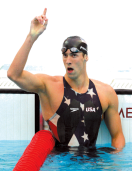 He has done what Mohammed Ali did for boxing £¨È»÷£©£¬Michael Jordan for basketball£¬Roger Federer for tennis and Tiger Woods for golf£®
Twenty-three-year-old Michael Phelps has become a phenomenon £¨Éñ»°£© in swimming£®
At the 2008Summer Olympic Games£¬he won eight gold medals£®That was more than the whole Australian team could put together£®He beat Mark Spitz's 1972record of seven wins in the pool at the one Games£®Phelps has put his name next to seven world records£®
Nine days£¬17games£¬morning and night he competed and won£®He had to beat former £¨´ÓÇ°µÄ£© world record-holders and gold medalists£®He had to turn their wins into old news£®
He won in every kind of way£®He won the 400medley £¨»ìºÏÓ¾£© by a body length£®He won the 100-meter butterfly £¨µûÓ¾£© by the smallest of margins £¨¾àÀ룩-one-hundredth of a second£®He won when his goggles £¨Ó¾¾µ£© leaked £¨Â©Ë®£©£®He won when teammate Lezak advanced £¨³¬Ç°£© in the final leg of the 4x100m relay£®
"I'm just lucky to have the drive £¨¶¯Á¦£© that I have£¬the talent that I have and the excitement for the sport£¬"Phelps said after winning his last medal£®
After the Olympics£¬swimming will not be in the news so much£®But Phelps has decided to keep working to popularize it£®
"I don't want this sport to be an every-four-year sport£¬"Phelps said£®"Over the past four years£¬it's skyrocketed£®I'm honored to help this sport for the next generation of swimmers who will have it better than I have£®"
42£®Where did Michael Phelps win his eight gold medals in 2008£¿D
A£®Australia
B£®Washington D£®C
C£®London
D£®Beijing
43£®What record did Mark Spitz's make in 1972at the one Games£¿C
A£®He won 8medals£®
B£®He got a gold medal£®
C£®He won 7gold medals
D£®He beat Michael Phelps
44£®What does the underlined phrase"one-hundredth of a second"mean£¿B
A.0.1ÀåÃ×
B.0.01Ãë
C.0.01ÀåÃ×
D.0.1Ãë
45£®Which statement£¨³ÂÊö£© is right£¿B
A£®Phelps won the 100-meter butterfly by very large margins
B£®the whole Australian team got less than eight gold medals
C£®Phelps didn't have to beat former world record-holders and gold medalists
D£®Twenty-one-year-old Michael Phelps has become a phenomenon in swimming£®
·ÖÎö ËûÒѾΪ֮¸¶³öÁËÐí¶à£¬ÕýÈç°¢ÀïÖ®ÓÚÈ»÷£¬Çǵ¤Ö®ÓÚÀºÇò£¬·ÑµÂÀÕÖ®ÓÚÍøÇò£¬ºÍÀÏ»¢Îé×ÈÖ®Óڸ߶û·ò£®
23ËêµÄÂõ¿Ë¶û•·Æ¶ûÆÕ˹ÒѾ³ÉΪӾ̳Éñ»°£®ÔÚ2008ÄêµÄÏļ¾°ÂÔË»áÉÏ£¬Ëû¶ÀµÃ°Ë½ð£®Õâ±ÈÕû¸ö°Ä´óÀûÑÇ´ú±íÍÅ£¨Ó®µÃµÄ½ðÅÆÊý£©¶¼¶à£®Ëû´òÆÆÁËÂí¿Ë•Ê©Æ¤´ÄÔÚ1972Äê´´ÔìµÄÒ»½ì°ÂÔË»áÓÎÓ¾ÏîÄ¿¶ÀµÃÆß½ðµÄ¼Í¼£®·Æ¶ûÆÕ˹»¹´òÆÆÁËÆßÏîÊÀ½ç¼Í¼£®
9Ì죬17³¡±ÈÈü£¬Ëû´ÓÔçµ½Íí¾ÍÊDZÈÈü¡¢Ê¤Àû¡¢±ÈÈü¡¢Ê¤Àû¡Ëû±ØÐë»÷°Ü¹ýÈ¥µÄÊÀ½ç¼Í¼±£³ÖÕßÒÔ¼°½ðÅÆ»ñµÃÕߣ®Ëû±ØÐ뽫ËûÃǵÄʤÀû´òÂä³¾°££®
ËûÒÔ¸÷ÖÖ·½Ê½»ñʤ£®ËûÒÔÒ»¸öÉí³¤µÄÓÅÊÆÓ®µÃÁË400Ã×»ìºÏÓ¾µÄ¹ð¹Ú£®ËûÒÔ°Ù·ÖÖ®Ò»ÃëµÄ΢ÈõÓÅÊÆÓ®µÃÁË100Ã×µûÓ¾µÄ¹Ú¾ü£®¼´Ê¹ËûµÄÓ¾¾µÂ©Ë®ÁËËû»¹ÊÇÓ®µÃÁ˱ÈÈü£®ËûµÄ¶ÓÓÑ Lezak ÔÚ4¡Á100µÄ½ÓÁ¦±ÈÈüÖÐÒԽϴóÓÅÊÆÓ®µÃÁ˱ÈÈü£®
"ÎÒºÜÐÒÔËÎÒÓж¯Á¦£¬ÎÒÓÐÓÎÓ¾µÄÌ츳ºÍ¶ÔÕâÏîÔ˶¯µÄÐ˷ܶȣ®"·Æ¶ûÆÕ˹ӮµÃÁËËû×îºóµÄ½ðÅƺó˵µÀ£®
°ÂÔË»á½áÊøºó£¬ÓÎÓ¾µÄÏûÏ¢²»»áÌ«¶à£¬µ«·Æ¶ûÆÕ˹¾ö¶¨¼ÌÐøŬÁ¦È¥ÍƹãËü£®
"ÎÒ²»Ï£ÍûÕâÏîÔ˶¯ÊÇÒ»¸öÿËÄÄêÒ»´ÎµÄÔ˶¯£¬"·Æ¶ûÆÕ˹˵"ÔÚ¹ýÈ¥µÄËÄÄêÀËüµÄÉí¼Û±©ÕÇ£®ÎÒºÜÈÙÐÒÄÜ°ïÖúÏÂÒ»´úµÄÓÎÓ¾Ô˶¯Ô±±ÈÎÒ¸üºÃµÄ²Î¼ÓÕâÏîÔ˶¯£®"
½â´ð 42£®D£®ÍÆÀíÅжÏÌ⣮¸ù¾ÝAt the 2008Summer Olympic Games£¬he won eight gold medals£®¿ÉÖªÔÚ2008ÄêµÄÏļ¾°ÂÔË»áÉÏ£¬Ëû¶ÀµÃ°Ë½ð£¬¶ø2008ÄêÏļ¾°ÂÔË»áÊÇÔÚÖйú±±¾©¾ÙÐеģ®¹ÊÑ¡D£®
43£®C£®Ï¸½Ú½âÌ⣮¸ù¾ÝHe beat Mark Spitz's 1972record of seven wins in the pool at the one Games£¬¿ÉÖªËû´òÆÆÁËÂí¿Ë•Ê©Æ¤´ÄÔÚ1972Äê´´ÔìµÄÒ»½ì°ÂÔË»áÓÎÓ¾ÏîÄ¿¶ÀµÃÆß½ðµÄ¼Í¼£®¹ÊÑ¡C£®
44£®B£®Ï¸½ÚÀí½âÌ⣮¸ù¾Ýone-hundredth of a second£¬¿ÉÖªÕâÀïa secondÊÇÒ»ÃëµÄÒâ˼£¬¶øone-hundredth ÊÇ°Ù·ÖÖ®Ò»µÄÒâ˼£¬ËùÒÔÕâÀïÊÇÖ¸°Ù·ÖÖ®Ò»Ã룬¼´0.01Ã룮¹ÊÑ¡B£®
45£®B£®Ï¸½ÚÀí½âÌ⣮¸ù¾ÝHe won the 100-meter butterfly £¨µûÓ¾£© by the smallest of margins £¨¾àÀ룩-one-hundredth of a second£®¿ÉÖªËûÒÔ°Ù·ÖÖ®Ò»ÃëµÄ΢ÈõÓÅÊÆÓ®µÃÁË100Ã×µûÓ¾µÄ¹Ú¾ü£¬ËùÒÔÑ¡ÏîA£®Phelps won the 100-meter butterfly by very large margins£¬ÃèÊö´íÎ󣻸ù¾ÝThat was more than the whole Australian team could put together£®¿ÉÖªÕâ±ÈÕû¸ö°Ä´óÀûÑÇ´ú±íÍÅ£¨Ó®µÃµÄ½ðÅÆÊý£©¶¼¶à£®ËùÒÔÑ¡ÏîB£®the whole Australian team got less than eight gold medals˵·¨ÕýÈ·£»¸ù¾ÝHe had to beat former £¨´ÓÇ°µÄ£© world record-holders and gold medalists£®¿ÉÖªËû±ØÐë»÷°Ü¹ýÈ¥µÄÊÀ½ç¼Í¼±£³ÖÕßÒÔ¼°½ðÅÆ»ñµÃÕߣ¬ËùÒÔÑ¡ÏîC£®Phelps didn't have to beat former world record-holders and gold medalists˵·¨´íÎ󣻸ù¾ÝTwenty-three-year-old Michael Phelps has become a phenomenon £¨Éñ»°£© in swimming£®¿ÉÖª23ËêµÄÂõ¿Ë¶û•·Æ¶ûÆÕ˹ÒѾ³ÉΪӾ̳Éñ»°£®ËùÒÔÑ¡ÏîD£®Twenty-one-year-old Michael Phelps has become a phenomenon in swimming£®Ëµ·¨´íÎó£®
¹ÊÑ¡B£®
µãÆÀ ±¾Ì⿼²éÈËÎï¹ÊÊÂÀàÔĶÁÀí½â£®ÔĶÁÕâÀà²ÄÁÏʱ£¬Í¬Ñ§ÃÇÒ»¶¨Òª¸ù¾ÝÖ÷ÒªÇé½ÚÕÆÎÕÎÄÕÂÖ÷Ö¼´óÒ⣬ͬʱץסÿһ¸öϸ½Ú£¬ÉèÉí´¦µØ¸ù¾ÝÎÄÕÂÄÚÈÝ´§Ä¦×÷ÕßµÄ̬¶ÈºÍÒâͼ£¬¸ù¾ÝÇé½ÚÕ¹¿ªÏëÏ󣬼´Ê¹ÊÇÅöµ½Éî²ãÀí½âÌâÒ²¿ÉÓÈжø½â£®

The purpose of these overhead bridges is to enable pedestrians£¨ÐÐÈË£© to£¨33£©Broad safely£®Overhead bridges are used in very much the same way£¨34£©Dzebra crossings£®They are more efficient£¨ÓÐЧµÄ£© although less convenient£¨35£©Apeople have to climb up a long flight of steps£®This is inconvenient especially to old people£®When pedestrians are£¨36£©Ba zebra crossing£¬traffic is held up£®This is£¨37£©D the government has built some overhead bridges to help pedestrians and£¨38£©Ctraffic moving£¨39£©Athe same time£®
The government of Anyue has£¨40£©Blots of money in building these bridges£®For their own safety£¬pedestrians£¨41£©Cbe encouraged to use them instead of£¨42£©Atheir lives by running across the road£®Old people£¬however£¬may find£¨43£©Da little difficult to climb up and down the steps£¬but it is still£¨44£©C safer than walking across the road with all the danger of moving traffic£®
Overhead bridges serve a very useful purpose£®Pedestrians£¬both old and young£¬should form a£¨45£©A of using them£¬This will prevent unnecessary accidents and loss of life£®
| 31£®A£®where | B£®when | C£®that | D£®who |
| 32£®A£®safe | B£®danger | C£®dangerous | D£®safety |
| 33£®A£®crossing | B£®cross | C£®crosses | D£®crossed |
| 34£®A£®in | B£®for | C£®to | D£®as |
| 35£®A£®because | B£®because of | C£®and | D£®so |
| 36£®A£®useful | B£®using | C£®used | D£®use |
| 37£®A£®when | B£®because | C£®that | D£®why |
| 38£®A£®keeps | B£®kept | C£®to keep | D£®keep |
| 39£®A£®at | B£®to | C£®for | D£®in |
| 40£®A£®spend | B£®spent | C£®spending | D£®been spent |
| 41£®A£®shouldn't | B£®won' | tC£®should | D£®might |
| 42£®A£®risking | B£®risk | C£®risked | D£®risks |
| 43£®A£®this | B£®that | C£®them | D£®it |
| 44£®A£®many | B£®more | C£®much | D£®very |
| 45£®A£®habit | B£®hobby | C£®habits | D£®hobbies£® |
-_________£®I'll go and buy another one£®£¨¡¡¡¡£©
| A£® | It doesn't matter£® | B£® | I'm afraid not£® | ||
| C£® | I don't agree£® |
--Yes£¬he flew there£®£¨¡¡¡¡£©
| A£® | how Jimmy went to Hong Kong | B£® | how did Jimmy go to Hong Kong | ||
| C£® | why Jimmy went to Hong Kong | D£® | why did Jimmy go to Hong Kong |
| around | beauty | color | disappear | down | go |
| hold | I | keep | luck | paint | work |
After learning why the boy had come£¬the king suggested that he should look around the palace and come back in two hours£®"At the same time£¬I want you£¨98£©to holdthis spoon with milk£¬"said the king£®"As you walk around my palace£¬carry this spoon without spilling £¨Òç³ö£©the milk£®"
The boy£¨99£©kepthis eyes fixed on the spoon and began to walk around the golden palace£®After two hours£¬he came back to the king£®"Well£¬"asked the king£®"Did you see the wonderful£¨100£©paintingsin my dining hall£¿Did you see the£¨101£©colorfulflowers in the garden£¿"The boy felt sorry because he saw nothing£®He only paid attention to the milk£®
"Then go back and see the beauty of£¨102£©myworld"£¬said the king£®This time the boy saw all of the£¨103£©works of art on the walls£®He saw the great gardens and mountains all around£®When he came back£¬he described everything he saw£®
"But where is the milk£¿"asked the king£®Looking£¨104£©downat the spoon he held£¬the boy saw the milk was£¨105£©gone£®"Well£¬there is only one piece of advice I can give you£¬"said the king£®"The secret to happiness is to see all the beauty of the world and also keep an eye on the milk on the spoon£®"
| A£® | whom | B£® | / | C£® | who | D£® | which |