题目内容
16.China is a great country with a long history,It has its own special cultures.Do you know some of them?66It is a special dance that has been popular for centuries in china.Over ten people work together to wave a dragon made of paper or cloth.People in many places organize this activity to celebrate the Chinese New Year.
67It is a kind of fighting style that has developed over the centuries in China.Many people practice it to keep healthy,More and more foreigners are crazy about it.The movie called kung Fu Panda is welcome all over the world.
68It is a singing performance,People regard it as one of the cultural treasures of China.It mixes music,drama and acrobatics(戏剧和杂技)together.Mei Lanfang is one of the greatest performers.
69It is one of the oldest artistic traditions in China.The painters make the pictures with soft brushes,If the painter is famous,the work with his seal(印章)will be much more valuable.
70It is perhaps the most popular board game played by millions of people in China.Two players play it on a board with 32pieces.The player who catches the enemy General can win the game.
根据上面每段话的陈述内容,从方框中选出与其匹配的名称.
A.Chinese Chess
B.Chinese Painting
C.The Dragon Dance
D.Chinese kung fu
E.Beijing Opera.
分析 文章大意:
介绍了几个具有中国特色的表演节目.
舞龙表演:数十人一起来舞动用纸或布做的龙来庆祝新年.
中国武术:一种打斗方式,中国功夫被世界所欣赏.
京剧:一种歌曲类表演项目,出现过很多有名的戏曲大师,比如梅兰芳.
中国画:作画人用毛笔作画,名人还会盖上自己的印章.
中国象棋
解答 66.C,归纳总结题.文中提到"Over ten people work together to wave a dragon made of paper or cloth"数十人一起来舞动用纸或布做的龙来庆祝新年,所以此项活动应该是舞龙表演,选择C.
67.D,归纳总结题,文中提到"a kind of fighting style"是一种打斗方式,后文又说"The movie called kung Fu Panda is welcome all over the world"功夫熊猫,可知此段讲的是中国功夫,所以选择D.
68.E,归纳总结题,文中提到歌唱类节目,且说明"Mei Lanfang is one of the greatest performers."梅兰芳是最有名的表演者之一,由此可知是京剧,所以选择E.
69.B,归纳总结题,文中提到"The painters make the pictures with soft brushes"作画人用毛笔作画,名人还会盖上自己的印章,由此可知此段讲的是中国画,所以选择B
70.A,归纳总结题,文中提到"Two players play it on a board with 32pieces"两个表演选手,总共32枚棋子,由此可知是中国象棋,所以填写A.
点评 对于配对型阅读理解题目,首先应该熟悉给定选项的含义,之后根据题目给定的条件进行分析,合理确定答案.

 考前必练系列答案
| A. | the,the | B. | an,the | C. | an,a | D. | a、the. |
| A. | gave them up | B. | gave them away | C. | gave away them | D. | gave up them |
| A. | owning | B. | owned | C. | own | D. | to own |
| A. | sometimes | B. | seldom | C. | often | D. | always |
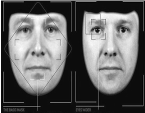 36、Soon computers and other machines will be able to remember you by looking at your eyes!The program works because everyone's eyes are different.So in the future you won't have to remember a number when you want to use a machine or take money out of a bank.You'll just have to look at the machine and it will be able to tell who you are.