题目内容
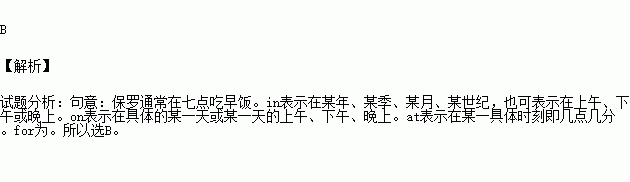
Paul usually has breakfast ______ seven o’clock.
A. in B. at C. on D. for
Paper money was in _____ use in China when Marco Polo visited the country in_____thirteenth century.
A. the; 不填 B. the; the
C. 不填; the D. 不填; 不填;
— What time do you usually get up ______ weekdays?
— ______ seven o’clock.
A. on; On B. on; At C. in; It’s
—What ______ does Tina like?
—She likes dogs and tigers.
A. subjects B. colors C. sports D. animals
—Does Peter walk home?
—______. He takes the bus.
A. No, he doesn’t B. Yes, he does
C. No, he isn’t D. Yes, he is 11.
书面表达。
假如你叫Tina,请用下面提供的信息给你最好的朋友Sara写封信告诉她关于你的烦恼。
内容提要:这几天,你发现同学们对你不太友好。上个星期六,你们班上的一位同学举行生日聚会,他邀请了班上的很多同学,但没有邀请你。你感到很烦恼。
Dear Sarah,
Yours,
Tina
In many English homes people eat four meals a day: breakfast, lunch, tea and dinner. People have breakfast at any time from seven to nine in the morning. They eat porridge,eggs or bread. English people drink tea or coffee at breakfast. Lunch comes at one o'clock. Afternoon tea is from four to five in the afternoon and dinner is about half past seven. First they have soups, and then they have meat or fish with vegetables. After that they eat some other things, like bananas,apples or oranges. But not all English people eat like that. Some of them have their dinner in the middle of the day. Their meals are breakfast, dinner, tea and supper and all these meals are very necessary.
1.Many English people have meals a day.
A. two B. three C. four D. three or four
2.People may have for their breakfast.
A. tea and eggs
B. porridge,eggs,bread,tea or coffee
C. tea and coffee
D. bread and eggs
3.People have lunch at .
A. any time B. nine C. five D. one
4.People don't have for their dinner.
A. porridge B. bananas and apples
C. some soup and meat D. meat and fish
5.In many English homes dinner comes .
A at one o'clock B. about half past seven
C. at noon D. at night
I don’t like to go shopping _____. Can you go together with me?
A. alone B. lonely C. lone D. cheer
Sam denied ______ computer games for hours in the net bar yesterday afternoon.
A. to play B. playing C. play D. played