完形填空

阅读下面短文,掌握其大意,从每题所给的A、B、C、D四个选项中选出最佳选项。

When Dave was 18, he bought an secondhand car for$200 so that he could travel to work more than by bus. It worked quite well for years, but then it got so old, and it cost him much in repairs that he decided that he had better it.

He asked all his friends to see if anyone wanted to buy a cheap car, but they all knew that it was falling to pieces, so of them wanted to buy it. Dave's friend Sam saw that he was worried one evening, and said, “What's , Dave?”

Dave told him, and Sam answered, “Well, what about advertising it in the paper? You may more for it that way than the cost of the advertisement!” Thinking that Sam's was right, he put an advertisement in an evening paper, which read “For sale: small car, very little oil, only two owners. Bargain (成交) at$50.”

For two days after the advertisement first appeared, there was no . But then on Saturday evening a man rang up and said he would like to see the car. Dave felt very happy. He asked the man whether ten o'clock the next morning would be or not. “Fine,” the man said, “and I'll my wife. We want to go for a ride in it to it.”

The next morning, at a quarter to ten, Dave parked the car in the square outside his front door, waiting there for the people who had answered his advertisement. Even Dave had to admit(承认) that the car really like a wreck(残骸).Then, soon after he had got the car as clean it could be, a police car stopped just behind him and a policeman got out. He looked at Dave's car and then said, “Have you reported this to us yet, sir?”

1.A. directly B. safely C. properly D. easily

2.A. soB. suchC. very D. too

3.A. keepB. repairC. sell D. throw

4.A. someB. neither C. none D. most

5.A. onB. up C. it D. that

6.A. learnB. missC. get D. find

7.A. message B. advice C. request(要求)D. description

8.A. usesB. losesC. has D. spends

9.A. doubt B. help C. troubleD. answer

10.A. exact B. suitable C. early D. late

11.A. follow B. meetC. bring D. introduce

12.A. praise B. getC. admireD. test

13.A. looked B. smelled C. tasted D. sounded

14.A. asB. that C. soD. such

15.A. bargain B. saleC. accidentD. result

I will never forget the tenth summer of childhood with my grandfather in western Norway on the mountain farm where my mother was born. As a boy. I always thought people simply bought whatever they needed. Whether Grandfather knew this. I didn't know. One day he said. 'Come. I have something for you.'

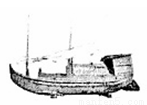
I followed him to a workroom. 'You should have a toy boat. You can sail it at Storvassdal.' he said. 'Great,' I thought. Looking around for the boat. But there was none

Grandfather pointed to a block of wood. ‘The boat is in there.' he said. Then he handed me some tools and showed me how to use them properly. 'It'll be a fine boat. and you'll make it with your own hands.' he said. 'NO one can give you what you do for yourself.' The words rang in my head as l worked. The boat was finished. It wasn't much to look at, but l was proud. Then I sailed it at Storvassdal.

We had to return to America. 'You cannot bring that boat home with you,' my mother said. We had too much baggage. Feeling sad, I hid my boat under a big rock at Storvassdal.

I said good-bye to Grandfather, not knowing I would never see him again.

In 1964, I went to Storvassdal with my parents and my wife and children. To my surprise, for 34 years my treasure stayed here, waiting for my return. I felt we three were together again although my grandfather had died 22 years before.

I carved(雕刻)’1930' and '1964' on its side and put it back

I returned to the lake in 1968. 1971. 1977 and 1988. Each time l had the boat and carved the year, my grandfather seemed near

My last trip to Storvassdal was in 1991. I brought my granddaughters: Catherine. 13; Claire. 12. I hoped they would understand the importance of the little boat and its simple message. At Storvassdal, Claire said softly, 'Grandpa, someday I'II come back.' she added. 'And I'll bring my children.'

1.Where did the writer spend his tenth summer of his childhood?

2. What did the writer's grandfather ask him to do one day?

3. The writer didn't take the little boat with him when he returned to America, did he?

4. What did the writer do with the little boat each time he returned to Storvassdal?

5. How many times did the writer go to Storvassdal altogether?

6. What can you learn from the story?

违法和不良信息举报电话:027-86699610 举报邮箱:58377363@163.com

精英家教网