题目内容
I'm ________.
- A.a Li Ming's friend
- B.Li Ming's a friend
- C.a friend of Li Ming's
- D.Li Ming's friends

 小学课堂作业系列答案
 金博士一点全通系列答案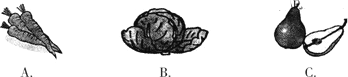


 towns
to work on bu
towns
to work on bu ilding
the cities. But when they work in the cities,
ilding
the cities. But when they work in the cities,
|
broadcast1/'brɔ:dkɑ:st||ˈbrɔdˌkæst/n[C] a programme on the radio or on television: a radio news broadcast | live broadcast ( = a programme that you see or hear at the same time as the events are happening) broadcast2 v past tense and past participle, broadcast 1 [ I,T] to send out radio or television programmes: The interview was broadcast live across Europe. 2 [T] to tell something to a lot of people: There was no need to broadcast the fact that he lost his job. broadcaster /ˈbrɔːdkɑːstə || ˈbrɔːdkæstər/ n [C] |
curious/ ˈkjʊəriəs || 'kjur-/ adj 1 wanting to know about something: When I mentioned her name everyone was curious. | [ +about] I’m incurious about this book she's supposed to be writing. |curious to see/hear/know etc: Mandy was curious to hear what Peter had to say himself.—opposite INCURIOUS 2 strange or unusual: a curious noise coming from the cellar | curious that It's very curious that she left without saying goodbye. curl1 /kɜ:l|| kɚrl/ n 1[C] a small mass of hair |
|
flask / flɑ:sk || flæsk/n [C] I BrE a special type of bottle that you use to keep liquids either hot or cold, for example when travelling 2 a flat bottle usually used to carry alcohol 3 a glass bottle with a narrow top, used in a LABORATORY flat1/ flæt / adj flatter, flattest 1▶ SURFACE◀ smooth and level, without raised or hollow areas, and not sloping or curving: a flat-bottomed boat |a perfectly flat sandy beach | flat as a |
pollute / pə'lu:t/ v [T] 1 to make air, water, soil etc dangerously dirty and not suitable for people to use: beaches polluted by raw sewage | industrial emissions that pollute the air 2 pollute sb’s mind to give someone immoral thoughts and spoil their character: fears that Lawrence's novels would pollute young minds--polluted adj: polluted rivers--polluter n [C] pollution / pəˈlu:ʃn /n [U] 1 the process of making |
1.The pronunciation of the word "broadcast" is ____ or/ˈbrɔdˌkæst /.
A. /'brɔ:dkɑ:st/ B. /'brəud'sɑ:st/ C. /bræd'kɔst/ D. /'bru:dkɑ:st/
2.The word"____ "can be used as an adjective (形容词).
A. pollute B. pollution C. curious D. curiously
3.Which of the following is a flask?


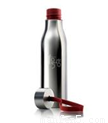
A. B. C. D.
4. The word "pollute" means "______".
A. to tell something to a lot of people B. wanting to know about something
C. a programme on the radio or on TV D. to make air. water, soil, etc dirty
5.These texts are probably from ______.
A. a magazine B. a dictionary
C. a newspaper D. an advertisement
| 完形填空。 | |||
| Here are my favorite photos. __1__ the first one, you can find it's__2__ . It's hot. I'm wearing a T-shirt and sitting on the grass. The__3__ one is a photo of' my family. I'm __5__ computer games. My grandfather is playing the erhu. My father is__5__ a newspaper. My grandmother is talking about the TV show __6__ my sister. And my mother is __7__ the table. I love this photo very much. In the third one, there are two __8__ . They are my friends, Tim and his brother. They are playing basketball. In the last one, I'm singing and my friends are dancing. __9__ I see these photos, I'm very happy. They make me think of the happy __10__. I will keep the photos all my life. | |||
| ( ) l. A. In ( ) 2. A. day ( ) 3. A. first ( ) 4. A. going ( ) 5. A. reading ( ) 6. A. to ( ) 7. A. cleaning ( ) 8. A. girls ( ) 9. A. When ( ) 10. A. time |
B. At B. night B. second B. doing B. seeing B. with B. sitting B. boys B. Where B. age |
C. For C. summer C. third C. playing C. looking at C. about C. buying C. women C. Why C. hour |
D. About D. spring D. fourth D. reading D. writing D. on D. swimming D. men D. How D. minute |