题目内容
We are all called upon to make a speech at some point in life, but most of us don't do a very good job. This article gives some suggestions on how to give an effective speech.
So, you have to give a speech and you're fearful. You get nervous, you forget what you want to say, you stumble over (结结巴巴地说)words, you talk too long and you bore your audience. Later you think,“ Thank goodness, it's over. I'm just no good at public speaking. I hope I never have to do that again.”
Cheer up! It doesn't have to be that bad. Here are some simple steps to take the pain out of speech making. Ask yourself the purpose of your speech. What is the occasion(场合)? Why are you speaking? Then, gather as many facts as you can on your subject. Spend plenty of time doing your research. Then spend plenty of time organizing your material so that your speech is clear and easy to follow. Use as many examples as possible and use pictures, charts and graphs if they will help you make your points more clearly. Never forget your audience. Don't talk over their heads so that they can understand what you say. They will appreciate your thoughtfulness.
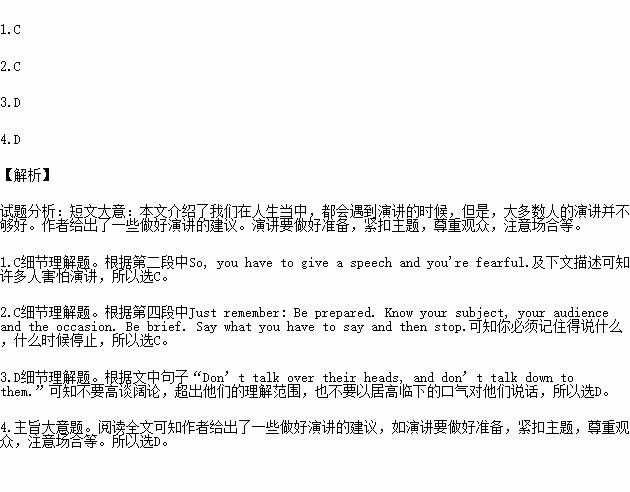
Just remember: Be prepared. Know your subject, your audience and the occasion. Be brief. Say what you have to say and then stop. And be yourself. Let your personality come through so that you make person-to-person contact with your audience.
If you follow these simple steps, you'll see that you don't have to be afraid of public speaking. In fact, you may find the experience so enjoyable that you volunteer to make more speeches! You're not sure yet. Give it a try and see what happens.
1.From Paragraph 2 we can know that many people________.
A. talk too much in a speech
B. are happy to give a speech
C. are afraid to give a speech
D. can give a good speech
2.Which of the following is TRUE according to the passage?
A. You can speak as long as you like.
B. You should avoid contacting with audience.
C. You should remember what you have to say and when to stop.
D. The more speeches you make, the more afraid you will be.
3.The underlined expression “talk over their heads” means “ ________ ”.
A. speak too loudly
B. look at the ceiling
C. look at the paper all the time
D. use difficult words and ideas
4.The main idea of the passage is that ____________ .
A. a poor speaker can never change
B. it's easy to make a short speech
C. you need to respect your audience
D. how you can improve your speaking ability

 名校课堂系列答案


