题目内容
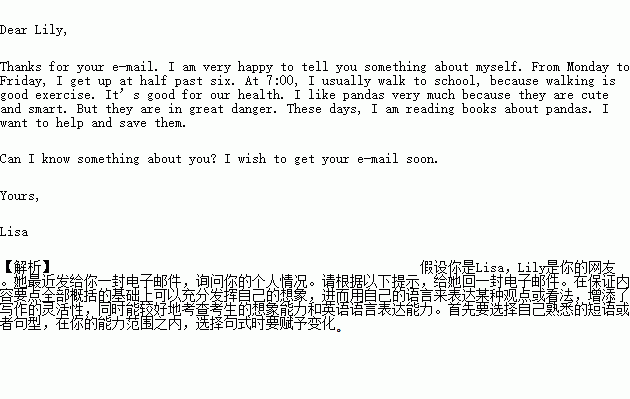
假设你是Lisa,Lily是你的网友。她最近发给你一封电子邮件,询问你的个人情况。请根据以下提示,给她回一封电子邮件。
内容: 1)你的日常生活习惯(写一点即可);
2)你的主要上学方式及原因;
3)你对某种动物的看法;
4)这些天你正在做的一件事。
要求:1)60词左右;2)书写工整、规范。
Dear Lily,
Thanks for your e-mail. I am very happy to tell you something about myself. _______________________
________________________________________________________________________________________
________________________________________________________________________________________
________________________________________________________________________________________
Yours,
Lisa

Anna: I work in a bank on workdays. My home is about twenty kilometers from my office. I usually go to work by train. I usually get up at 6:30 a.m. and take the train at 7:00 a.m. It usually takes me about thirty minutes to get to my office. I am never late for work. |
Joe: I am a student. My home is not far. I can go to school on foot. It takes me about forty minutes. But I often go to school by boat because it is more fun. It takes me about twenty minutes. |
Nancy: I’m a waiter. I work in a restaurant from Monday to Friday. I often go to work by bus. It is about five kilometers from my home to the restaurant. It takes me about twenty-five minutes to go to work. Sometimes, I am late for work because there are too many cars and buses on the street. |
1.Anna usually gets to her office at about ______.
A. 6:30 a.m. B. 7:30 a.m. C. 7:00 a.m. D. 8:00 a.m.
2.Joe often _______ to school.
A. takes a bus B. takes a train C. walks D. takes a boat
3.Nancy lives about ______ kilometers from her working place.
A. ten B. fifteen C. five D. fifth
4.Who is sometimes late for work?
A. Nancy. B. Joe. C. Anna. D. Anna and Nancy.
5.How long does it take Joe to get to school?
A. Thirty minutes. B. Twenty minutes by boat.
C. Forty minutes on foot. D. B and C.