题目内容
【题目】阅读短文,根据短文内容回答问题。

Every month we look at a different artist. We think Haroshi is super cool—he makes sculptures from skateboards.
Haroshi is in his late 30s. He's a skateboarder but he also makes things from wood. He began skateboarding when he was 15 years old and he loved it. He used to skate every day. Now, if you know anything about skateboarding, you'll know that skateboards don't last forever because they break. Haroshi didn't throw his out but he collected them. Over time he built up a big collection and at the same time he learnt about all the different types of skateboards. Surprisingly, not all skateboards are of the same shape and actually they are often built in different ways. By the time he was 25, he had a lot of collections of old skateboards.
He decided he had to do something with them so he started to cut them up. As he was doing that, he noticed some interesting patterns(图案)in the wood. He then cut more and fixed them on top of each other. The first thing he created from the wood was a piece of jewelry. He created something new from something old.
Today, however, he is known for his large 3D wooden sculptures. His ideas generally come from skateboarding culture, from skateboarding cats to cool trainers, but also everyday topics such as hurting yourself, getting better, being crazy about something and growing up. All skateboarders will understand these. Haroshi has made over 40 pieces and each piece takes a very long time. There is no doubt that he is very talented. But he had no formal art training. He taught himself.
Haroshi held an exhibition(展览)in London last month. As we entered the rst room, we saw a huge bird that covered one wall. There was also a sculpture called Ordinary Life. It looked like a broken leg—a very common problem, of course. It's unbelievable to think that these sculptures are all made from broken skateboards. But there's something else that is really interesting about Haroshi's works. In the twelfth century, Unkei, a sculptor, placed a glass ball in each of his works to show the heart of the piece. Haroshi also places something inside his sculptures—a piece of broken skateboard. In this way, he gives his sculptures life. We think that is just amazing!
【1】When did Haroshi begin skateboarding?
【2】What was the rst thing Haroshi created from the wood?
【3】How many pieces of sculptures has Haroshi made?
【4】What kind of person is Haroshi according to the passage?
【5】What is the last paragraph mainly about?
【答案】
【1】When he was15 years old. /At the age of 15.
【2】(A piece of ) jewelry.
【3】Over 40.
【4】Talented /creative/clever/patient/hardworking/excellent/…
【5】Haroshi’s sculpture works in his exhibition in London.
【解析】
本文是一篇记叙文。主要讲述了Haroshi通过利用一些收集来的旧滑板制作出了伟大的艺术品,从旧事物中创造出了新事物,说明了创造力的巨大作用。
【1】根据第二段“He began skateboarding when he was 15 years old and he loved it”可知,Haroshi15岁的时候开始玩滑板。故答案为When he was15 years old. /At the age of 15.
【2】根据第三段“The first thing he created from the wood was a piece of jewelry”可知,Haroshi用木头做的第一件东西是珠宝。故答案为(A piece of ) jewelry.
【3】根据第四段“Haroshi has made over 40 pieces and each piece takes a very long time”可知,Haroshi已经制作了40多件雕塑品。故答案为Over 40.
【4】根据全文可知,Haroshi利用破旧的滑板制作了很多优秀的雕塑艺术品,并且每一个作品都花费他很长时间,足以证明Haroshi是一个天才的、富有创造力的、聪明的、耐心的、勤奋的、优秀的……的人。故答案为Talented /creative/clever/patient/hardworking/excellent/…
【5】根据最后一段大意可知,最后一段主要讲述的是Haroshi的雕塑作品在伦敦的展览。故答案为Haroshi’s sculpture works in his exhibition in London.

 精英口算卡系列答案
 应用题点拨系列答案
【题目】先通读下面的短文,然后根据短文内容和所给首字母,在空格内填入一个适当的单词,使短文意思完整。所填单词必须在答题卡标有题号的横线上完整写出。
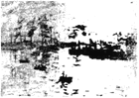
Claude Monet’s paintings were quite different from the art styles that were popular in the 1870s France. Traditional artists always did their artwork in a studio and their paintings were realistic- they looked exactly like the real world. Claude Monet was part of a group of painters who were called Impressionists(印象派画家). Their paintings were light and a bit fuzzy - they gave an impression of what the real world looked like. Sometimes Impressionists worked outside, which was a very unusual thought in their time. Impressionists received its name from an early painting by Claude Monet titled Impression, Sunrise.
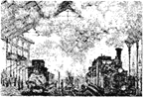
Knowing that trains were interesting subjects and represented modern progress, Claude Monet created a series of Impressionist paintings of trains from January to March of 1877. He worked on his paintings right on the train platform (站台)at the Gare Saint-Lazare, the train station on Saint Lazare Street. Although there were many train stations in Paris, this was the first train station built in Paris so it had historical significance(意义).
Monet’s friend, Impressionist painter Pierre Auguste Renoir, told the following story to his sons about Claude Monet and painting the trains. Monet needed permission (允许)to spend time on the train platform and paint what he saw in his impressionistic style. One day, Monet put on his very best suit along with a fine hat, a good shirt and a silk tie. He appeared to be a wealthy gentleman while he really was a poor painter.
The station master was impressed and gave Monet permission to paint on the train platform. The station master even kept trains from leaving on time so Monet could finish a scene even though passengers complained.
Was it worthy? Monet's train scenes turned his career into a success and for the station master, made his train station famous until even now.
Introduction | Claude Monet was one of the Impressionist painters whose paintings were not the same as the popular art styles in the 1870s France. Impressionist paintings gave an impression of 【1】 the real world looked. Impressionism was 【2】 after his painting Impression, Sunrise. |
A story of painting trains | At that time trains could keep people's interest and represented modem progress. He created paintings of trains at the train station with the longest history in Paris. He 【3】himself as a wealthy gentleman to win the station master's trust. In order to help Monet finish a scene, the station master even made the trains leave 【4】 than they should do. |
Result | His train scenes made not only his career 【5】 but also the train station famous. |
