题目内容
Mr. and Mrs. King don’t often go out in the evening. But today Mrs. King says to her husband(丈夫), “ There is a good film at the cinema(电影院) this evening . Can we go and see it?” Mr. king is happy about it. So they go to see the good film. They have a good time.
They come out of the cinema at eleven o’clock. They get into their car and drive home. It is very dark(黑). Mrs. King says, “Look , Bill. A woman is running very fast and a man is running after her. Can you see them?” Mr. King says , “Yes, I can.” He drives the car slowly(慢慢地) near the woman and says to her. “ Can we help you ?” “No, thanks.” The woman says, but she doesn’t stop running. “ My husband and I always run home after the cinema, and the last one washes the dishes(洗盘子)at home!”
1.Mr. and Mrs. King go out one evening because (因为)__________.
A. they don’t often go out B. they want to see a film
C. they want to drive D. they like to run home
2.___________ like the film.
A. Mr. King B. Mrs. King C. The Kings D. everyone
3.Mr. King wants to ___________.
A. help the woman B. drive the car slowly
C. run on the road D. looks at the woman
4.The woman __________.
A. wants to get help B. runs for fun
C. doesn’t want to do the washing D. wants to wash dishes
5.Mr. and Mrs. King ________ give help to the woman.
A. must B. can C. may D. can’t


 名校练考卷期末冲刺卷系列答案
阅读短文,根据其内容,选择最佳选项完成下列各题。
Teenagers are known for being full of new ideas. Let’s have a look at these teenage inventions that might change the world.
Banana leaves usually go bad in two or three days. Tenth Hadith, a teenager from India, used UV to make the leaves stay fresh for a year. Tenth thinks that one day the leaves will be used for making plates, cups and other things. |
David Cohen, an American teenager, built an earthworm(蚯蚓) robot. It is able to go into the smallest places, where humans or dogs can’t go. It will be used for finding people in a fire or an earthquake. |
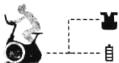
Remya Jose, a 14-year-old from India, found it tiring and boring to hand wash clothes in the nearby river. She reused some bicycle parts and created a washing machine that saves time, energy and keeps people fit at the same time. |
Kenneth Shinozuku, a 15-year-old from New York, noticed that his grandfather who got Alzheimer's disease(老年痴呆) would often leave home and get lost. So he invented the wearable sensors(感应器)to help people find their family members like his grandfather. |



1.What is the passage mainly about?
A. Popular ads B. Useful machines
C. Teenage inventions D. Beautiful works of art.
2.How long can the banana leaves stay fresh by using UV?
A. A day. B. A week. C. A month. D. A year.
3.The earthworm robot made by David Cohen can ______.
A. make things stay fresh B. help people wash clothes
C. go into the smallest places D. take care of the old people
4.Why do Remya Jose want to create a special washing machine?
A. Because she has no time to wash clothes.
B. Because she found it tiring and boring to hand wash clothes in the river.
C. Because she can’t afford the washing machine.
D. Because she wants to lose weight.
5.Which of the following is TRUE
A. Plates and cups are made of fresh banana leaves.
B. Remya's washing machine can also keep people fit.
C. David Cohen is a middle school student from India.
D. Kenneth's wearable sensors will keep old people at home.