题目内容
(题文)书面表达。
保护人类共同的家园——地球是每个人的责任和义务。我们在生活中的点滴小事上也能做出自己的贡献。根据表格内容,谈一谈曾经为保护环境做过哪些努力,将来还打算如何去做。
要求:1.词数不少于50词;
2.开头已给出,不计入总词数;
3.意思连贯,条理清晰,适当发挥。
turn off the lights when you leave a room . |
turn off the shower while washing hair |
stop using paper napkins |
take your own bags when shopping |
stop riding in cars |
ride a bike |
recycle books and paper |
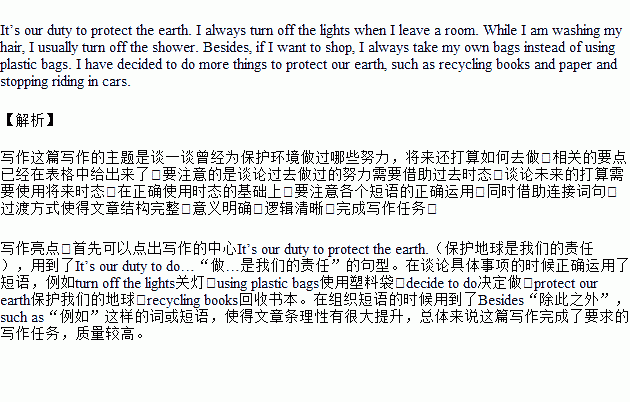
 It’s our duty to protect the earth. I always turn off the lights when I leave a room. While I am washing my hair, I usually turn off the shower. Besides, if I want to shop, I always take my own bags i...

Mark is a 16-year-old student. He has a very healthy life. However, one year ago, he was not so healthy. From Monday to Friday, he studied every day but hardly did any sports. He often used the Internet. Although his parents asked him to exercise, he never did. He sometimes helped his mother with housework, but only once a week. On weekends, he liked watching TV. Then the bad result came, he became fat and had few friends. One day, the doctor in his school talked with him. He told Mark to do more sports because it was good for his body and mind. From then on, Mark decided to change his habits. Now, he does sports more often than before, such as playing basketball and soccer. He plays less computer games. After dinner, he often takes a walk with his parents. Doing exercise helps him become healthy and study better. Now he also has more friends.
1.Did Mark have a healthy life one year ago?
______________________________________________________________________________
2.How often did Mark help his mother with the housework?
______________________________________________________________________________
3.What did Mark like doing on weekends?
______________________________________________________________________________
4.When did he decide to change his habits?
_______________________________________________________________________________
5.What kind of sports does Mark do now?
_______________________________________________________________________________
1.No, he didn’t.
2.Once a week.
3.Watching TV.
4.After talking with the doctor
5.Basketball and soccer.
【解析】
本文主要介绍马克的。马克是一个16岁的学生。他有一个非常健康的生活。然而,一年前,他没有健康的生活方式。从星期一到星期五,他每天都学习,但几乎没有... We write ____________ our pens.
A. use B. for C. with
C
【解析】
句意:我们用钢笔写字。考查介词用法。A. use使用,是动词,句中已有谓语动词,所以排除;B. for为了,write for“为…写”;C. with用、和…一起,write with“用…写”。根据句意:我们用钢笔写字,可知C选项符合题意,故答案选C。 I ______ my birthday cake with my friends last night. It was delicious.
A. touched B. shared C. put D. sold
B
【解析】
句意“昨天晚上,我和我的朋友分享了生日蛋糕,很可口”。A.触摸;B.分享;C.放;D.卖。根据share...with...可知,表示“与……分享”,故选B。 —Can you stay here ______ longer, Linda?
—Of course.
A. little B. a few C. a little D. few
C
【解析】
句意“-琳达,你能待在这里长一点时间吗?-当然”。空后有比较级longer,a little修饰比较级,故选C。 ---- David asked______ in China.
----- Of course not. Chinese usually shake hands with a lady as a greeting.
A. why he can greet a lady by kissing her
B. Why he could greet a lady by kissing her
C. Whether he can greet a lady by kissing her
D. Whether he could greet a lady by kissing her
D
【解析】
试题句意:-大卫问在中国和女士见面打招呼时,是否可以亲吻。-当然不行。中国人和女士见面打招呼时,通常握手。A.why he can greet a lady by kissing her为什么他可以和女士见面打招呼时亲吻她;B.Why he could greet a lady by kissing her为什么他可以和女士见面打招呼时亲吻她;C.Whether he c... —________free education,the poor children in my hometown can go back to school.
—So can the children in my hometown.
A. Thanks to
B. Instead of
C. As for
D. Towards
A
【解析】
句意:——多亏了免费教育,我家乡的贫穷孩子们可以重新去上学了。——我故乡的孩子们也是。“多亏了”应该表示为“thanks to”。 假定英语课堂上老师要求同桌之间交换修改作文,请你修改你同桌写的一篇作文,文中共有10处语言错误,每句中最多有两处。每处错误仅涉及一个单词的增加,删除或修改。
增加:在缺词处加一个漏字符号(∧), 并在其下面写出该加的词。
删除:把多余的词用斜线(\)划掉。
修改:在错的词下一横线,并在该词下面写出修改后的词。
注意:1. 每处错误及修改均仅限一词;
2. 只允许修改10处,多者(从第11处起)不计分。
Last Sunday, I take part in the “Earth Protector” activity with my classmates. In the morning, we went to a People’s Park at 8:30 by bus. When we got to there,we saw some children draw pictures by the lake. The ground and public walls was very dirty. So we began to pick up the rubbish or clean the public walls. We also planted some tree. All of them worked very hard. We think it’s our duty to take good care our environment. If everyone protects the environment, the world will become more and more beautifully.
1. take改为took 2. a改为the 3. to去掉 4. draw改为drawing 5. was改为were 6. or改为and 7. tree改为trees 8. them改为us 9. take good care后面添加of 10. beautifully改为beautiful
【解析】
第1行take改为took。last Sunday上周日,用于一般过去时,动...