题目内容
How will the girl go to school today?
A. B. C.
VII. 根据汉语意思完成英语句子, 每空一词。
1.我不想变胖。
I don’t ________ ________ ________ fat.
2.水果和蔬菜是健康食品。
Fruit and vegetables are ________ ________.
3.让我考虑一下这件事情吧。
Let me ________ ________ it.
4.妈妈,晚饭后我可以做什么。
Mum, what can I do ________ ________?
5.我认为你是对的。
I think ________ ________ ________.
There are almost 400 wax models in Madam Tussauds.
A. nearly B. actually C. totally D. really
Where is the world’s happiest place? The answer is Denmark, according to the 2016 World Happiness report.
Denmark is neither the richest nor the biggest country. So why do the 5.7 million people of Denmark smile so much?
The country has a perfect welfare system (福利制度). For example, the country supports parents if they want to be with their children, especially babies. Danish families receive a total of 52 weeks of parental leave (育婴假).
But besides that, the main reason Danish people are so happy is because of their lifestyle.
“We have no worries. And if we do worry, it’s about the weather. Will it rain today, remain grey or get cold?” Knud Christensen, a 39-year-old social worker from Copenhagen, said to the reporter.
Denmark is famous for its biking culture. In Denmark’s capital, Copenhagen, bikes are used about 50 percent of the time on the way to school or work. Biking is not only helpful to protect the environment. It is also good for people’s health.
Trust also helps make Danish people happy. They trust others, including people they don’t even know. In Aarhus, the second biggest city of Denmark, you can see people buy flowers even when the owner isn’t there. People just put money in the empty flowerpot.
“ The Danish have no great expectations about what they will do or what will happen to them,” Kaire Christensen, a university teacher said, “They are happy with what they have.”
1.What does the underlined word “that” in Paragraph 4 refer to?
A. The welfare system. B. The medical service.
C. The traditional culture. D. The natural environment.
2.What does the weather example want to show?
A. Danish people don’t like rain. B. Danish people hate cold weather.
C. Denmark often has bad weather. D. Danish people don’t worry much.
3.Which of the following helps Danish people feel happy?
A. They have high expectations about the future.
B. They trust each other, including the strangers.
C. The flowers are completely free of cost in Aarhus.
D. They must ride bikes to work or school in Copenhagen.
4.What’s the best title for the passage?
A. Best Transportation in the World B. Healthiest Lifestyle in the World
C. Best Flower Shop in the World D. Happiest Place in the World
听下面一段较长对话,回答以下小题。
1.Where are the speakers talking now?
A. In a lab. B. In a bank. C. In a museum.
2.What does the sign mean?
A. No photos. B. No smoking. C. No touching.
—Can ________help ________?I need someone to help me move(搬)the big desk.
—Sure.
A. I,you B. you,me C. I,her D. you,her
─Are these Jenny’s trousers?
─________They are Helen’s.
A. Yes,it is. B. No,it isn’t C. Yes,they are. D. No,they aren’t.
假如你是 Li Hua,你的澳大利亚好友 Tom 打算寒假来中国旅行,同时也想了解我国的民 俗风情和生活方式.为帮助他更好地了解中国,请根据表格信息,给他写一封信做介绍。
Useful expressions:
在…北方(to the north of) 交通(transportation ) 便利(convenient) 团聚(get together) 访友(visit friends) 红包(red packets) 注意:1.词数 70 左右,可适当发挥,
2.邮件的开头和结尾部分已给出,不计入总词数;
3.文中不得出现真实的人名与校名.
Dear Tom,
I am very glad to hear that you are going to visit China this winter holiday. Here are the ways of life in China.
China_______________________________________________________________________________________________________________________________________________________________________________________________________________________________________________
Wish you have a good trip in China!
Yours,
Li Hua.
On Saturday morning, John got up early to go to a sports club. On his way, he saw three of his schoolmates at the mall, Rie, Asuka and Yuki. They were always together because they were very good friends.
“I'm shopping for new shoes,” Rie told John. “But I have big feet so nothing fits! We have been shopping everywhere but I can't find any big shoes!”
“And we walk very slowly,” Yuki said, “because of Asuka ...”
“I know,” John said, looking at Asuka. “I heard you hurt your knee in P.E. class yesterday. Does it hurt?”
“It's OK if I move very slowly,” Asuka told him. “We are going to eat ice-cream at Dairy Queen. Do you want to come?”
“Sorry, I can't. I am going to meet Edward at the sports club. See you later!” said John.
John was walking past a coffee shop when he saw Ms. Kanda. She was looking at a new sidewalk (人行道). As John came closer he could see that Ms. Kanda was angry. “Somebody jumped in the middle of the sidewalk when the cement (水泥) was still wet!” she said, pointing to two small footprints (脚印) in the new cement. “Now I can't go home because I have to fix the sidewalk!”
“Who did it?” asked John.
“A first-year student over there said that three girls were walking by here just now. But he doesn't know which girl jumped in the cement!”
Three girls? “Small” footprints? Somebody “jumped”? “I know who did!” said John.
1.Where did John meet his schoolmates?
A. In a park. B. At the mall.
C. At a sports club. D. In an ice-cream shop.
2.What happened to Asuka in yesterday's P.E. class?
A. She had a fight with her classmate. B. She hurt one of her feet.
C. She broke her shoes. D. She hurt her knee.
3.Ms. Kanda was angry because ______.
A. someone stole her car
B. she fell in the new cement
C. she had to fix the sidewalk
D. someone drove on the sidewalk
4.The footprints in the cement were ______.
A. big B. small C. different D. similar
5.Who might John think jumped in the cement?
A. Rie. B. Yuki. C. Asuka. D. Edward.
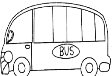 B.
B. 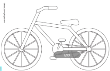 C.
C. 
 B. C.
B. C.