In North America, most students go to school by bus. The subway is also widely used in some cities. In small towns and cities, walking is still popular.
The yellow school bus is a familiar sight all over North America. It is a very convenient form of transportation because it takes students right to the entrance to the school. It also gives students opportunity to chat with their friends. However, the bus is slow and does not always pick up on time.
The subway is a means of getting around quickly in many cities. However, it is expensive and can be very crowded during rush hour. Another disadvantage of the subway is that the stops are not so close to the school, and students often have to walk considerable distance or take a bus from the subway stop to the scho
Walking has a number of advantages for those who live reasonable close to school. It's free and it provides a form of exercise. However, it's no fun if you have a large backpack full of books to carry. It's also unpleasant if the weather is either too hot or cold or wet.
【小题1】In North America, most students usually go to school by_________.
A. school bus or subway B. car or bicycle C. taxi or car
【小题2】 For many students, the yellow school bus is convenient but it is_________.
A. too expensive B. slow and sometimes late      C. crowded and dirty
【小题3】Subways are fast but the stops are often a little bit_________the school.
A. close to B. busy for C. far away from
【小题4】Walking is a good way for the students that live reasonable close to school and it is_________.
A. not convenient B. bad for health C. good for health
【小题5】This passage is about_________in North America.
A. transportation B. students C. schools


A young girl sits at her desk, reviewing her homework for the evening. English: Read three chapters and write a report. Math: Complete 30 problems. Science: Do a worksheet, front and back. French: (A) Study new words for tomorrow’s test. It’s going to be a long night.
This happens to students in America. Now it’s time to start a homework revolution(变革).
Do students in the United States receive too much homework? According to the National Education Association, a student should be assigned (布置) no more than 10 minutes per grade level per night. For example, a first grader should only have 10 minutes of homework, a (B)  grader, 20 minutes, and so on. This means that a student in my grade—seventh—should have no more than 70 minutes of work (C) each night. Yet this is often doubled, sometimes even worse!
It’s no good giving students too much homework. According to research, kids are developing more illness at school, such as stomachaches, headaches and sleep problems than before.
Everybody (D)  that teachers are the ones who assign homework, but they are not the only ones to blame (受责备). “Many teachers are under greater pressure (压力) than ever before,” says Kylene Beers, President of the National Council for teachers of English, “Some of  (E) it comes from parents, some from the wish for high scores on tests.” Teachers who are under pressure feel the need to assign more homework.
Some people have different ideas, saying that homework prepares kids for doing better in high school, better in college, and (F) 今后找到更好的工作. But too much homework is sapping students’ strength, curiosity(削弱学生的个性和好奇心), and most importantly, their love of learning, is that really what teachers and parents want?
【小题1】写出文中划线部分(A)和(C)的同义词或近义词:                         
【小题2】在文中(B)和(D)的空白处分别填入适当单词:                         
【小题3】文中划线部分(E)指代的是:               
【小题4】将文中划线部分(F)译成汉语:             
【小题5】从文中找出能说明本文主旨大意的中心词:           

In some science fiction movies, evil robots refuse to die, no matter how hard people fight back.

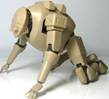
Now science fiction has become science fact. For the first time, scientists have made a robot that can take a beating and keep on going. Scientists from Cornell University made the robot, which looks like a spider with four legs.

Until now, even the most advanced (先进的) robot was almost certain to break down when it was damaged (毁坏). That is because its computer inside simply doesn’t know how to make the machine work after its shape has changed. 

To deal with this problem, the scientists put eight motors (发动机) and two sensors (传感器) that read how the machine is working. They all give signals to the machine’s software. Using this information, the computer can then figure out the machine’s shape at any moment.

The new technology is a big advance in robot-making, scientists say, and it’s far from scary. It may someday help scientists create better artificial (假的) arms and legs and give new freedom to people who lose them. It might also help scientists understand how people and animals figure out their own sense of place in space.

“It has been difficult to design robots that can work well when the environment changes or when it’s damaged,” says Olaf Sporns of Indiana University in US. “With this work, we are nearer to solving this problem.”

1.Why do robots easily break down when they are damaged?

A.They cannot repair themselves.

B.The computer has changed a lot.

C.They have no computers inside.

D.The computer cannot work if the robot changes.

2.The new technology(技术) allows the robot to        .

A.keep working after being damaged

B.tell people where it is

C.do house work for humans

D.remember a lot of information

3.The underlined word “them” in Paragraph 5 refers to       .

A.sensors           B.robots            C.scientists          D.arms and legs

4.How do the sensors in the robot work?

A.They can replace the computer when it’s broken.

B.They help the computer learn the robot’s condition.

C.They can find out where the damage comes from.

D.They can send signals to the person who uses the robot.


违法和不良信息举报电话:027-86699610 举报邮箱:58377363@163.com

精英家教网