题目内容
根据汉语提示完成下列各句,每空一词。
1.下周我们将要游览长城。
We ______ ______ ______ _____ the Great Wall next week.
2.春天树叶变绿。
Leaves __________ __________ __________in spring.
3.如果明天下雨,我们就不去游乐园了。
We __________ __________ ___________ the theme park if it rains tomorrow.
4.下周日我们将要举行春游。
We _________ _________ __________ __________ a spring filed trip next Sunday.
5.我们一会就使用网络收集一些有关它的信息。
___________ __________ ____________ the Internet to collect some information about it in a short time.
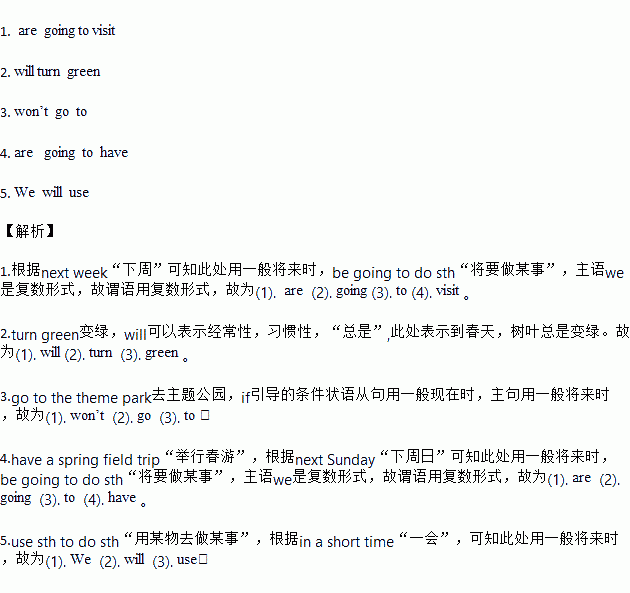
1. are going to visit 2. will turn green 3. won’t go to 4. are going to have 5. We will use 【解析】 1.根据next week“下周”可知此处用一般将来时,be going to do sth“将要做某事”,主语we是复数形式,故谓语用复数形式,故为(1). are (...Bargaining (讨价) is the rule here in Beijing. At least, it is so in most markets and back-street clothes shops. Bargaining is an art and if you are unfamiliar (不熟悉) with it, we’d like to offer you some advice. The tips here are often used in Beijing but may help you at any place in the world where bargaining is practiced.
DO NOT say how much you want to pay for an item (物品) unless it’s near the end of the bargaining. Always try and drop the seller’s offering price as much as possible before opening your mouth with a price.
DO throw out really low prices like 10 RMB with a big smile.
DO keep smiling from the beginning to the end. The seller usually continues bargaining with a happy smiling face. Getting angry hardly gets you the price you want. Keep in mind the price offered by the seller at the beginning is usually at least 40% over the generally reasonable (合理的) price. It can be up to 500% over.
DO have an idea of what the item costs. You can ask your friends, people in the hotel or others you know, or look at the list below. This is very general and is based (根据) on a market like Xiu Shui. You may not be able to get the lowest prices at Xiu Shui, especially on a weekend when there are lots of tourists around.
1.Who is this passage written for?
A. Owners of back-street shops. B. Businessmen in Beijing.
C. Those who are good at bargaining. D. Those who travel in Beijing.
2.What is the writer mainly talking about in this passage?
A. Beijing markets. B. Bargaining tips.
C. Lowest prices. D. Sellers’ offer.
3.What is the most important thing to do in bargaining with the seller?
A. Keep smiling. B. Be patient.
C. Don’t get angry. D. Don’t say anything.
4.What is NOT included in the tips often used to bargain in Beijing?
A. Find out the true price and go to the markets with friends.
B. Don’t offer your price until the end of the bargaining with a smile.
C. Getting angry can hardly gets you the price you want.
D. Don’t go to markets at the time when there are too many tourists.
5.Which of the following can help you get an item you want at the lowest price?
A. Whenever you go shopping, take a price list with you.
B. You can bargain for anything at the price of 10 RMB.
C. The price range (范围) for you to bargain is usually between 40% and 500%.
D. XiuShui Market is the biggest shopping center where prices are always reasonable.