题目内容
-________students are there in your class?
-There are 56.
- A.How many
- B.Who
- C.What
- D.When
A
试题分析:How many多少个;Who谁;What什么;When什么时候;根据下文答语,有56个。可知上文提问数量,故选A。
考点:疑问词辨析
点评:该题型是属于英语考试中的基础题型,是必考内容。答题前首先要理解每个选项的基本含义及用法,并注意交叉含义间的区别,然后根据答语,以及该疑问词在句子中承担的句子成分选择正确答案。
试题分析:How many多少个;Who谁;What什么;When什么时候;根据下文答语,有56个。可知上文提问数量,故选A。
考点:疑问词辨析
点评:该题型是属于英语考试中的基础题型,是必考内容。答题前首先要理解每个选项的基本含义及用法,并注意交叉含义间的区别,然后根据答语,以及该疑问词在句子中承担的句子成分选择正确答案。

练习册系列答案
 阅读快车系列答案
相关题目
A new term has begun. Teachers are 36 about the fact that new students are not easy to handle. They like to bring cellphones and MP3 players to school. What is 37 ,some students even use cellphones to do with out-of-class matters in class,or sometimes just for fun. Some other students listen to MP3 players when they are having a lesson that they are not interested in.
Are these new students really that 38 ? 'Yes,' says Delaney Kirk,a professor at Drake University. 39 she adds it's not their fault. Instead, the things that they bring into school---cellphones,MP3 players and so on --- and the teachers are to blame. Kirk first began thinking about students' manners six years ago. ‘I had my first class in which students were sleeping or talking to each other. It seemed that learning well 40 nothing to do with them,' she says. 'At first,I got worried about this,but then I said to myself, "You're teaching 41 ,and you need to manage this…These students need to know more about manners. It's time to help them develop some good 42 . They shouldn't waste time doing nothing when they are young. Sooner or later,they might regret the time they have wasted."'
Kirk also 43 a list of suggestions to help teachers better manage their classes. The following are among her suggestions:
● Tell students how they will benefit by taking the class. On the first day of class,emphasize its importance 44 giving some homework that students must turn in next time.
● Do not allow them to bring cellphones and MP3 players to the class at all.
■ Decide 45 formal and informal the class will be.
Are these new students really that 38 ? 'Yes,' says Delaney Kirk,a professor at Drake University. 39 she adds it's not their fault. Instead, the things that they bring into school---cellphones,MP3 players and so on --- and the teachers are to blame. Kirk first began thinking about students' manners six years ago. ‘I had my first class in which students were sleeping or talking to each other. It seemed that learning well 40 nothing to do with them,' she says. 'At first,I got worried about this,but then I said to myself, "You're teaching 41 ,and you need to manage this…These students need to know more about manners. It's time to help them develop some good 42 . They shouldn't waste time doing nothing when they are young. Sooner or later,they might regret the time they have wasted."'
Kirk also 43 a list of suggestions to help teachers better manage their classes. The following are among her suggestions:
● Tell students how they will benefit by taking the class. On the first day of class,emphasize its importance 44 giving some homework that students must turn in next time.
● Do not allow them to bring cellphones and MP3 players to the class at all.
■ Decide 45 formal and informal the class will be.
| 【小题1】 |
|
| 【小题2】 |
|
| 【小题3】 |
|
| 【小题4】 |
|
| 【小题5】 |
|
| 【小题6】 |
|
| 【小题7】 |
|
| 【小题8】 |
|
| 【小题9】 |
|
| 【小题10】 |
|
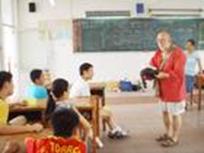
A doctor was once teaching a class of medical students at a famous hospital in Edinburge. An injured man was brought in, and the doctor turned to one of his students and asked him, “What’s wrong with this man ?”
“I don’t know, sir,” the student answered. “Shall I examine him and find out?”
“There’s no need to examine him,” said the doctor. “You should know without asking questions. He has hurt his right knee. Didn’t you notice the way he walked? He hurt it by burning it in the fire. You see his trousers leg is burnt away at the knee. This is Monday morning. Yesterday was fine, but on Saturday the roads were wet and muddy. The man’s trousers are muddy all over. The man fell down on Saturday night.”
The doctor then turned to the man and said, “You had your pay on Saturday and went to a public house and drank too much. You got muddy and wet on the way home. Because you had drunk too much, you fell on the fire and burnt your knee. Is that right?
“Yes, sir,” said the man.
【小题1】The medical students were having a lesson ______.
【小题2】 The man hurt his knee _______.
【小题3】 How did the doctor know that the man burnt his knee?
【小题4】Which is the right order according to the passage?
① He burnt his knee. ②He got drunk. ③He fell down and got muddy. ④He had his pay.
【小题5】 From the passage we know that _______ is very important for medical students.
“I don’t know, sir,” the student answered. “Shall I examine him and find out?”
“There’s no need to examine him,” said the doctor. “You should know without asking questions. He has hurt his right knee. Didn’t you notice the way he walked? He hurt it by burning it in the fire. You see his trousers leg is burnt away at the knee. This is Monday morning. Yesterday was fine, but on Saturday the roads were wet and muddy. The man’s trousers are muddy all over. The man fell down on Saturday night.”
The doctor then turned to the man and said, “You had your pay on Saturday and went to a public house and drank too much. You got muddy and wet on the way home. Because you had drunk too much, you fell on the fire and burnt your knee. Is that right?
“Yes, sir,” said the man.
【小题1】The medical students were having a lesson ______.
| A.at the library | B.in a classroom |
| C.at a well-known hospital | D.in a medical school |
| A.on Monday | B.on Sunday night | C.on Saturday night | D.yesterday |
| A.From the way he walked. | B.By seeing his trousers leg is burnt away at the knee. |
| C.By seeing the man’s trousers are muddy all over. | D.Both A and B |
① He burnt his knee. ②He got drunk. ③He fell down and got muddy. ④He had his pay.
| A.①②③④ | B.④③②① | C.③④①② | D.④②③① |
| A.watching and thinking | B.taking good care of others |
| C.learning from others | D.teaching |

There are eight ___________ students in our school.
| A.hundred | B.hundreds |
| C.hundreds of | D.hundred of |