ÌâÄ¿ÄÚÈÝ

To keep safe, drivers aren¡¯t supposed to drink before driving.

A. aren¡¯t willing to B. shouldn¡¯t C. aren¡¯t sure to D. don¡¯t have to

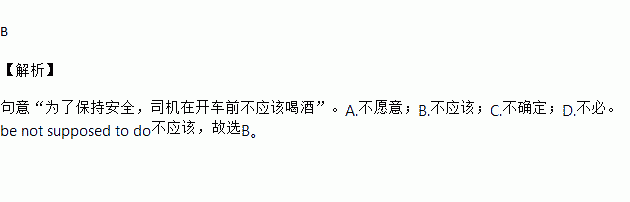
B ¡¾½âÎö¡¿ ¾äÒ⡰ΪÁ˱£³Ö°²È«£¬Ë¾»úÔÚ¿ª³µÇ°²»Ó¦¸ÃºÈ¾Æ¡±¡£A.²»Ô¸Ò⣻B.²»Ó¦¸Ã£»C.²»È·¶¨£»D.²»±Ø¡£be not supposed to do²»Ó¦¸Ã£¬¹ÊÑ¡B¡£
Á·Ï°²áϵÁдð°¸
Ïà¹ØÌâÄ¿

Do you know any 9?year?olds who have started their own museums? When Theodore Roosevelt(ÂÞ˹¸£) was only nine, he and two of his cousins opened the ¡°Roosevelt Museum of Natural History¡±. The museum was in Theodore's bedroom. It had a total of 12 specimens(±ê±¾). On display were a few seashells, some dead insects and some birds' nests. Young Roosevelt took great pride in his small museum.

Born in New York in 1858, Theodore Roosevelt was not always healthy. ¡°I was a sickly, delicate boy£¬¡± he once wrote. Roosevelt had a health condition called asthma(Ïø´­). He often found it hard to breathe.Instead of playing, he observed(¹Û²ì) nature and then read and wrote about it.

Roosevelt's interest in nature sometimes got him into trouble. Once, his mother found several dead mice in the icebox. She ordered him to throw them out. This wasindeed ¡°a loss to science¡±£¬ Roosevelt said later.

Because Roosevelt was often sickly as a boy, his body was small and weak. When he was about 12, his father urged him to improve his body. Roosevelt began working out in a gym. He didn't become strong quickly. But he did decide to face life's challenges with a strong spirit. That determination stayed with Roosevelt his whole life. And finally his body did get strong. As an adult, he was an active, healthy person. He enjoyed adventures and loved outdoors.

In 1900, at the age of 41, Roosevelt was elected Vice President. A year later, President McKinley was shot and killed. Roosevelt became the 26th president of the USA.At 42, he was the youngest leader the country had ever had.

1.What is the main idea of the first paragraph?

A. Roosevelt's museum had 12 specimens.

B. Roosevelt had two cousins.

C. Roosevelt was a brave man.

D. Roosevelt had a small museum as a boy.

2.Which of the following tells about Roosevelt as a boy?

A. He liked playing outdoors sports.

B. He became the President in 1901.

C. He was interested in observing nature.

D. He was a healthy person full of energy.

3.It can be inferred(ÍÆ¶Ï) that________£®

A. Roosevelt's mother liked mice

B. Roosevelt followed his father's advice

C. everyone with asthma is small and weak

D. working out in a gym is a waste of time

4.In which book might you find this passage?

A. Improving Your Body.

B. Living with Asthma.

C. Small Museums of Natural History.

D. The Childhoods of America's Presidents.

1.D 2.C 3.B 4.D ¡¾½âÎö¡¿ÊÔÌâ±¾ÎÄÊÇһƪ¼ÇÐðÎÄ¡£ÎÄÕ½²ÊöÁËÃÀ¹úǰ×ÜͳÂÞ˹¸£Ð¡Ê±ºòÒòÌåÈõ¶à²¡£¬ËùÒÔ»¨¸ü¶àµÄʱ¼ä¹Û²ì×ÔÈ»£¬Òò´Ë¶Ô×ÔÈ»ºÜ¸ÐÐËȤ£¬²¢³ÉÁ¢ÁË×Ô¼ºµÄСС²©Îï¹Ý¡£ºóÀ´Ëû¼á³Ö¶ÍÁ¶ÉíÌ壬½¥½¥µØËû±äµÃ½¡¿µ¡¢Ç¿×³ÆðÀ´£¬³ÉΪÁËÒ»¸ö»ý¼«½øÈ¡¡¢¸ÒÓÚÃæ¶ÔÉú»îÖеÄѹÁ¦ºÍÌôÕ½µÄÈË¡£ÔÚËû42Ëêʱ£¬Ëû³ÉΪÃÀ¹úÀúÊ·ÉÏ×îÄêÇáµÄ¹ú¼ÒÁìµ¼ÈË¡£ 1.ÌâÒ⣺µÚÒ»¶ÎµÄÖ÷ÒªÒâ˼ÊÇʲô£¿¿¼²éÎÄ...

Different countries have different customs in giving presents. In China you must never give a clock to a Chinese person, because the pronunciation of the word for ¡°clock¡± in Chinese is similar to the pronunciation of ¡°death¡±£®Also, don¡¯t wrap (Óá­¡­°ü¹ü) a present in white, black, or blue paper, because they are the colours for funerals (ÔáÀñ)£®Don¡¯t give a knife, because something sharp can cut a friendship.

In Russia if you give flowers as presents, you have to give an odd number of them (One, Three, five, etc.) because even numbers of flowers are for funerals.

In Germany if you are invited to dinner, flowers are good presents to take to your dinner hostess (Å®Ö÷ÈË), but don¡¯t take her red roses because it means you are in love with her. Don¡¯t take thirteen of anything because it¡¯s an unlucky number. Don¡¯t take an even number of anything, either. Don¡¯t wrap your presents in white, brown, or black paper.

1.According to the passage, ________ must never be given to Chinese people as presents.

A. flowers B. clothes C. food D. clocks

2.People don¡¯t wrap presents in black or white paper in________.

A. Germany B. China C. both China and Germany D. both China and Russia

3.What does the underlined word ¡°even¡± mean in Chinese in the passage?

A. ÆæÊýµÄ B. żÊýµÄ C. ÉõÖÁ D. ƽ̹µÄ

4.What presents can you take to your dinner hostess in Germany?

A. Thirteen of something.

B. Flowers except red roses.

C. An even number of something.

D. Something wrapped in brown paper.

5.Which is the best title of the passage?

A. Foreigners¡¯ Presents

B. Giving Flowers as Presents

C. Different Customs in Giving Presents

D. Don¡¯t Give Thirteen of Anything as Presents

1.D 2.C 3.B 4.B 5.C ¡¾½âÎö¡¿ ±¾ÆªÎÄÕÂÄѶÈÊÊÖУ¬Ö÷Òª½²Êö²»Í¬µÄ¹ú¼ÒÔÚËÍÀñÎïʱÓв»Í¬µÄ·çËס£ 1.ϸ½ÚÀí½âÌâ¡£¸ù¾ÝIn China you must never give a clock to a Chinese person, because the pronunciation of the word for ¡°clock¡± in Ch...

Î¥·¨ºÍ²»Á¼ÐÅÏ¢¾Ù±¨µç»°£º027-86699610 ¾Ù±¨ÓÊÏ䣺58377363@163.com

¾«Ó¢¼Ò½ÌÍø