阅读下面短文,用括号内所给动词的适当形式填空(必要时可加情态动词或助动词)。
" Everything happens for the best," my grandmother said whenever things weren't going my way. "Don't worry, one day your luck【小题1】_______(change). "
Grandmother was right, as I discovered after graduating from college. I had decided to be sports announcer (广播员) in a radio station, so I 【小题2】_______ ( go) to Shanghai and knocked on the door of every station. But I got refused every time.
In one station, a kind lady said my problem was short of experience. " Get some work with a small station and【小题3】______(work) your way up ," she said.
I couldn't get a job there, either. Then my dad told me a businessman had opened a company and needed someone【小题4】_______ ( manage) the sports center. But again, I didn't get the job.
I felt really down. "Your luck will change," Granny reminded me. I tried another radio station in Beijing. But the owner, a nice man, told me he already had someone.
As I left his office, I asked, " How can someone be a sports announcer if he 【小题5】_______(not, get) a job in a radio station?"
I 【小题6】_______( wait) for the elevator when I heard the man call, " What was that you said about sports? Do you know anything about football?" I 【小题7】_______(put) in front of a microphone and asked to imagine I was commenting (评论) on a football game. "Now you 【小题8】_______ (watch) the football game between Lu Neng and Shen Hua. . . "
On my way home, Granny's words came back to me, " One day your luck will change, boy. And when it 【小题9】 _______( happen) , it'll feel twice as good because of all the disappointment (失望) you 【小题10】 _______ ( have) . " At that moment I knew just what she meant.


broadcast1/'brɔ:dkɑ:st||ˈbrɔdˌkæst/n[C] a programme on the radio or on television: a radio news broadcast | live broadcast ( = a programme that you see or hear at the same time as the events are happening)

broadcast2 v past tense and past participle, broadcast 1 [ I,T] to send out radio or television programmes: The interview was broadcast live across Europe. 2 [T] to tell something to a lot of people: There was no need to broadcast the fact that he lost his job.

broadcaster /ˈbrɔːdkɑːstə || ˈbrɔːdkæstər/ n [C]

curious/ ˈkjʊəriəs || 'kjur-/ adj 1 wanting to know about something: When I mentioned her name everyone was curious. | [ +about] I’m incurious about this book she's supposed to be writing. |curious to see/hear/know etc: Mandy was curious to hear what Peter had to say himself.—opposite INCURIOUS 2 strange or unusual: a curious noise coming from the cellar | curious that It's very curious that she left without saying goodbye.

   curl1 /kɜ:l|| kɚrl/ n 1[C] a small mass of hair

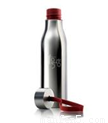
flask / flɑ:sk || flæsk/n [C] I BrE a special type of bottle that you use to keep liquids either hot or cold, for example when travelling 2 a flat bottle usually used to carry alcohol 3 a glass bottle with a narrow top, used in a LABORATORY

flat1/ flæt / adj flatter, flattest

1▶ SURFACE◀ smooth and level, without raised or hollow areas, and not sloping or curving: a flat-bottomed boat |a perfectly flat sandy beach | flat as a

pollute / pə'lu:t/ v  [T] 1 to make air, water, soil etc dangerously dirty and not suitable for people to use: beaches polluted by raw sewage | industrial emissions that pollute the air 2 pollute sb’s mind to give someone immoral thoughts and spoil their character: fears that Lawrence's novels would pollute young minds--polluted adj: polluted rivers--polluter n [C]

pollution / pəˈlu:ʃn /n [U] 1 the process of making


1.The pronunciation of the word "broadcast" is ____ or/ˈbrɔdˌkæst /.

A. /'brɔ:dkɑ:st/     B. /'brəud'sɑ:st/      C. /bræd'kɔst/       D. /'bru:dkɑ:st/

2.The word"____ "can be used as an adjective (形容词).

A. pollute          B. pollution           C. curious            D. curiously

3.Which of the following is a flask?


 A.               B.                C.              D.


4. The word "pollute" means "______".

A. to tell something to a lot of people       B. wanting to know about something

C. a programme on the radio or on TV       D. to make air. water, soil, etc dirty

5.These texts are probably from ______.

A. a magazine        B. a dictionary

C. a newspaper        D. an advertisement


根据下面短文内容,在短文的空格处填上一个恰当的词,使短文完整、通顺。

WHETHER you like it or not, your parents are responsible (负责任的) for you, at least 1.you finish high school. But does it feel like your parents are stressing you out with their love? Do you often fight with them?

Hu Muqing, 15, of Shenyang, complains that his parents are only concerned (关心) about his grades and not his other needs. He and his parents fight the most about the time he   2.watching TV and on the Internet.

“They think because I’m in Grade Nine I should concentrate on my work,” the Shenyang teenager said.

“However, I need to be able to relax. Most of my friends can watch TV and surf the Web a lot. Sometimes it’s 3.to talk to them. They don’t understand me”.

After some talk, Hu has been allowed to watch TV for 15 to 20 minutes every night, but has been told to keep away from the 4.. So it is always turned off .

Since she feels she’s grown up now, Shen Ying, 15, wants more respect(尊重) from her parents.

“My father shouts at me when he’s unhappy. He doesn’t listen to me, but he always pretends to listen to me 5.”, said the teenager from Jianyang, Sichuan province. “I’d like my parents to regard me as a friend and understand that respect is a two-way street. ”

Lu Yiting, 15, of Shantou, has a different problem with her parents. They think she spends too much time with her friends and is falling into bad company. They also think she should study all the time.

“I want my parents to believe me,” Lu said.

“ It’s the age when teenagers are becoming more independent (独立的). And teenagers don’t now how to talk with their parents. But their parents are very concerned about their kids’ futures, ” said Sun Yunxiao, a researcher at the China Youth and Children Research Center. Sun suggests that teenagers should 6.to communicate with their parents effectively (有效地).

“Find the right time for a talk. 7.Mother’s Day or Father’s Day, say ‘Thank you’ to your parents or give them a small gift with a letter so they can get inside your head a little,” he advised.

Sun also believes that teenagers have to work to get trust and respect from their parents.

“You need to make sure they know that you’re not going to fail your exams or let 8.down. Let them know that you want to do well, and that you will do well,” he said.


完形填空  阅读短文,从每题所给选项中选出可以入空白处的最佳选项。(15分)

    Last week Lu visited England. He stayed with my grandmother. He said it was a strange visit. “I don’t understand, but I  16  your grandmother a lot. When I arrived, I gave her a   17  from Suzhou. She looked in it and asked me to take it back. Then I saw a red spider(蜘蛛) on the table so I killed it for her and she seemed very   18  . Do English people like spiders?”

    “Later we went shopping. Someone was painting a shop   19  , so there was a ladder. Grandmother  20  me walking under it and said I must walk around it. I liked the shops and bought a smart   21  for my father and some new shoes for myself. When we got back, I put the shoes on the table and opened the umbrella to wonder   22  it was all right. Your grandmother came in and   23  !”

    “Then I broke a small   24  in the bathroom. Your grandmother’s face went white. I felt very sorry. When I left I gave   25  grandmother some flowers. She counted and there were 13. She   26  it. I think she was happy I was going.”

     I   27  to Lu, “My grandmother follows the old customs(习俗). You must not give someone an empty purse   28  they will have no money. You must not kill a “money spider”  or the same will happen. It is very unlucky to walk under a ladder and to put new shoes on the table. A(n)  29  umbrella in a house means someone will die. Breaking a mirror brings seven years’ bad luck, and 13 is   30  a very unlucky number. You were really making my grandmother very afraid. ”

1. A. affected      B. loved            C. frightened      D. encouraged

2. A. pen           B. purse            C. dress           D. handbag

3. A. honest        B. humorous         C. happy           D. unhappy

4. A. back          B. right            C. front           D. left

5. A. stopped       B. kept             C. insisted        D. suggested

6.A. wallet         B. umbrella         C. flower          D. shirt

7. A. why           B. that             C. if              D. where

8. A. laughed       B. screamed         C. clapped         D. cheered

9. A. bowl          B. bottle           C. plate           D. mirror

10.A. my            B. your             C. her             D. our

11.A. didn’t like  B. liked            C. enjoyed         D. smelt

12. A. shouted      B. talked           C. told            D. explained

13. A. but          B. for              C. or              D. so

14. A open          B. closed           C. new             D. old

15. A. hardly       B. never            C. seldom          D. also


违法和不良信息举报电话:027-86699610 举报邮箱:58377363@163.com

精英家教网