题目内容
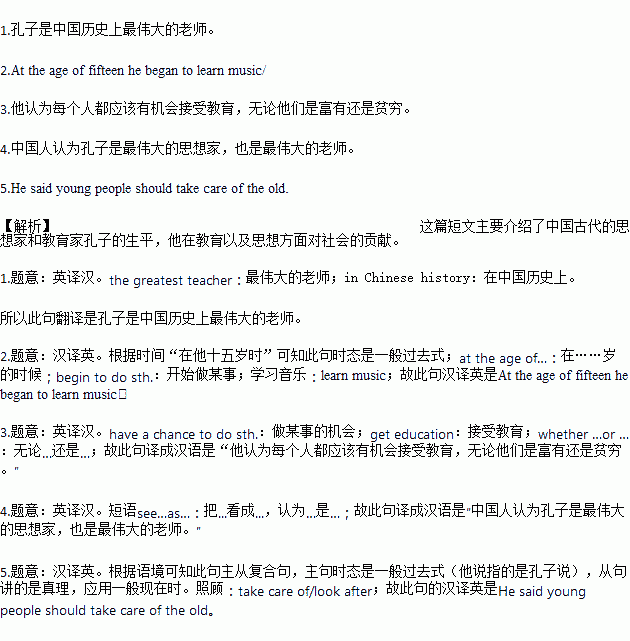
语篇翻译 阅读下面的短文,将画线部分译成英文或中文。
46.Confucius is the greatest teacher in Chinese history. He was born on September 28,551BC in the Kingdom of Lu, in today’s Shandong Province. When he was young, he and his mother had a hard life. 47.他十五岁时开始学习音乐, and he did well in it. Then he went on learning other subjects. When he was thirty, he became a teacher. He started his own school. 48.He believed everyone should have a chance to get education whether they were rich or poor. He had about 3,000 students and many of them became famous.
49.Chinese see Confucius as the greatest thinker and also the greatest teacher. His most important ideas are kindness and good manners. 50.他说年轻人人应该照顾老年人。 People should stop thinking of themselves and work for others. His ideas are around in people’s everyday life. Today people can still hear them, and they go far into east and south Asia.
1._________________________________________________________________
2._________________________________________________________________
3._________________________________________________________________
4._________________________________________________________________
5._________________________________________________________________

If you’re away from home, feeling a bit blue or searching for some comfort, the Danes have a solution. It’s called “hygge”. Coming from Danish culture, but popularized by the British in 2016, hygge is much more than just a word, it’s becoming a feeling around the world.
The hygge refers to the sense of happiness you get when your family is gathered together at new year or Christmas. It is all about the pleasant feelings of home: the smell of your mother’s cooking, your partner’s arm around your shoulder and so on.
Hygge is an antidote(良药) to stress. You know when you’ve got it, a gentle warmth starts spreading through your body. Another important part of hygge is that it has nothing to do with modern technology. It’s a period time to relax your tired mind and eyes. So, put down that smartphone and turn off the computer.
You should also know that hygge is not about healthy eating or more exercise. In fact, it’s just the opposite. You’re supposed to be lost in what you like: enjoy sweet snacks and calorie-laden cakes freely.
Let yourself be carried on a wave of nostalgia(怀旧) back to your birthplace, and remember the childhood songs of your distant youth with a smile. If it helps, wrap yourself in a warm blanket and sleep with one of your favorite books (not a pill or e-reader).
If Denmark seems too far, then think of old Beijing with its hutong and courtyard houses. Picture yourself sit around a traditional stove with your loved ones, eating dumplings and chatting about the old days. Let yourself drift back in time to a period where everything is relaxing, and there is no need to reply to any e-mails or text messages. They did not exist(存在) back then.
Now you’ve really understood hygge without even having to set foot in Copenhagen.
An Antidote to 1. -Hygge | |
Origin (起源) | ?Hygge came from Danish culture. ?It was 2.with the British in 2016. |
What hygge is | ?You will feel pleased3. your family members around. ?You don’t4. to use modern technology like a cellphone or computer. ?You can eat whatever you like without5. about daily exercise. |
What people can do6. feeling stressed | ?You can remind 7. of the sweet memories of childhood and relax yourself by reading books that you like 8. . ?If Denmark seems too far, let yourself think of old things and chat about the old days when 9. or text messages didn’t exist. |
It’s not 10. for you to go to Copenhagen as you have known hygge well. | |