请先阅读下面短文,掌握其大意,然后从各小题所给的A 、B、C、D四个选项中选出可以填入相应空白处的最佳选项,并在答题卡上将该项涂黑。

Things like Hula hoops(呼啦圈)used to be very popular. Did you ever own any of these? If you didn’t, don’t feel too bad. They were all fads. A fad is something that becomes very among a large number of people, but only for a short time. can become a fad very quickly, but can stop being popular just as quickly. it is no longer “cool,” a fad goes away. Anything can become a(n) -fashion, food, music, technology, even language.

In the late 1970s, Erno Rubik, a professor was looking for a way to teach his students about 3D objects. He a six-color plastic object that would be called the Rubik’s Cube(魔方). The goal was to get each side of the cube a color. It was very challenging. It took a few years for the toy to become popular, but then , in 1982, it seemed everyone had one. People bought over a hundred million of the .There were 50 books available that year offering solutions(解决办法). Then, just as suddenly as the craze (风尚) started, it . By 1983, people were not interested in the Rubik’s Cube anymore, perhaps because so many people had one in their home.

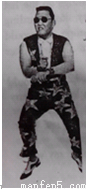
In 2012, a South Korean musician named Psy released a song called “ Gangnam (江南) Style.” The music video shows Psy pretending (假装) to horse-ride while he is dancing. In six months, it became the first Youtube (一视频网站) video ever to reach a billion views (观看). Six months after that, went on to reach two billion views. The song and video started a worldwide craze. “Gangnam Style” had a huge influence on world popular culture. U.S. President Barack Obama and U.K. Prime Minister David Cameron even the dance. “Gangnam Style” became less and less popular, the “Korean Wave” of culture remains popular all over the world.

1.A. useful B. popular C. valuable D. relaxing

2. A. Both B. Someone C. Something D. None

3.A. Although B. Whether C. Before D. When

4. A. invention B. fad C. goal D. dream

5.A. creative B. difficult C. traditional D. common

6.A. found B. bought C. invented D. borrowed

7.A. strange B. dark C. bright D. different

8. A. suddenly B. slowly C. exactly D. seriously

9.A. videos B. toys C. clothes D. books

10.A. spread B. appeared C. ended D. failed

11.A. already B. hardly C. especially D. only

12. A. he B. they C. we D. it

13.A. food B. dance C. language D. sport

14.A. depended on B. tried out C. gave up D. put off

15. A. then B. and C. but D. so

阅读下面短文,按照句子结构的语法性和上下文连贯的要求,从1-15各题所给的A、B、C、D项中选出最佳选项,并在答题卡上将该项涂黑。

In a far-away place, there was a village. The village was____ in potatoes than anywhere else in the country. At the end of every growing season, ______potatoes were dug out of the ground, and readied for market. In each home, men and women would________divide the potatoes into three groups, large, medium and small.

One year, there was a young man______received his share of the potatoes. As the other villagers_______, he walked around the village laughing and talking.______villagers thought he was lazy, and they worried that this man would never get__________potatoes ready in time. When it was time for the villagers________to market, they were greatly surprised to find that the man’s potatoes_____perfectly into three groups.

After _______the man how he did it, they understood he was not lazy, ______very clever. He had put all his potatoes in a cart and pulled it along the village’s rough dirt road. As the cart moved up and down over the road, the potatoes moved_______. The small potatoes moved to the bottom, the larger potatoes rose to the top and the medium potatoes rested____ the middle.

Life______like this too. The rough roads we travel along can also_____us.

1.A. rich B. richer C. richest D. more rich

2.A. thousand with B. thousands with C. thousand of D. thousands of

3.A. busily B. busy C. more busily D. busier

4.A. who B. which C. what D. whose

5.A. work B. was working C. were working D. works

6.A. A B. An C. The D. /

7.A. he B. him C. himself D. his

8.A. go B. going C. to go D. went

9.A. are divided B. were divided C. are dividing D. divided

10.A. asking B. asked C. ask D. asks

11.A. so B. and C. or D. but

12.A. too B. also C. either D. neither

13.A. on B. in C. with D. by

14.A. has B. are C. were D. is

15.A. to help B. help C. helps D. helped

违法和不良信息举报电话:027-86699610 举报邮箱:58377363@163.com

精英家教网