题目内容
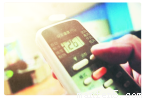
You may have known several kinds of police, traffic police, and street police. But have you ever heard of energy-saving (节能) policemen?
A group of 22 of these new policemen went to work last week in Beijing. They go around the city to see the use of energy in hotels, office buildings, shopping centers and other public places. One of their aims is to make sure that these places have set their air conditioning (空调) no cooler than 26 ℃.
"If everyone sets their air conditioning at 26 ℃, Beijing will save 400 million kilowatt-hours of electricity in one summer. That's one-third of all the usage of the city in the season," said a TV advertisement.
Other Chinese cities, like Wuhan in Hubei Province and Yangzhou in Jiangsu Province, are going to follow Beijing's steps in setting up a similar police team.
From 1986 to 2005, China met 20 warm winters. It means that Chinese cities have to spend billions of yuan solving the environmental problems every year.
At the beginning of this month, China made its first action plan to fight pollution. It aims to reduce energy usage by 20% and increase renewable energy up to 10% from 7% by 2010.
To introduce a green life to the public, Beijing also held a show on energy-saving technology and productions last week. It attracted lots of attention.
"We want to tell people that there are certain ways to protect the environment. Each of us can find right ways to do it in our daily lives," said Liu Qianguang, an environmental engineer in Beijing.
1.The job of the energy-saving policemen is ___________.
A. to set the air conditioning cooler
B. to check the use of energy in public places
C. to stop people using air conditioning
D. to make sure that more energy will be produced
2. Beijing will use ___________ million kilowatt-hours electricity in one summer.
A. 1200 B. 800
C. 400 D. 133
3. Which of the following years' winters were all warm in China?
A. 1984-1988.B. 1999-2003.
C. 2002-2006. D. 2005-2009.
4.According to Liu Qianguang, ___________.
A. there are few ways to protect the environment
B. it's difficult to find good ways to save energy
C. it's easy for one to do something good for the environment
D. it's not easy for one to do something good for the environment
5.In the year 2010 China’s energy usage is going to be cut by________.
A.20% B.10%
C.7% D.17%
1.B
2.A
3.B
4.C
5.A
【解析】
试题分析:这篇短文讲述的是在北京一种新型的警察—节能警察的工作。他们是在公共场所检查能源的使用,避免能源的浪费。由于能源的浪费,导致了很多环境的问题。因此我们倡导节能生活,我们每个人都可以做一些事情来保护环境。
1.细节理解题。根据短文第二段中They go around the city to see the use of energy in hotels, office buildings, shopping centers and other public places.可知,节能警察的职责是在全城的公共场所检查能源的使用。由此可知选B。
2.细节理解题。根据短文第三段中If everyone sets their air conditioning at 26 ℃, Beijing will save 400 million kilowatt-hours of electricity in one summer. That's one-third of all the usage of the city in the season,可知,如果我们把空调的温度设置在26度,那么北京一个夏天就可以节省4亿千瓦每小时的电,在占北京这个季节总用电量的三分之一。由此我们可以计算出,北京一个夏天的用电是大约1,200 million kilowatt-hours.。故选A。
3.细节理解题。根据短文第五段From 1986 to 2005, China met 20 warm winters.可知,从1986年到2005年,中国遇到了20个暖冬。从这里我们可以判断,哪个选项是在这个区间里。故应该选B。
4.细节理解题。根据短文最后一段中刘潜光所说的话中可知,我们想告诉人们有一些办法来保护环境,我们每一个人都可以在日常生活中找到正确的方式来保护环境。从他的话中我们可以知道,他是告诉我们每个人都可以做一些事情来保护环境。故选C。
5.细节理解题。根据短文第六段中It aims to reduce energy usage by 20% and increase renewable energy up to 10% from 7% by 2010.可知,中国计划到2010年减少能源使用20%。故选A。
考点:环境保护类短文阅读。

 激活思维优加课堂系列答案
 活力试卷系列答案
 课课优能力培优100分系列答案