题目内容
(题文)—Many students don’t know how to difficulties and become worried.
—I think they should ask the teacher for help.
A. play with B. deal with C. talk with D. come up with
 B
【解析】
句意:-许多学生们不知道怎样处理困难,从而变得焦虑。-我认为他们应该向老师求助。play with和…一起玩;deal with处理;talk with和某人谈话;come up with提出,想出。根据句意和后面的difficulties可知,这里说的是处理困难,故应选B。
B
【解析】
句意:-许多学生们不知道怎样处理困难,从而变得焦虑。-我认为他们应该向老师求助。play with和…一起玩;deal with处理;talk with和某人谈话;come up with提出,想出。根据句意和后面的difficulties可知,这里说的是处理困难,故应选B。


 名校课堂系列答案
阅读下面短文,完成相关任务。
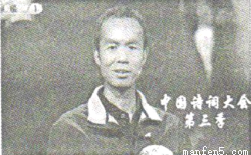
Lei Haiwei, a 37-year-old fast food courier(快递员) from Hunan Province, got first place in a televised Chinese poetry knowledge competition. He beat other competitors, including a master’s degree(硕士学位) graduate from Beijing University, in the third season of the Chinese Poetry Conference on CCTV on April 4, 2018.
“My interest in ancient poems began as early as I was six years old. My father hoped I would grow up to be a man who keeps the mountains, rivers, lakes and seas in mind,” the courier said.
In 2001, the younger Lei found a job in Shanghai and began to read books related to ancient poems at bookstores or libraries in his spare time, since he didn’t make much money. The young man also developed a habit of reciting poems he liked and writing them down after returning home.
Though Lei works as a fast food courier in Hangzhou later, his love for poems never died. Even on his busiest work days, he used any available moment to recite poems. “For
example, I am used to reciting poems when I wait for food at restaurants, and traffic lights
on my way to deliver food. Reciting poems not only enriches my knowledge, but also
makes my job less boring. As for my future plan, I will stick to reading and reciting
poems,” Lei said.
1.How old is Lei Haiwei?
____________________________
2.What habit did Lei Haiwei develop when he worked in Shanghai?
_____________________________
3.What is Lei Haiwei’s future plan?
____________________________
4.把短文最后一段中划线句子翻译成汉语。
____________________________
5.给短文拟一个恰当的标题。
__________________________
1.37 years old.
2.Lei Haiwei developed a habit of reciting poems he liked and writing them down after returning home.
3.He will stick to reading and reciting poems.
4.虽然雷后来在杭州当速食速递员,但他对诗歌的热爱从... --- Can I swim in the river?
---No way. Look at the sign. It says No Swimming.
A. It's possible.
B. No door.
C. It’s impossible.
D. No problem.
C
【解析】
句意:——我能在河里游泳吗?——不可能。看这个标志,上面写着不能游泳。考查情景交际。A. It's possible.这是有可能的;B. No door.没有门;C. It’s impossible.这是不可能的;D. No problem.没问题。根据后面Look at the sign. It says No Swimming.可知No way表示“不可能”,是拒绝别... The tour guide has made the route for the school trip.We don't need to ________ that.
A. be worried about B. be afraid of
C. be sorry for D. be good at
A
【解析】
句意:导游已经制定了学校旅行的路线,我们不必为此担心。A. be worried about担心,忧虑;B. be afraid of害怕;C. be sorry for抱歉;D. be good at擅长。根据语境推测句意是“导游已经为郊游制定好了路线”,可知我们没必要为此担心,由此判断句子中缺少短语:为…担心,故答案为A。 Mario is afraid of _________ alone.
A. be B. being C. is D. to
B
【解析】
句意:Mario害怕一个人孤单。短语be afraid of doing sth.表示害怕做某事。be alone表示单独。根据题意,故选B。 Long, long ago there were only a few thousand people in the world. These people move form place to place over the land, hunting animals for food.
No one knows how or when these people learned about growing food. But when they did, their lives changed. They did not have to look for food any more. They could stay in one place and grow it.
People began to live near one another. And so the first village grew. Many people came to work in the villages. These villages grew very big. When machines appeared(出现), life in the villages changed again. Factories were built. More and more people lived near the factories. The cities grew very big.
Today some people are moving back to small towns. Can you tell why?
1.The underlined word "They" in the second paragraph refers to ___.
A. villages B. animals C. cities D. people
2.When factories were built, ___.
A. more people live near the factories
B. people began to live in the factories
C. many people began to work in villages
D. many machines appeared in big factories
3.In what order did people do the following things?
a.Worked in villages b.Lived near the factories. c.Learned to grow food.
d.Built factories. e.Began to live near each other.
A. d, b, a, e, c B. e, a, c, d, b C. c, e, a, d, b D. a. c. d. e. b
4.We can learn from the passage that ___.
A. people like to work only in big cities
B. some people don't like to live in big cities
C. there will be no small towns in the future
D. it is better to live in cities than in villages
5.The best title of the text should be ___.
A. Cities or Villages B. Back to Towns
C. How Cities Grew D. People and Animals
1.D
2.A
3.C
4.B
5.C
【解析】
试题这篇短文简单的介绍了人类社会的发展过程,人们首先由学会种植食物开始,从而结束了游猎生活;接着开始集体生活,建立村庄,工厂;最后生活在工厂附近,城市出现。
1.根据前文No one knows how or when these people learned about growing food. But... (题文)We’ll have a picnic near the river tomorrow it rains heavily.
A. until B. if C. unless D. when
C
【解析】
试题句意:明天我们将在河边野餐,除非雨下得很大。until直到; if 如果;unless除非;when当……的时候。结合语境可知该选C。