题目内容
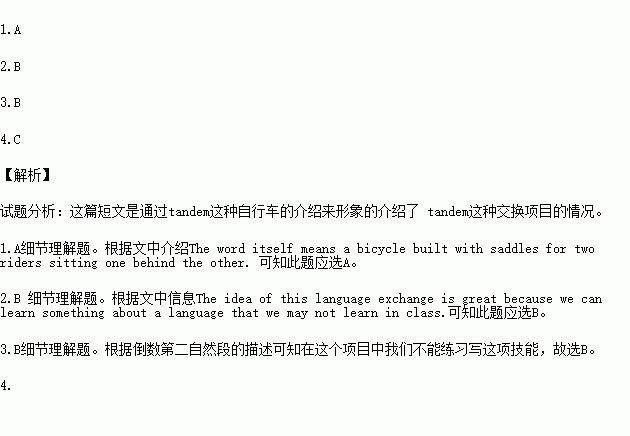
Have you ever heard of tandem? The word itself means a bicycle built with saddles for two riders sitting one behind the other. However, when we learn a foreign language, we can find a native speaker
who wishes to learn our languages. So we both get a chance to practice. This is the tandem exchange.
For example, I’m a native English speaker but I want to learn Spanish. So I go to a tandem meeting. There I can find a native Spanish speaker who wants to improve his or her English. Then we become “tandem” partners. I speak English with my Spanish tandem partner for about an hour and help him or her with some English problems. After that, we speak Spanish for an hour, too. The idea of this language exchange is great because we can learn something about a language that we may not learn in class. This is the main reason why we can choose the tandem exchange as a way to learn a new language.
In the tandem exchange, we can also read passages with our partner. This way we can not only practice our pronunciation but also understand the meaning of difficult words in other languages. We can then have conversations about the passages in order to practice our speaking and listening.
So I advise you to participate in the tandem exchange. If there’s no foreigner around you, online tandem exchange is also a good choice. Join in the tandem exchange and enjoy the opportunity of learning new languages and understanding the cultures of other countries!
1.Which of the following is a tandem bicycle?
A.  B.
B.  C.
C. D.
D.
2.What is the main reason for choosing the tandem exchange?
A. We can make more friends.
B. We can learn something about a language that we may not learn in class.
C. We can improve our pronunciation.
D. We can learn Spanish in the tandem exchange.
3.Which language skill is NOT practiced in the tandem exchange according to the passage?
A. Speaking. B. Writing. C. Reading. D. Listening.
4.The underlined phrase “participate in” means “ ”.
A. take in B. make up C. take part in D. give up

请根据句意从方框中选择合适的动词,并用其适当时态填空,使句子通顺。
choose do have fly happen |
1. How time _________! Here you are graduating from a middle school.
2.Today’s young people keep hands on the phone wherever they go, even while they _________ meals.
3.We Canada for the coming holiday,and the next step is to plan our route carefully.
4. What do you think __________ to John if he finds his car has been stolen (被偷)?
5.---Have you finished homework?
---Not yet. But I _________ it the whole morning.