ÌâÄ¿ÄÚÈÝ

The police found only_______ man in the house£®

A. one B. first C. a few

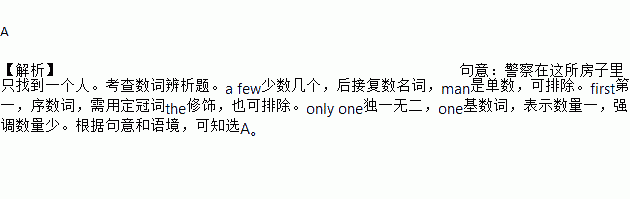
A ¡¾½âÎö¡¿¾äÒ⣺¾¯²ìÔÚÕâËù·¿×ÓÀïÖ»ÕÒµ½Ò»¸öÈË¡£¿¼²éÊý´Ê±æÎöÌâ¡£a fewÉÙÊý¼¸¸ö£¬ºó½Ó¸´ÊýÃû´Ê£¬manÊǵ¥Êý£¬¿ÉÅųý¡£firstµÚÒ»£¬ÐòÊý´Ê£¬ÐèÓö¨¹Ú´ÊtheÐÞÊΣ¬Ò²¿ÉÅųý¡£only one¶ÀÒ»ÎÞ¶þ£¬one»ùÊý´Ê£¬±íʾÊýÁ¿Ò»£¬Ç¿µ÷ÊýÁ¿ÉÙ¡£¸ù¾Ý¾äÒâºÍÓï¾³£¬¿É֪ѡA¡£
Á·Ï°²áϵÁдð°¸
Ïà¹ØÌâÄ¿

As we know, some children live in the countryside , and some live in the city. Their lives are a little different. Please look at the following table.

In the countryside

In the city

Ways of going to school

On foot

By bus or car

Classroom facilities(ÉèÊ©)

Recorders and radios

VCD, DVD, TV sets, recorders, radios, loudspeakers

Ways of learning

Classes only, without many reference books(²Î¿¼Êé)

Many extra classes, tutors(¼ÒÍ¥½Ìʦ)£¬ lots of reference books

Eyesight

Less than 45% are near-sighted

About 75% are near-sighted

After-class activities

Playing with balls

English corners and other school clubs

Homework

Homework can usually be finished at school

Homework never ends

Chores(ÔÓÊÂ) to do

Washing, cleaning , farming, looking after younger sisters or brothers, cooking

Usually no chores

Family members

Big families with three generations(Èý´úÈË)

Small families with three members

Ideal jobs

Teachers, drivers, scientists, nurses, secretaries

Scientists, professors, doctors, computer programmers, managers, university presidents, the UN chief

1.The survey was done among the _____ between the countryside and the city.

A. teachers B. students C. parents D. adults

2.About _____ of children in the countryside have good eyesight, but only ____ of children in the city have good eyesight.

A. 45%; 75 % B. 55%; 75% C. 55%; 25% D. 45%; 25 %

3.Which of the following is not included in the survey?

A. Ideal jobs B. After-class activities C. Ways of learning D. Results of tests

4.A classroom in the countryside often has____ according to the survey.

A. recorders B. DVD C. TV sets D. loud-speakers

5.Which if the following is not true according to the survey?

A. Children in the countryside often go to school on foot.

B. Children in the city often have too much homework to do.

C. Children in the countryside often have lots of chores to do

D. Children in the city don¡¯t want to be computer programmers.

1.B 2.C 3.D 4.A 5.D ¡¾½âÎö¡¿ÊÔÌâ·ÖÎö£º±¾±í¸ñÊÇÕë¶ÔÅ©´åº¢×ӺͳÇÊжùͯËù×öµÄµ÷²é£¬½ÒʾÁËËûÃDz»Ò»ÑùµÄÉú»î¡£ 1.ÌâÒ⣺ÕâÏîµ÷²éÊÇÔÚÅ©´åºÍ³ÇÊÐÖ®¼äµÄ ½øÐеġ£¿¼²éϸ½ÚÀí½âÌâ¡£A. teachersÀÏʦ£»B. studentsѧÉú£»C. parents¸¸Ä¸£»D. adults³ÉÄêÈË¡£¸ù¾Ý¿ªÍ·As we know, some children liv...

Winter is a time for many exciting sports: sledding (³ËÑ©ÇÁ), skating and skiing. Skating and skiing need lots of skills. Sledding gives you good exercise and is lots of fun!

A sled looks like a boat. It can move easily over snow or ice. Early sleds were made of wood. Now some better sleds are made of glass.

Sleds can be pulled£¨±»À­£©by animals. In some very cold parts of the world, people make animals like dogs, horses, and reindeer (ѱ¹) pull(À­) goods(»õÎï) or people in sleds.

People also sled for sports and fun. Driving a sled does not need much skill. The driver gives a kick(Ìß) in the snow to start the sled. He or she can also ask someone else for help. In a sled, there can be one person(ÈË) or several(¼¸¸ö).

Usually, you have to lie on your back, feet first in a sled. As you travel, you move your body and feet to keep it in the right direction (·½Ïò).

There is a special sled called the skeleton sled (¹Ç¼ÜÑ©ÇÁ). It¡¯s very different.

On a skeleton, you lie on your stomach and drive the sled in a head-first way. It is very fast! Many people are afraid to ride it. But once they try it, they want to do it again!

1.What were early sleds made of?

_______________________________________________________________________________

2.What kind of animals can pull sleds?

_______________________________________________________________________________

3.Besides(³ý...Íâ) pulling goods or people, what are sleds also used for?

_______________________________________________________________________________

4.How many people can stay in a sled?

_______________________________________________________________________________

5.How do many people feel when they ride a skeleton?

_______________________________________________________________________________

1.They were made of wood./Wood. 2.Dogs,horses and reindeer. 3.Sports and fun. 4.One person or several. 5.They are afraid./ Once they try it, they want to do it again. ¡¾½âÎö¡¿ÎÄÕ½²ÊöÁ˹ØÓÚ»¬Ñ©ÇÁµÄÊÂÇé¡£...

There are twenty-seven bridges ____ London¡¯s River Thames. ____ all the bridges, Tower Bridge is the most famous. Do you know what ____ Tower Bridges so famous? ____ do so many visitors from all over the world come to see it?

The surprising thing about Tower Bridge is that it is open ____. It does this to let the big ships go ____ the pool(Ë®Óò) of London. If you are lucky enough to see the bridge with its two opening arms high in the air, you will never ____ it, it¡¯s really exciting.

On the north side of the river, there is the Tower of London. The Tower of London and London Bridge look the same, but the Tower of London is much ____ than London Bridge, the Tower of London is almost one thousand years old and the Tower Bridge is only about one hundred. Before they began to build Tower Bridge, the designers(Éè¼ÆÊ¦) argued (ÕùÂÛ) about it for more than thirty years. It ____ them quite a long time to argue and decide to build the Tower Bridge because they had two ____, they were very difficult to solve(½â¾ö).

1.A. on B. above C. over D. from

2.A. In B. From C. About D. Of

3.A. makes B. let C. has D. does

4.A. What B. Why C. When D. How

5.A. on the left B. in the middle C. on the right D. all the time

6.A. past B. on C. through D. into

7.A. remember B. know C. understand D. forget

8.A. younger B. smaller C. older D. cheaper

9.A. took B. spent C. paid D. cost

10.A. questions B. problems C. arms D. bridges

1.C 2.D 3.A 4.B 5.B 6.C 7.D 8.C 9.A 10.B ¡¾½âÎö¡¿ÊÔÌâ·ÖÎö£ºÕâÆªËµÃ÷Îļòµ¥½éÉÜÁËÖøÃûµÄÂ×¶ØËþÇŵĶÀÌØÖ®´¦£¬²¢Í¨¹ý¶Ô±È½éÉÜÁËÂ×¶ØËþµÄÀúÊ·¾ÃÔ¶¡£ 1.¾äÒ⣺Â×¶ØÌ©ÎîÊ¿ºÓÉÏÓжþÊ®Æß×ùÇÅ¡£¿¼²é½é´Ê±æÎöÌâ¡£A. onÔÚ¡­¡­ÉÏÃæ£¬Ç¿µ÷±íÃæ½Ó´¥£»B. aboveÔÚ¡­¡­ÉÏÃæ£¬Ç¿µ÷´¹Ö±·½Ïò£»C. overÔÚ¡­¡­...

Î¥·¨ºÍ²»Á¼ÐÅÏ¢¾Ù±¨µç»°£º027-86699610 ¾Ù±¨ÓÊÏ䣺58377363@163.com

¾«Ó¢¼Ò½ÌÍø