题目内容
---Raymond, there was a phone call for you.
---Oh?Who was it?-I don't know, but it was a girl's ________.
- A.wish
- B.voice
- C.answer
- D.number
因为句中表达的意思是“这是女孩的声音”,要用“voice”表示,所以正确答案是B.

 天天向上一本好卷系列答案
 小学生10分钟应用题系列答案
But what about anger problems? Anger is largely viewed as a secondary emotion – one caused by other emotions. People are thought to be angry because they are sad, anxious or stressed. In the past, many doctors didn’t accept the idea that anger could be a problem all on its own.
Today, though, a growing number of mental health experts think that anger is a serious problem that needs its own treatment.
How to tell the difference between “normal” anger and “anger problem” is difficult. After all, everyone gets really mad from time to time. Experts point out a few ways.
Disordered anger, as it is sometimes called, tends to be of greater intensity (强度). It takes very little to set off a person with an anger problem, and their responses (反应) are very strong. An example: While most people would get upset if a driver cut them off, someone with disordered anger might try to chase down the car and force it off the road.
And in cases of disordered anger, the person gets angry more frequently and his/her anger lasts longer. For most people, angry feelings disappear quickly. But people with anger problems often stay angry for days, weeks or even years; their feelings of anger don’t disappear over time.
Consequences are also important to consider: Disordered anger often damages people’s lives. “It interferes (干扰) with people’s relationships and their jobs,” says Raymond Chip Tafrate, a US psychologist. “Even their health is affected.”
Anger clearly increases the risk of certain health problems, as many studies have shown. “When a person is angry, their heart beats faster and their blood pressure goes up,” says Howard Kassinove, a professor at Hofstra University in New York. Over time, these changes take their toll on the body, he adds.
Experts suggest that people with an anger problem take anger-management programs. The programs teach people to control their responses to stressful situations through the use of relaxation techniques. The programs sometimes include life-skills training as well: increasing someone’s level of competence (竞争)– whether on the job or as a parent or partner – helps bring down stress and cut angry feelings.
【小题1】A person who _________ most possibly has disordered anger in the experts’ opinion?
| A.can’t get out of anger quickly |
| B.is dissatisfied with relationships |
| C.has high blood pressure |
| D.is worried about his job |
| A.Responses. | B.Effects. | C.Reasons. | D.Feelings |
| A.Anger is an secondary emotion that makes people sad and stressed. |
| B.Anger was recognized as an illness by most doctors in the past. |
| C.A person with an anger problem gets angry more often and easily. |
| D.The use of relaxation techniques is the best way to manage anger. |
| A.Can anger be an illness? |
| B.Is it disordered anger? |
| C.Can anger influence our life? |
| D.Is anger management important? |
|
|
Raymond is a little koala living in Australia. His mom left him when he was only 1 month old. But luckily, a kind woman called Julie took him home and looked after him. Raymond spends his days sitting at Julie’s desk. |
|
|
Meet Zeus, the tallest dog in the world. The 3-year-old dog is 168cm tall from foot to shoulder. When standing on his hind legs (后腿), Zeus reaches 226cm. Zeus lives in the US. He eats a 14-kg bag of food. |
|
|
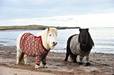
Scotland chose two Shetland ponies(矮种马), Fivla and Vitamin, as “ambassadors(大使)” to bring in visitors. Fivla is 17 and Vitamin is 18. They wear clothes made from wool. Scotland uses pictures of them to show the country’s beauty. |
|
|
You can’t find a better sheepdog than Jess the springer spaniel (激飞长毛猎犬) in the UK. Every day, the dog goes out to feed lambs from a milk bottle she carries in her mouth. She does it rain or shine, three times a day. |



1._______ left Raymond when he was only one month old.
A. Julie B. Fivla C. Vitamin D. His mother
2. is the tallest dog in the world.
A. Raymond B. Zeus C. Jess D. Fivla and Vitamin
3.Fivla and Vitamin are Shetland ponies from_______.
A. Australia B. The US C. The UK D. Scotland
4.How often does Jess feed lambs from a milk bottle in her mouth?
A. Every two weeks. B. Three times a week.
C. Once a day. D. Three times a day.
 cording
to the article, the movie Tiny Times ________.
cording
to the article, the movie Tiny Times ________.  It has many advertisements for luxury
goods.
It has many advertisements for luxury
goods.