题目内容
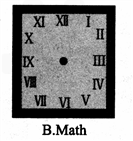
________ learn English, she went to school in London.
[
]|
A .To |
B .For |
C .With |
D .About |

 阅读快车系列答案
In a class in Japan, a robot teacher Saya called out the names of the students, smiled at them and told them off. 【小题1】_________ So the students liked her very much. But the scientists say she is not going to take the place of human teachers.
【小题2】__________ They are surprise, fear, dislike, anger, happiness and sadness. She can also say simple phrases such as “Thank you” and “Sorry”.
“【小题3】__________ Robots that look like humans have an important influence(影响) on children and older people,” said Kobayashi, the maker of Saya.
【小题4】___________ After being invented, she was tested in a classroom with many fifth and sixth grade students. “She still can’t do much more than call out names and shout ‘Be quiet’, but the children had great fun,” Kobayashi said. “They were very happy when Saya called out their names. We invented Saya to help people, but we cannot have too high hope for her. 【小题5】__________ She is just a tool(工具).”
|
If an American is satisfied with you,he will put his thumb and forefinger into a circle.That means OK.But in Brazil,the very sign is considered to be rude.In Poland,a guest usually presents flowers to his hostess.The number must be an odd(奇数)one.Besides,the hostess isn’t expected to remove the cover of the bunch of flowers.And usually,the red rose is a sign of love.
Usually we nod to express our agreement and shake our heads to show disagreement.To our surprise these body movements mean the opposite in Bulgaria.
The differences in customs and cultures in the world are really noticeable.We should learn more about them to avoid embarrassment(窘迫).Then,would you please remember:When in Rome,do as the Romans do.
【小题1】In Poland,if a man gives some odd red roses to a woman as a present,it means that he ____.
| A.will invite her to a dinner party |
| B.has not been in love with her |
| C.will invite her to a party |
| D.has fallen in love with her |
| A.will be friends with |
| B.is not been in love with |
| C.is willing to help |
| D.is satisfied with |
| A.impolite | B.polite | C.strange | D.popular |
| A.will have a talk |
| B.disagrees |
| C.will shake hands |
| D.agrees |
| A.we should learn from the Romans |
| B.we should work as the Romans do |
| C.we should obey its customs when we are in a foreign country |
| D.we have been Romans |