阅读下面的短文并用英语回答问题,并将答案写在答题卷上标有题号的横线上。

Have you seen people carrying rubbish bags while jogging? Or their hands filled with old plastic bottles? You might soon. Sweden's latest fitness craze(狂热)-plogging-is making its way to the whole world.

What is plogging? It is a new word made up of part of "jogging" and part of the Swedish words "plocka upp(pick up)", which means picking up rubbish while jogging. By plogging joggers will keep fit and save the world at the same time.

It all began when a Swedish man, Erik Ahlstrom, moved to Stockholm two years ago. This capital city left Erik a strong idea: "It looks like a dump(垃圾场)." His way to make a change is pretty outside the box: he invited groups of joggers-armed with(用……装备)rubbish bags and gloves-to jog through the city and pick up rubbish. Amazingly, it has turned popular and people share photos of the rubbish they collected on the Internet.

It is said that a half-hour of plogging burns about 288 calories(卡路里),while only jogging burns 235 calories. Some parents go plogging with their children at weekends. "It is the best family education. My child learns the idea of environmental protection by plogging. She is only 6," said a father. And a company called Vivobarefoot now will give out a pair of shoes in exchange for 17 plastic bottles.

Plogging is well accepted in many other countries. There are plogging groups in Germany, Australia and the US. In China, it's starting to go popular among exercisers who want to make a difference.

1.Who started plogging?

_____________________

2.What is the meaning of plogging?

_____________________

3.Would you like to go plogging with your parents? Why or why not?

_____________________

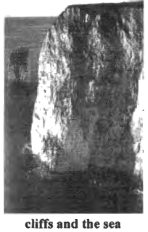
I was coming downstairs to get breakfast when the post came. I was _______ for a letter from my friend Sam. So I picked the letters up and looked _______ them. I wasn't surprised to see that there were some bills. There was an invitation to a party. There wasn't a letter from Sam. There was a postcard, showing some cliffs and sea. What a nice _______ !

I turned the _______ over. It wasn't easy to read. Rain had made the writing _______ , including the name of the person who had sent the postcard. _______ was it from? I tried to read any of the words. I could read "Dear Tom, I'm having a lovely time in…" Then the writing became unclear. I couldn't read _______ else. Who had gone to the seaside? I couldn't think of anyone! It was a mystery. There was another _______ too. Where was Sam's letter?

Just then the phone rang. It was Sam!"I'm calling to see if you got my postcard," he said. "We are at the seaside, not in London. We _______ our minds. Mum and Dad are resting after our walk. So I'm ringing you. I'm sorry I didn't write a letter. We've been so __________ ."

Both mysteries were solved!

1.A. asking B. paying C. searching D. waiting

2.A. after B. for C. through D. up

3.A. symbol B. view C. object D. position

4.A. bill B. invitation C. letter D. postcard

5.A. unclear B. unclean C. uncomfortable D. uncommon

6.A. How B. Where C. Who D. When

7.A. something B. anything C. nothing D. everything

8.A. matter B. method C. mistake D. mystery

9.A. changed B. kept C. lost D. made

10.A. amazed B. busy C. curious D. frightened

What will you have for lunch today? In some countries, lunchtime often m1.soup time! There are many kinds of soups served around the world. Some are as t2., and clear as water. Some are as thick as stews(纯煮的菜肴).Others are full of noodles!

Soup is just one thing that can be e3.for lunch. What you have for lunch may be d4. from the lunch of someone who lives in another country. Let’s take a look around the world to see w 5. kids are eating for lunch.

Mexico

Many children in Mexico eat tortillas(玉米粉圆饼) for lunch. Most tortillas are made from ground corn, but sometimes wheat is used. Tortillas are usually flat and round, but they can also be made into other s6..Taco(墨西哥肉卷) shells are made from com tortillas and f7. with beans or meat. Tasty sauces(酱汁),called salsas(沙司),are often added to tacos. These sauces are made from tomatoes, onions, hot peppers(辣椒)and spices(香料).

Russia

Winters in Russia are very cold. Maybe that’s why many Russian children eat soup for lunch. Two of their favourites are cabbage soup and beef soup.

Many Russian soups also include potatoes. Potatoes are an i8.crop in Russia .They make soups thick. Eating thick soups can help keep people w9.and can fill them up, so hunger is no problem!

South Korea

Meals in Korea are made up of many dishes. No matter what else is served, there is always rich.

Kimchi is also always on the table. Kimchi is pickled(腌制的)meat or vegetables. Korean children mix together many dishes and flavors at meals. It’s c10.for their food to be hot and spicy.

Thailand

Lunch in Thailand often includes noodles. There are many ways to serve noodles. One popular dish is made with thin rice noodles, tofu and shrimp. Another favourite way to eat rich noodles is with meat, vegetables and thick gravy(肉汁).

违法和不良信息举报电话:027-86699610 举报邮箱:58377363@163.com

精英家教网