题目内容

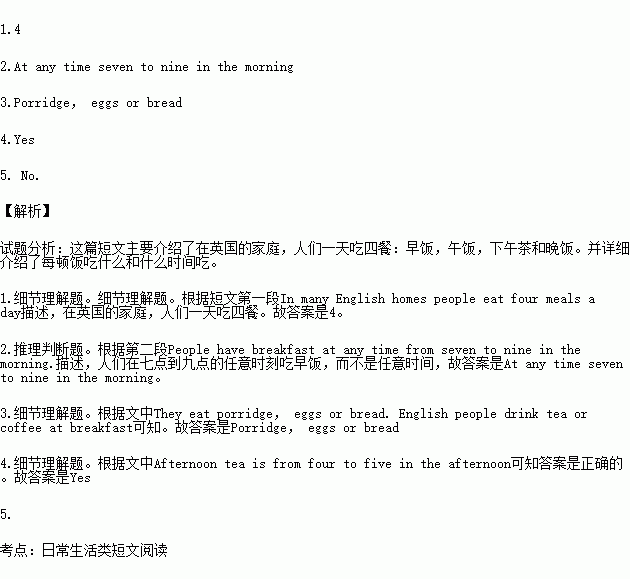
In many English homes people eat four meals day: breakfast, lunch, tea and dinner.

People have breakfast at any time seven to nine in the morning. They eat porridge, eggs or bread. English people drink tea or coffee at breakfast. Lunch comes at one o’clock. Afternoon tea is from four to five in the afternoon, and dinner is about half past seven. First they have soup, then they have meat or fish with vegetables. After that they eat some other things, like bananas, apples or oranges. But not all English people eat like that. Some of them have their dinner in the middle of the day. Their meals are breakfast, dinner, tea and supper and all these meals are very simple.

1.How many meals a day do many English people have?

2.When do people have their breakfast?

3.What did they have for breakfast?

4.Is afternoon tea from four to five in the afternoon?

5.Do all English people eat dinner at about half past seven?
练习册系列答案
相关题目

Do American children still learn handwriting in school? In the age of the keyboard, some people seem to think handwriting lessons are on the way out. 90% of teachers say they are required to teach handwriting. But studies have yet to answer the question of how well they are teaching it. One of this year’s studies found that about three out of every four teachers say they are not prepared to teach handwriting. Some teachers are teaching handwriting by providing instruction for 10 to 15 minutes a day, and then other teachers who basically teach it for 60 to 70 minutes a day — which really for handwriting is pretty much.

Many adults remember learning that way — by copying letters over and over again. Today’s thinking is that short periods of practice are better. Many experts(专家) also think handwriting should not be taught by itself. Instead, they say it should be used as a way to get students to express ideas. After all, that is why we write.

Handwriting involves two skills. One is legibility, which means forming the letters so they can be read. The other is fluency(流畅) — writing without having to think about it. Fluency continues to develop up until high school.

But not everyone masters these skills. Teachers commonly report that about one fourth of their kids have poor handwriting. Some people might think handwriting is not important any more because of computers and voice recognition programs.

But Steve Graham at Vanderbilt says word processing is seldom done in primary school, especially in the early years. American children traditionally first learn to print, and then to write in cursive, which connects the letters. But guess what we learned from a spokeswoman for the College Board(大学委员会). More than 75 percent of students choose to print their essay(article) on the test rather than write in cursive.

1.From Paragraph 1 we can learn .

A. teaching handwriting is a basic requirement in the teaching job

B. most teachers prefer to teach handwriting

C. teachers spend little time in teaching handwriting

D. a keyboard has taken the place of the handwriting

2.Which of the following is WRONG for traditional handwriting in the USA?

A. Handwriting includes two skills.

B. To write in cursive is taught first.

C. The letters are repeated many times.

D. The students are taught by practicing a long period.

3.The underlined word “legibility” in Paragraph 3 means .

A. easy to read B. easy to write

C. unexpected D. unreadable

4.The best title for the passage is .

A. How to Improve Handwriting in School

B. Right or Wrong: the Death of Handwriting

C. Handwriting Involves Two Skills

D. Handwriting Lessons Are on the Way Out

违法和不良信息举报电话:027-86699610 举报邮箱:58377363@163.com

精英家教网