题目内容
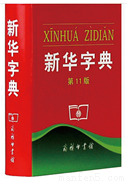
What is the best-selling book in the world? Is it the Harry Potter series or Secret Garden? According to the Guinness World Records, the Xinhua Dictionary, published by the Commercial Press in China, is the world’s most popular dictionary and the best-selling book.
In 1950, Chinese language experts(专家) and scholars, Wei Jiangong and Ye Shengtao, started to edit(编辑) the Xinhua Dictionary. There was a lot of discussion, research and paper work. Some hand scripts (稿件) were checked again and again like compositions, People’s Daily reported. Many people’s hard work and interesting stories went into making the dictionary.
In 1953, the first Xinhua Dictionary was published. Today, 567 million copies of the dictionary have been sold worldwide.
However, revisions (修订) to the dictionary continue to be made. According to Yu Guilin from Commercial Press, editors(编辑) usually summarize (总结) the meaning of words again while revising. If the example sentences are out of date, editors need to have experiences and make new examples. “To give a correct explanation of the word ‘焗油 (deep condition)’ , one editor went to a barber shop (理发店) to experience it for himself,” Yu told the Beijing Times. So far, the Xinhua Dictionary has been revised 11 times.
To keep up with the times, some popular and widely used internet words are also added to the dictionary. For example, in the 11th edition, the phrases “晒工资 (show off salary)” and “晒照片 (show off pictures)” were included.
All these efforts create the “National Dictionary” of China. The Xinhua Dictionary is not only a useful tool for generations of Chinese people. It also helps foreigners who are learning the Chinese language and culture.
1.According to Guinness World Records, the best-selling book is _____.
A. the Xinhua Dictionary
B. the Harry Potter series
C. Secret Garden
D. Guinness Book of World Records
2.What’s the meaning of the underlined word “scholars” in the second paragraph?
A. 校长 B. 学长 C. 学者 D. 学生
3.Which of the following is NOT true about the first Xinhua Dictionary?
A. Wei Jiangong and Ye Shengtao edited it.
B. The editors had a lot of discussions, did research and paper work.
C. The editors checked the hand scripts again and again.
D. The first Xinhua Dictionary was published in 1950.
4. While revising the dictionary, the editors _____.
A. just need to read and correct the printing mistakes
B. make new examples for the words
C. have to go to a barber shop to experience deep conditioning
D. have to change all the examples of the words
5. According to the article, the Xinhua Dictionary _____.
A. has to include internet words
B. is little help for foreign learners
C. is better than any other dictionary
D. tries to keep up with the times

 阅读快车系列答案