阅读理解

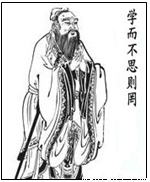
Who is the greatest teacher in Chinese history? Many people would think of Confucius, whose birthday was September 28. Although he lived over 2,000 years ago, people still remember and respect him for his contribution to the education today.

Confucius lived in the Kingdom of Lu, which lies in Shandong Province. He lived during the Spring and Autumn Period. He had a hard childhood. His father died when he was only 3. His mother brought him up. As a child, he had to work to help his mother, but young Confucius didn’t give up studying. He visited many famous teachers and learned music, history, poetry and sports.

Later, he became a teacher and started the first public school in Chinese history. At that time only children from noble families could go to school, but Confucius believed everyone should go to school if they wanted to learn. He had about 3,000 students in his lifetime.

Today, people still follow Confucius’ lessons. He told us that we all have something worthy to be learned. “When I am with three people, one of them must be better than me in some areas. I choose their good qualities and follow them.”

He also taught us that thinking is very important in study. “All study but no thinking makes people puzzled (困惑的). All thinking but no study makes people lazy.”

Confucius is not only a great teacher, but also a famous thinker with wise thoughts about the world and society. His most important teachings are about kindness and good manners. “A person should be strict with himself, but be kind to others.” he said.

1.Today we still remember Confucius mainly because___________.

A. he lived a poor life in his childhood

B. he had wise thoughts and great views about education

C. he traveled with his students from state to state

D. he lived during the Spring and Autumn Period

2.Confucius learned music, history, poetry and sports __________as a child.

A. by teaching himself at home

B. with the help of his mother

C. by going to school

D. by visiting many famous teachers

3.The underlined word “noble” in Paragraph 3 has the closest meaning to __________.

A. poor B. bright

C. wealthy D. cute

4.The correct order of the following statements is __________.

① Confucius worked to help his mother as a child.

② Confucius educated about 3,000 students in his lifetime.

③ Confucius’ father died.

④ Confucius started the first public school in Chinese history.

A. ③①④② B. ②③④①

C. ①③②④ D. ④③①②

5.Which of the following is NOT mentioned in the passage?

A. All study but no thinking makes people puzzled.

B. No one has something worthy to be learned.

C. All thinking but no study makes people lazy.

D. A person should be strict with himself, but be kind to others.

阅读下列内容,从每小题所给的四个选项中选出一个最佳答案

Smog is a big problem in many Chinese cities. But it seems that besides wearing a mask, few of us know what has caused the smog and what to do to beat it. Chai Jing, a former news interviewer with CCTV, discussed the questions in her documentary Under the Dome.

The 103-minute film was on websites on Feb 28. In the film, Chai visits polluted places and talks to officials and scientists. She thinks that burning too much coal and oil are the main causes of PM2.5 and smog.

To solve the problem, Chai suggests that we should clean our coal and oil or replace them with cleaner energy such as natural gas. In her film, Chai also emphasized (强调) that everyone can do something to help control smog too. For example, we can live a greener life by using more public transport. Or if we see things that could harm the environment, we can try to stop it. In the film, when she sees a restaurant cooking without any suitable filter facilities (过滤设备), she calls the hotline 12369. The restaurant installed the filter a week later.

Chen Jining, the new minister of environmental protection, praised Chai. “This film encourages ordinary people to take notice of the environment. This is what we need in the future.”

1.What is the main cause of smog according to Chai?

A. Setting off too many fireworks.

B. Burning too much coal and oil.

C. Too many cars in big cities.

D. Too many factories and companies.

2.Which of the following is NOT included in Chai’s suggestions towards reducing smog?

A. Using cleaner energy.

B. Cleaning coal and oil.

C. Using public transport.

D. Replacing coal with wind energy.

3.What can we tell from the story?

A. Only factories produce heavy smog.

B. Only the government can control smog.

C. Smog can’t be controlled by ordinary people.

D. Living a green life can help reduce smog.

4.What’s Chen Jining’s attitude towards Chai’s film?

A. He didn’t watch it. B. He thought highly of it.

C. He disagreed with it. D. He disliked it.

违法和不良信息举报电话:027-86699610 举报邮箱:58377363@163.com

精英家教网