题目内容
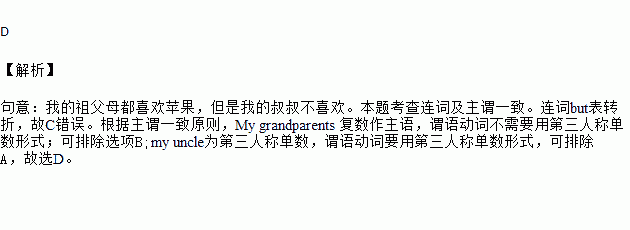
My grandparents apples, but my uncle them.
A.don’t like; like B.doesn’t like; likes
C.like; likes D.like; doesn’t like

 名校课堂系列答案
Military training is not just a Chinese tradition. Students in other countries also have it. Let's take a look!
China| Military training in China usually teaches students things like standing at attention (站军姿), goose-stepping (正步走) and folding a quilt (叠被子). Some students say that it is not useful. But others feel it encourages them to be more independent (独立的) and responsible (有责任感的).
The US | US schools don't force (强迫) students to take military training. If children are interested in the military, they can attend military camps. These activities help children work in a team and encourage them to work out problems on their own. For example, a group might have the task of climbing over (翻越) a high wall. If even one person cannot climb over the wall, the whole group needs to do it again. So everyone must help each other and finish the task together.
The UK| The UK pays attention to military training for students, especially college students. There are Officer Training Corps (军官训练员,OTC) in some universities. In the OTC, students can learn military skills like first aid (急救), weapons (武器) training and radio communications (无线电通讯). Students can make money by taking part in military exercises. They can earn up to £ 60 per day.
Military training in different 1. | ||
Where | 2. to do | Feelings |
China | ※Learn how to3. at attention, do the goose-stepping and fold quilts. | ※Some people think it encourages students to be more 4. and responsible. |
The US | ※Finish tasks5. , such as climbing over a high wall. ※If even one person6. , the whole group needs to do it again. | ※It is7. for children to take part in them because they help children to work in a team and encourage them to work out problems by 8. |
The UK | ※OTC in some universities9. students chances to learn first aid, weapons training, radio communications and so on. ※They can also earn money from training. | ※ Students learn a lot of military10.during the training. |