题目内容
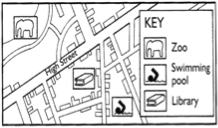
【题目】Different types of maps have different uses.Tourist maps, for example, have signs to show places of interest in an area. When tourists read these maps, it is easy for them to find where to go and what to see in a place and it is easy for them to go and find their ways to these places.
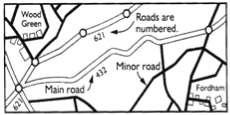
Road maps show large areas so that people can plan long journeys. Different types of roads are given different numbers. For example, if you want to go to Wood Green, you just follow No. 621 Road and keep looking at the road signs.
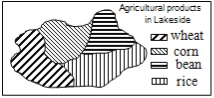
Distribution maps(分布图)use colors or signs to show facts about an area. For example, where different languages are spoken, how many people live in an area, how cold and hot some places are, or whether a place is short of water.
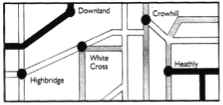
Some maps, such as railway maps, use straight lines to show everything. This is easy for people to read. Trains are fast. People don’t have to think about small places they go past. They just need to know the two ends of their trips.
【1】Jim is visiting the Summer Palace. Which map doeshe need most?
A.A tourist map.
B.A railwaymap.
C.A distribution map.
D.A road map.
【2】How can you tell different roads on road maps?
A.By using different colors.
B.By finding the numbers.
C.By following No. 621 Road.
D.By looking at the road signs.
【3】Which of the following can distribution maps tell us?
A.How to get to Lakeside.
B.How to plan a long journey.
C.Where a famous museum is.
D.How many people live in a place.
【4】Why do railway maps use straight lines?
A.Because railways are straight.
B.Because people canread them easily.
C.Because people like straight lines.
D.Because railways have only two ends.
【答案】
【1】A
【2】B
【3】D
【4】B
【解析】
试题解析:本文讲的是不同地图有不同的作用。
【1】细节理解 去颐和园,应该用旅游地图,这样容易找到要去的地方和怎么走。故选A。
【2】细节理解 Different types of roads are given different numbers 根据这句话可知答案应是finding the numbers.故选B。
【3】细节理解 根据文中how many people live in an area,这句话知道答案D符合题意。
【4】细节理解 根据文中 use straight lines to show everything. This is easy for people to read.这句话知答案应B。

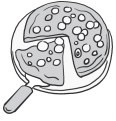
【题目】图片与词组配对。请将单词前面的字母填到图片下面的横线上。
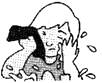
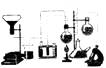
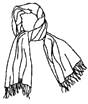
A. catch fish | B. silk scarf | C. science lab | D. cut the cake | E. behind the tree |
F. half past nine | G. dragon dance | H. a box of pencils | I. do homework | J. wash face |
|
|
|
|
|
|
|
|
|
|